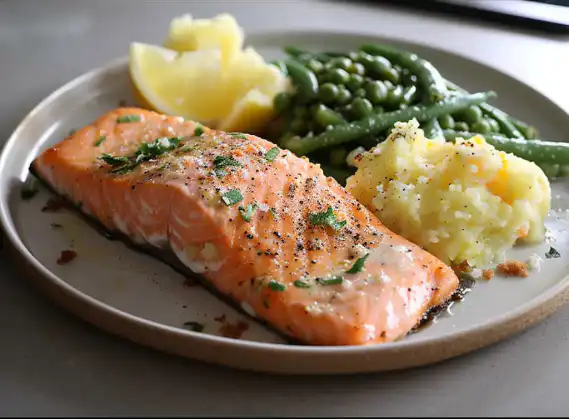
Baking salmon at home is surprisingly simple and yields a tender, flaky fish that’s both healthy and delicious. This recipe focuses on building layers of flavor without complicated techniques, making it a go-to for weeknight dinners or casual entertaining.
Why This Baked Salmon Recipe Works
This baked salmon recipe stands out because it balances simplicity with a robust flavor profile. The combination of fresh ingredients, thoughtful seasoning, and precise cooking time results in a consistently delicious and moist salmon.
Ingredients
- 1.5 pounds salmon fillet, skin on or off (your preference)
- 2 tablespoons olive oil
- 1 teaspoon smoked paprika
- 1 teaspoon garlic powder
- ½ teaspoon dried dill
- ½ teaspoon onion powder
- ½ teaspoon salt (or to taste)
- ¼ teaspoon black pepper (or to taste)
- 1 lemon, thinly sliced
- Optional: Fresh parsley for garnish
Gathering these few, accessible ingredients is the first step towards a delightful salmon meal.
How to Make It
- Preheat Your Oven and Prep Your Baking Dish: Begin by preheating your oven to 400°F (200°C). This consistent temperature is crucial for even cooking. While the oven heats, lightly grease a baking dish large enough to hold your salmon fillet without overcrowding. A baking sheet lined with parchment paper or aluminum foil also works well for easier cleanup.
- Prepare the Salmon Fillet: If your salmon still has scales, gently scrape them off with the back of a knife. Pat the salmon fillet completely dry with paper towels. This step is important because moisture can prevent the seasonings from adhering properly and can lead to steamed rather than baked fish.
- Mix the Seasoning Blend: In a small bowl, combine the olive oil, smoked paprika, garlic powder, dried dill, onion powder, salt, and black pepper. Stir everything together until it forms a well-mixed paste or coating.
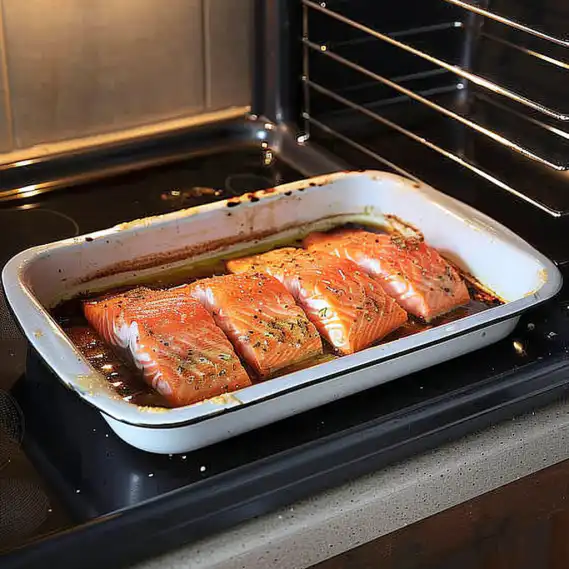
- Season the Salmon: Place the dried salmon fillet onto your prepared baking dish or lined baking sheet. Spoon the olive oil and spice mixture evenly over the top of the salmon. Use your hands or a small spatula to gently spread the mixture across the entire surface of the fish, ensuring all sides are coated.
- Arrange Lemon Slices: Lay the thinly sliced lemon evenly over the top of the seasoned salmon. The lemon slices will bake alongside the fish, releasing their juice and infusing the salmon with a bright, citrusy flavor.
- Bake the Salmon: Place the baking dish or sheet into the preheated oven. Bake for approximately 12-15 minutes per inch of thickness. For a standard 1-inch thick fillet, this means around 12-18 minutes total. The salmon is done when it flakes easily with a fork and the internal temperature reaches 135-140°F (57-60°C) in the thickest part.
- Rest and Serve: Once baked, carefully remove the salmon from the oven. Let it rest in the baking dish for about 5 minutes before serving. This resting period allows the juices to redistribute throughout the fillet, resulting in a moister and more tender fish. If you used fresh parsley, sprinkle it over the salmon as a garnish before serving.
Following these straightforward steps will lead you to a beautifully cooked and richly flavored baked salmon, ready to be enjoyed.
Nutrition at a Glance
- Rich in Omega-3 Fatty Acids: Beneficial for heart and brain health.
- Excellent Source of Protein: Essential for muscle repair and growth.
- Good Source of Vitamin D: Important for bone health and immune function.
- Contains Selenium: An antioxidant that helps protect cells from damage.
- Low in Saturated Fat: A heart-healthy protein choice.
- Vitamins B6 and B12: Support energy production and nervous system function.
- Potassium: Helps regulate blood pressure.
- Choline: Crucial for brain development and function.
How to Serve It
- Classic Pairing: Serve alongside roasted asparagus, steamed broccoli, or a fresh green salad for a balanced and healthy meal.
- Grain Bowl Base: Flake the cooked salmon over quinoa, brown rice, or farro, adding a drizzle of tahini dressing or a squeeze of lemon.
- Side of Potatoes: Enjoy with baked sweet potatoes, mashed potatoes, or roasted fingerling potatoes.
- Pasta Addition: Gently flake the salmon into a lemon-butter pasta or a light marinara sauce for a protein boost.
- Tacos or Wraps: Break apart the salmon and fill tacos or wraps with your favorite toppings like slaw, avocado salsa, or crema.
This flavorful baked salmon is wonderfully versatile and pairs well with a variety of side dishes and meal preparations.
Common Mistakes
- Overcooking: This is the most frequent culprit for dry, tough salmon. Keep a close eye on the cooking time and check for doneness using a fork. The flesh should flake easily but still be moist. Using an instant-read thermometer is a more accurate way to ensure it’s cooked to an internal temperature between 135-140°F (57-60°C) and not beyond.
- Not Drying the Salmon: Residual moisture on the fish prevents the seasonings from adhering well and can steam the salmon, leading to a less desirable texture. Always pat your salmon completely dry with paper towels before applying oil and spices.
- Underspicing: Salmon has a distinct flavor that can benefit from generous seasoning. Don’t be afraid to use enough of the spice blend to coat the fillet well. The spices help create a flavorful exterior and enhance the natural taste of the fish.
- Ignoring the Thickness: Recipe times are often general. Salmon thickness can vary significantly, impacting cooking time. Always base your cooking time on the thickness of the fillet, aiming for about 12-15 minutes per inch.
- Skipping the Rest: Just like with meat, allowing the salmon to rest for a few minutes after baking helps the juices settle and redistribute, leading to a moister piece of fish.
Being aware of these common pitfalls can help you achieve a consistently delicious baked salmon every time you make it.
You might love this: Sheet Pan Maple Dijon Glazed Salmon
Storage and Reheating
- Storage: Allow the cooked salmon to cool completely before storing. Store in an airtight container in the refrigerator for up to 3-4 days. Ensure the container is well-sealed to prevent drying out.
- Reheating Gently: To reheat, the best methods are in a low oven (around 275°F/135°C) for about 10-15 minutes, or gently in a covered skillet with a splash of water or broth. Microwaving is an option but can sometimes result in drier fish; if using a microwave, use a lower power setting and check frequently. For best results, reheat just until warmed through and avoid overheating, which can make the salmon tough.
Proper storage and careful reheating will help maintain the quality and flavor of your leftover baked salmon.
Leftover Ideas
- Salmon Salad: Flake cold salmon into a bowl, mix with mayonnaise or Greek yogurt, chopped celery, red onion, and dill. Serve on crackers, in lettuce wraps, or as a sandwich filling. This is a quick and easy way to transform leftovers into a new meal.
- Pasta Toss: Add chunks of leftover salmon to a cooked pasta dish during the last few minutes of cooking or when tossing with sauce. The gentle heat will warm the salmon through without overcooking it.
- Frittatas or Omelets: Chop leftover salmon and incorporate it into your morning frittata or omelet for a protein-packed start to the day.
- Grain Bowls: Reheat the salmon gently and add it as a protein to your favorite grain bowl, alongside roasted vegetables and a flavorful dressing.
- Fish Cakes: Combine flaked salmon with mashed potatoes, breadcrumbs, herbs, and a binder (like an egg yolk). Form into patties and pan-fry until golden brown.
Leftover baked salmon is a fantastic ingredient for repurposing into a variety of delicious and convenient meals.
Step by Step Guide to a Flavorful Baked Salmon Recipe
- Total Time: 25 minutes
- Yield: 4 servings 1x
Description
Learn how to make incredibly flavorful baked salmon with this simple step-by-step guide. Perfect for weeknight dinners!
Ingredients
- 1.5 pounds salmon fillet, skin on or off
- 2 tablespoons olive oil
- 1 teaspoon smoked paprika
- 1 teaspoon garlic powder
- ½ teaspoon dried dill
- ½ teaspoon onion powder
- ½ teaspoon salt (or to taste)
- ¼ teaspoon black pepper (or to taste)
- 1 lemon, thinly sliced
- Optional: Fresh parsley for garnish
Instructions
- 1. Preheat your oven to 400°F (200°C) and lightly grease a baking dish or line a baking sheet with parchment paper.
- 2. Pat the salmon fillet completely dry with paper towels.
- 3. In a small bowl, combine olive oil, smoked paprika, garlic powder, dried dill, onion powder, salt, and black pepper. Stir to form a blend.
- 4. Spoon and spread the seasoning mixture evenly over the salmon fillet.
- 5. Arrange the thin lemon slices over the top of the seasoned salmon.
- 6. Bake for 12-18 minutes, depending on thickness, or until salmon flakes easily and reaches an internal temperature of 135-140°F (57-60°C).
- 7. Let the salmon rest for 5 minutes before serving. Garnish with fresh parsley, if desired.
Notes
Store leftover cooked salmon in an airtight container in the refrigerator for up to 3-4 days. Reheat gently in a low oven or covered skillet.
- Prep Time: 10 minutes
- Cook Time: 15 minutes
- Category: Main Course
- Method: Baking
- Cuisine: American
Nutrition
- Serving Size: 1 serving
- Calories: N/A
- Sugar: N/A
- Sodium: N/A
- Fat: N/A
- Carbohydrates: N/A
- Fiber: N/A
- Protein: N/A