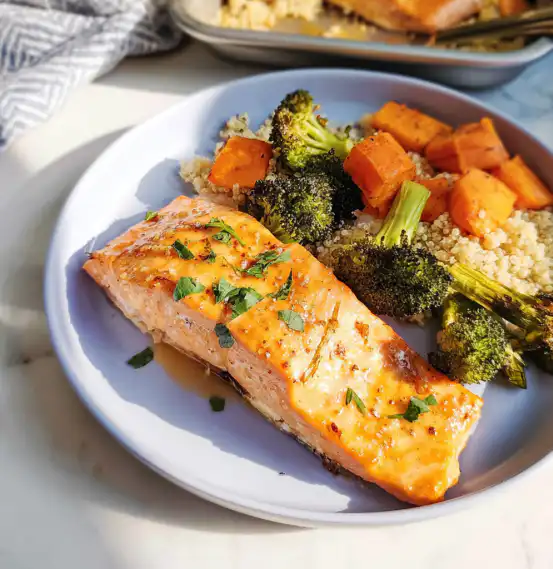
Sheet pan dinners are a weeknight savior. They minimize cleanup and maximize flavor, and this Maple Dijon Glazed Salmon is a prime example of how simple ingredients can come together for a satisfying meal.
Why This Sheet Pan Maple Dijon Glazed Salmon Works
This recipe truly shines because of its elegant simplicity. The sweet maple syrup perfectly balances the tangy Dijon mustard, creating a glaze that caramelizes beautifully on the salmon.
Ingredients
- 1.5 pounds salmon fillet, skin on or off as preferred
- 1 tablespoon olive oil
- 1/4 cup pure maple syrup
- 2 tablespoons Dijon mustard
- 1 tablespoon apple cider vinegar
- 1 teaspoon soy sauce or tamari
- 1/2 teaspoon garlic powder
- Salt and freshly ground black pepper to taste
- Optional: Fresh parsley or chives for garnish
- Optional for serving: Cooked quinoa, rice, or roasted vegetables like broccoli or asparagus
With all your ingredients prepped and ready, you’re well on your way to a delicious meal. Let’s get cooking.
How to Make It
- Preheat your oven to 400°F (200°C). Line a large baking sheet with parchment paper or aluminum foil for easier cleanup. This is a small step that makes a big difference.
- Pat the salmon fillet dry with paper towels. This step helps the glaze adhere better and promotes a nice sear on the fish. If you’re using skin-on salmon, you can place it skin-side down on the prepared baking sheet.
- In a small bowl, whisk together the maple syrup, Dijon mustard, apple cider vinegar, soy sauce (or tamari), and garlic powder. Season with salt and pepper to your liking. Give it a good stir until it’s well combined and smooth.
- Place the salmon fillet on the prepared baking sheet. Brush or spoon about half of the maple Dijon glaze evenly over the top of the salmon. Make sure to coat the entire surface.
- Roast the salmon in the preheated oven for 10 to 12 minutes. The cooking time will depend on the thickness of your salmon fillet. You’re looking for the salmon to be mostly cooked through at this point.
- Remove the baking sheet from the oven. Brush the remaining glaze over the salmon. If you’re adding any quick-cooking vegetables to the pan like asparagus or broccoli florets, you can add them now, tossing them with a drizzle of olive oil, salt, and pepper.
- Return the baking sheet to the oven and continue to roast for another 5 to 8 minutes, or until the salmon is cooked through and flakes easily with a fork, and the vegetables are tender-crisp.
- Once cooked, remove the salmon from the oven. Let it rest for a minute or two before serving. Garnish with fresh parsley or chives if desired for a pop of color and freshness.
This simple, seven-step process delivers a flavorful and healthy meal with minimal effort. The result is a glistening, flaky salmon that is a delight to eat.
Nutrition at a Glance
- Rich in Omega-3 Fatty Acids: Salmon is renowned for its high content of omega-3 fatty acids, which are beneficial for heart and brain health.
- Excellent Source of Protein: A substantial portion of protein, essential for muscle repair and satiety.
- Vitamins and Minerals: Contains vital vitamins like D and B vitamins, as well as minerals such as selenium and potassium.
- Lower in Calories: When prepared with minimal added fats and served with healthy accompaniments, it’s a calorie-conscious option.
- Gluten-Free Potential: By using tamari instead of soy sauce, this dish can easily accommodate a gluten-free diet.
- Controlled Sugar Content: While maple syrup adds sweetness, the overall sugar content is manageable, especially when compared to heavily processed sauces.
- Beneficial Fats: The natural fats in salmon are healthy unsaturated fats.
How to Serve It
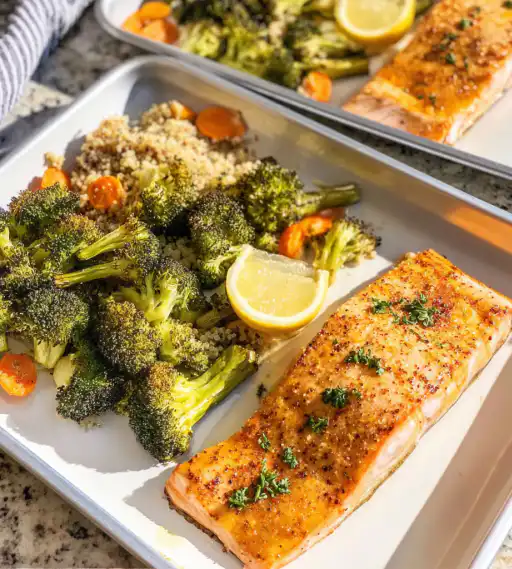
- With Roasted Vegetables: Asparagus, broccoli, Brussels sprouts, or even bell peppers and onions can be roasted alongside the salmon on the same pan. Toss them with a little olive oil, salt, and pepper before adding them for the last 10-15 minutes of cooking.
- Over Grains: Serve the salmon over a bed of fluffy quinoa, brown rice, or wild rice for a more substantial meal. This is my go-to for a complete and filling dinner.
- With a Fresh Salad: For a lighter option, pair the salmon with a vibrant green salad, perhaps with a simple vinaigrette. The richness of the salmon is a great contrast to fresh, crisp greens.
- As Part of a Buddha Bowl: Deconstruct the meal by serving the salmon alongside your favorite cooked grains, roasted or raw vegetables, and a drizzle of tahini or a light dressing.
- Alongside Potatoes: Roasted new potatoes or sweet potato wedges are another excellent accompaniment that complements the sweet and savory flavors of the glaze.
- With a Simple Side of Greens: Sometimes, all you need is a simple side of steamed green beans or sautéed spinach to complete the meal.
This sheet pan salmon is a flexible dish that can be adapted to fit your culinary preferences and what you have on hand.
Common Mistakes
- Overcooking the Salmon: Salmon is best when it’s just cooked through – flaky but still moist. Overcooking is the most frequent error and leads to dry, less enjoyable fish. Keep a close eye on it during the last few minutes of baking.
- Not Patting the Salmon Dry: Moisture on the surface of the salmon can prevent the glaze from adhering properly and can lead to steaming rather than roasting. A quick pat with paper towels makes a difference.
- Uneven Glaze Application: Ensure the glaze is spread evenly over the entire fillet. This ensures consistent flavor and beautiful caramelization on every bite.
- Opening the Oven Door Too Frequently: Each time you open the oven door, you release heat, which can prolong the cooking time and potentially affect the texture. Try to limit how often you check on the salmon.
- Using Low-Quality Maple Syrup or Mustard: While not a critical error, using good quality, pure maple syrup and a flavorful Dijon mustard will elevate the taste of the glaze significantly. For instance, a cheap imitation syrup won’t provide the same depth of flavor.
- Not Preheating the Oven Properly: An oven that hasn’t reached the correct temperature will cook the salmon unevenly. Always allow your oven to fully preheat.
- Overcrowding the Pan: If you’re roasting vegetables alongside the salmon, ensure there’s enough space on the baking sheet for air to circulate. Overcrowding can lead to steaming instead of roasting, affecting the texture of both the fish and vegetables.
Avoiding these common mistakes will help ensure your Sheet Pan Maple Dijon Glazed Salmon is always a success.
Storage and Reheating
- Storage: Once completely cooled, store the leftover salmon in an airtight container in the refrigerator for up to 2-3 days. It’s best to store it separate from any cooked vegetables if possible, as vegetables can sometimes become mushy upon reheating.
- Reheating: The best way to reheat this salmon is in a low oven (around 300°F or 150°C) for about 10-15 minutes, or until just warmed through. You can also gently reheat it in a skillet over low heat with a very small amount of oil or butter.
- Cold Consumption: Leftover salmon is also delicious served cold in salads or wraps. Its flavor holds up well for this type of use.
Properly storing and reheating will help you enjoy this delicious salmon for days to come.
Here’s another great option: Oven‑Baked Texas Roadhouse‑Style Salmon
Leftover Ideas
- Salmon Salad Sandwiches: Flake the cold leftover salmon, mix with a little Greek yogurt or mayonnaise, chopped celery, a squeeze of lemon juice, salt, and pepper. Serve on toast or in lettuce wraps for a quick lunch.
- Salmon and Avocado Toast: Mash some avocado onto your favorite toast, top with flaked leftover salmon, a sprinkle of red pepper flakes, and an Everything Bagel seasoning. It’s a surprisingly satisfying breakfast or light dinner.
- Salmon Pasta Salad: Chop the leftover salmon and toss it with cooked pasta, chopped vegetables (like cucumber, bell peppers, or cherry tomatoes), and a lemon-herb vinaigrette. It’s a refreshing and easy meal.
- Salmon Grain Bowls: Reheat the salmon gently and serve it over a bed of leftover quinoa or rice, topped with your favorite steamed or fresh vegetables and a drizzle of your preferred sauce.
- Salmon Omelets or Scrambled Eggs: Flake the salmon into your morning eggs for a protein-packed start to the day. It’s a wonderful addition to a weekend brunch.
- Salmon Lettuce Wraps: Warm the salmon slightly and serve in crisp lettuce cups with a drizzle of sriracha or a light soy-based sauce. This is a light yet flavorful option.
These ideas demonstrate how a simple sheet pan meal can provide delicious variety throughout the week.
Sheet Pan Maple Dijon Glazed Salmon – Eat Yourself Skinny
- Total Time: 30-35 minutes
- Yield: 4 servings 1x
Description
A simple, healthy, and delicious Sheet Pan Maple Dijon Glazed Salmon recipe perfect for weeknight dinners. Quick cleanup and minimal effort make this a go-to meal.
Ingredients
- 1.5 pounds salmon fillet, skin on or off as preferred
- 1 tablespoon olive oil
- 1/4 cup pure maple syrup
- 2 tablespoons Dijon mustard
- 1 tablespoon apple cider vinegar
- 1 teaspoon soy sauce or tamari
- 1/2 teaspoon garlic powder
- Salt and freshly ground black pepper to taste
- Optional: Fresh parsley or chives for garnish
- Optional for serving: Cooked quinoa, rice, or roasted vegetables like broccoli or asparagus
Instructions
- 1. Preheat oven to 400°F (200°C). Line a large baking sheet with parchment paper or foil.
- 2. Pat salmon fillet dry with paper towels. Place on prepared baking sheet.
- 3. In a small bowl, whisk together maple syrup, Dijon mustard, apple cider vinegar, soy sauce, and garlic powder. Season with salt and pepper.
- 4. Brush or spoon half the glaze over the salmon.
- 5. Roast for 10-12 minutes.
- 6. Remove from oven, brush with remaining glaze. Add optional vegetables.
- 7. Return to oven and roast for another 5-8 minutes, until salmon is cooked through and flakes easily. Garnish if desired.
Notes
Store leftover salmon in an airtight container in the refrigerator for up to 2-3 days. Reheat gently in a low oven or skillet to avoid drying out the fish.
- Prep Time: 10 minutes
- Cook Time: 20-25 minutes
- Category: Main Course
- Method: Baking
- Cuisine: American
Nutrition
- Serving Size: 1 serving
- Calories: Approx. 350-450 (depending on serving size and sides)
- Sugar: Approx. 10-20g
- Sodium: Approx. 300-500mg
- Fat: Approx. 15-25g
- Carbohydrates: Approx. 15-25g
- Fiber: Approx. 1-3g
- Protein: Approx. 30-40g