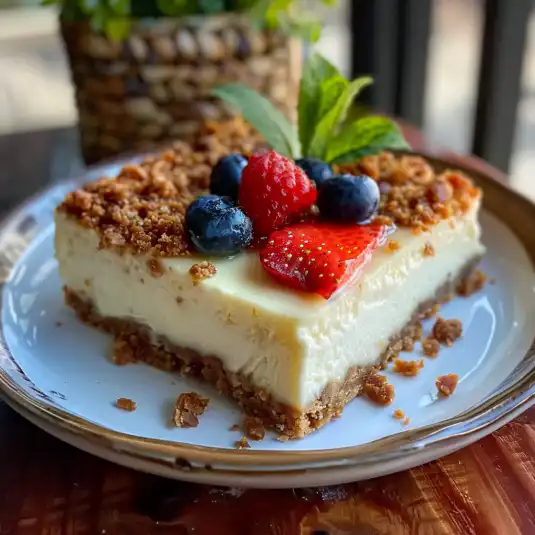
Greek yogurt cheesecake is a prime example of that philosophy in action. It’s genuinely satisfying, creamy, and tastes like a treat, but it’s also packed with protein and lower in calories and fat than traditional cheesecakes.
Why This Greek Yogurt Cheesecake Works
This Greek yogurt cheesecake is a smart choice for healthier desserts because it cleverly uses Greek yogurt to replace a significant portion of the cream cheese. Greek yogurt is naturally high in protein and lower in fat than cream cheese, which fundamentally changes the nutritional profile of the dessert.
Ingredients
- 1 ½ cups graham cracker crumbs (from about 10 full graham crackers)
- 2 tablespoons unsalted butter, melted
- 2 tablespoons granulated sugar (for the crust)
- 16 ounces non-fat plain Greek yogurt, full-fat plain Greek yogurt, or a blend, brought to room temperature
- 8 ounces softened cream cheese, light or regular
- ½ cup granulated sugar (for the filling)
- 2 large eggs, at room temperature
- 1 teaspoon vanilla extract
- ½ teaspoon lemon zest (optional, but recommended for brightness)
- Pinch of salt
Bringing your dairy ingredients to room temperature is a crucial step that ensures a smooth, lump-free filling.
Check this out: Easy and Quick Protein-Rich Yogurt Toast
How to Make It
- Preheat your oven to 350°F (175°C). Lightly grease a 9-inch springform pan.
- In a medium bowl, combine the graham cracker crumbs, melted butter, 2 tablespoons of sugar, and the pinch of salt. Stir until the crumbs are evenly moistened.
- Press the crumb mixture firmly and evenly into the bottom of the prepared springform pan. You can use the bottom of a glass or a flat measuring cup to get a compact layer. Bake the crust for 8-10 minutes until lightly golden.
- In a large bowl, beat the softened cream cheese with an electric mixer until smooth and creamy, ensuring there are no lumps. This might take a minute or two.
- Gradually add the ½ cup of sugar to the cream cheese and continue to beat until well combined and fluffy. Scrape down the sides of the bowl as needed.
- Add the Greek yogurt to the cream cheese mixture and beat on low speed until just incorporated and smooth. Be careful not to overmix at this stage.
- Add the eggs one at a time, beating on low speed after each addition until just combined. Overbeating the eggs can introduce too much air, which can lead to cracking.
- Stir in the vanilla extract and lemon zest (if using). Mix until just combined.
- Pour the filling evenly over the cooled graham cracker crust.
- To help prevent cracking and ensure even baking, you can use a water bath. Wrap the outside of the springform pan tightly with a double layer of heavy-duty aluminum foil. Place the foil-wrapped pan in a larger roasting pan.
- Bake at 325°F (160°C) for 45-60 minutes, or until the edges are set and the center is still slightly wobbly when gently shaken. The internal temperature should reach about 150°F (65°C).
- Turn off the oven, crack the oven door open a few inches, and let the cheesecake cool in the oven for 1 hour. This gradual cooling is crucial for preventing cracks and ensuring a creamy texture.
- Remove the cheesecake from the water bath (if used) and the oven. Allow it to cool completely on a wire rack. Once cooled, cover the cheesecake loosely with plastic wrap and refrigerate for at least 4 hours, or preferably overnight, to allow it to fully set and develop its flavor.
This recipe involves several steps, each contributing to the final quality of your cheesecake. Take your time with each stage, especially the cooling process, to achieve a beautiful and delicious result that you can be proud of.
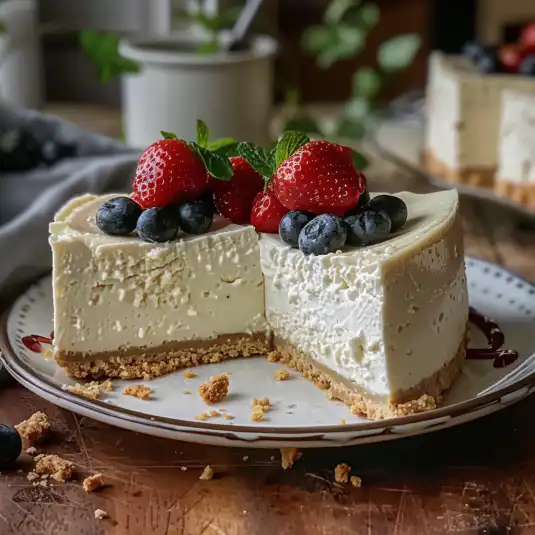
Nutrition at a Glance
- Lower in Calories: By substituting a portion of cream cheese with Greek yogurt, the overall calorie count per serving is significantly reduced.
- Higher in Protein: Greek yogurt is a protein powerhouse. This recipe boasts a considerable protein boost, making it more satisfying and helpful for muscle maintenance and satiety.
- Reduced Fat Content: Using non-fat or reduced-fat Greek yogurt, and potentially light cream cheese, lowers the total fat and saturated fat content.
- Source of Calcium: Dairy products like yogurt and cream cheese are good sources of calcium, which is important for bone health.
- Controlled Sugar: While sweeteners are still necessary for taste, you have control over the amount used, allowing for a healthier sugar profile compared to many store-bought desserts.
How to Serve It
- Fresh Berries: A classic pairing that offers natural sweetness and a beautiful visual contrast. Strawberries, blueberries, raspberries, or a mix are always a good choice.
- Fruit Compote or Sauce: Warm berry compotes, cherry sauce, or even a simple drizzle of raspberry coulis can elevate the cheesecake. Make your own to control the sugar content.
- Unsweetened Whipped Cream: A dollop of light, unsweetened whipped cream complements the richness without adding excessive sugar.
- A Sprinkle of Cinnamon: A light dusting of cinnamon can add warmth and depth to the flavor.
- Chocolate Drizzle: For a more decadent feel, a light drizzle of melted dark chocolate can be added.
- A squeeze of Lemon: A touch of fresh lemon juice or a tiny sliver of lemon zest can brighten the flavors.
The beauty of this cheesecake is its adaptability. You can keep it simple and let the cheesecake flavor shine, or get creative with toppings.
Common Mistakes
- Overmixing the Filling: Incorporating too much air into the batter, especially when adding eggs, can cause the cheesecake to puff up excessively in the oven and then crack as it cools. Mix until just combined at each stage.
- Opening the Oven Door Too Often: Sudden temperature fluctuations are the enemy of a smooth cheesecake. Resist the urge to peek too frequently, as this can disrupt the baking process and contribute to cracking.
- Cooling Too Quickly: A rapid temperature change from a hot oven to a cool kitchen is a common cause of cracks. The gradual cooling process described in the recipe is essential.
- Not Using Room Temperature Ingredients: Cold cream cheese and eggs won’t emulsify properly, leading to a lumpy or grainy texture. Ensure these ingredients are at room temperature for a smooth batter.
- Underbaking: While you don’t want to overbake, an underbaked cheesecake will be too soft and won’t set properly, even after chilling. Look for the slight wobble in the center.
- Not Chilling Long Enough: Cheesecake needs time to set properly. Rushing the chilling process will result in a soft, unset dessert. Patience is key here.
Understanding these common mistakes is an important part of the learning process when baking any type of cheesecake.
Storage and Reheating
- Refrigeration: Once completely cooled, cover the cheesecake loosely with plastic wrap or aluminum foil. Store it in the refrigerator. It’s best to place it on a flat surface in the fridge to prevent any toppings from shifting.
- Duration: Homemade cheesecake typically stays fresh in the refrigerator for about 3-4 days when stored properly.
- Freezing (Optional): If you need to store it for longer, you can freeze cheesecake. It’s best to freeze individual slices for easier thawing. Wrap each slice tightly in plastic wrap, then in aluminum foil, and place in a freezer-safe bag or container. Frozen cheesecake can last up to 2-3 months.
- Thawing Frozen Cheesecake: Thaw frozen slices overnight in the refrigerator before serving. Do not thaw at room temperature, as this can affect the texture and introduce condensation.
When it comes to reheating, cheesecake is typically served cold or at room temperature. If you have frozen it, the thawing process brings it back to a chilled state.
Leftover Ideas
- Cheesecake Parfait: Crumble leftover cheesecake into a glass. Layer it with Greek yogurt, fresh berries, and a sprinkle of granola for a decadent breakfast or snack.
- Cheesecake “Crumbles”: If the cheesecake is a little too soft to slice neatly, crumble it into a bowl with some berries and a dollop of Greek yogurt. It’s like a deconstructed cheesecake treat.
- Cheesecake Smoothie: Blend a slice of cheesecake with milk (dairy or non-dairy), a banana, and a few ice cubes for a rich, creamy smoothie. You might even add a touch of protein powder to boost it further.
- Cheesecake “Milkshake”: Similar to a smoothie, but with a little more indulgence. Blend cheesecake with milk and a touch of sweetener (if needed) until smooth.
- Add to Oatmeal: Chop up a small piece of cheesecake and stir it into your morning oatmeal in the last minute of cooking. It adds a creamy, sweet surprise.
- Cheesecake Bites: If you have just a small amount left, cut it into bite-sized cubes and enjoy them as a sweet afternoon pick-me-up.
Don’t let any of this delicious cheesecake go to waste! These simple ideas can help you enjoy its wonderful flavors and textures in new and exciting ways, even after the initial dessert occasion has passed.
Low-Calorie High-Protein Greek Yogurt Cheesecake Recipe for Healthy Desserts
- Total Time: 5 hours 25 minutes (includes chilling)
- Yield: 10 servings 1x
- Diet: Vegetarian
Description
Discover a healthier way to enjoy cheesecake with this Low-Calorie High-Protein Greek Yogurt Cheesecake Recipe. Creamy, delicious, and packed with protein, it’s a guilt-free dessert.
Ingredients
- 1 ½ cups graham cracker crumbs
- 2 tablespoons unsalted butter, melted
- 2 tablespoons granulated sugar (for the crust)
- Pinch of salt
- 16 ounces non-fat plain Greek yogurt, full-fat plain Greek yogurt, or a blend, brought to room temperature
- 8 ounces softened cream cheese, light or regular
- ½ cup granulated sugar (for the filling)
- 2 large eggs, at room temperature
- 1 teaspoon vanilla extract
- ½ teaspoon lemon zest (optional)
Instructions
- 1. Preheat oven to 350°F (175°C). Grease a 9-inch springform pan.
- 2. Mix graham cracker crumbs, melted butter, 2 tbsp sugar, and salt. Press into pan. Bake crust for 8-10 minutes until golden. Let cool. Reduce oven temperature to 325°F (160°C).
- 3. Beat softened cream cheese until smooth. Gradually add ½ cup sugar and beat until fluffy.
- 4. Beat in Greek yogurt until smooth.
- 5. Add eggs one at a time, beating on low speed until just combined.
- 6. Stir in vanilla extract and lemon zest (if using).
- 7. Pour filling over cooled crust.
- 8. For a water bath: Wrap the springform pan tightly in foil and place in a larger roasting pan. Add hot water halfway up the sides of the springform pan.
- 9. Bake at 325°F (160°C) for 45-60 minutes, until edges are set and center is slightly wobbly.
- 10. Turn off oven, crack door open, and let cheesecake cool in oven for 1 hour.
- 11. Remove from oven and water bath, let cool completely on a wire rack.
- 12. Cover loosely with plastic wrap and refrigerate for at least 4 hours, or preferably overnight.
Notes
Store covered in the refrigerator for up to 3-4 days. For longer storage, freeze individual slices tightly wrapped in plastic wrap and foil for up to 2-3 months. Thaw frozen slices overnight in the refrigerator.
- Prep Time: 25 minutes
- Cook Time: 60 minutes
- Category: Dessert
- Method: Baking
- Cuisine: American
Nutrition
- Serving Size: 1 serving
- Calories: Estimate: 200-250 kcal (will vary based on ingredients)
- Sugar: Estimate: 15-20g (will vary based on ingredients)
- Sodium: Estimate: 150-200mg (will vary based on ingredients)
- Fat: Estimate: 8-12g (will vary based on ingredients)
- Carbohydrates: Estimate: 20-25g (will vary based on ingredients)
- Fiber: Estimate: 1-2g (will vary based on ingredients)
- Protein: Estimate: 10-15g (will vary based on ingredients)