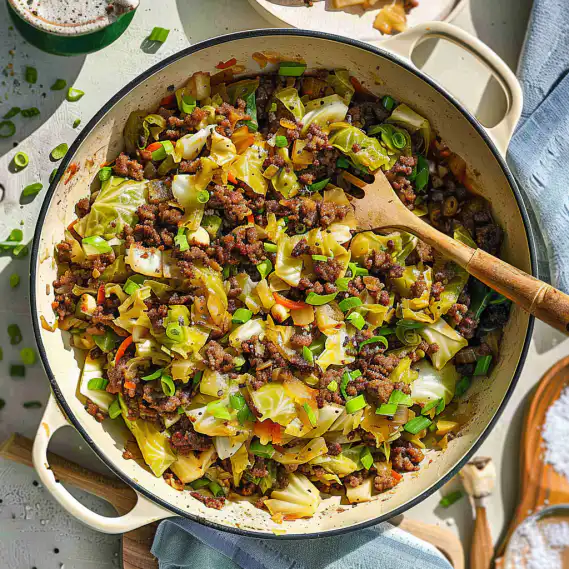
Irish Ground Beef & Cabbage is a weeknight lifesaver, delivering a comforting and flavorful meal in about 30 minutes. It’s the kind of dish that feels both nourishing and satisfying, familiar yet something you’ll want to make again and again.
Why This Irish Ground Beef & Cabbage Works
This dish shines because it’s a complete meal that comes together quickly with minimal fuss. The savory ground beef, tender cabbage, and aromatic seasonings meld beautifully, creating a satisfying harmony of flavors and textures.
Ingredients
- 1 tablespoon olive oil or other cooking oil
- 1 pound lean ground beef (85/15 or 90/10 works well)
- 1 medium yellow onion, chopped
- 2 cloves garlic, minced
- 1/2 teaspoon dried thyme
- 1/4 teaspoon dried rosemary
- Salt and freshly ground black pepper to taste
- 1/2 head of green cabbage (about 4-5 cups), thinly sliced or shredded
- 1/2 cup beef broth or water
- 1 tablespoon Worcestershire sauce
- 1 teaspoon Dijon mustard (optional, but adds a nice tang)
- Fresh parsley, chopped, for garnish (optional)
Gathering your ingredients before you begin will make the cooking process smooth and efficient. Having everything measured and ready to go is a key part of making this a truly 30-minute meal.
How to Make It
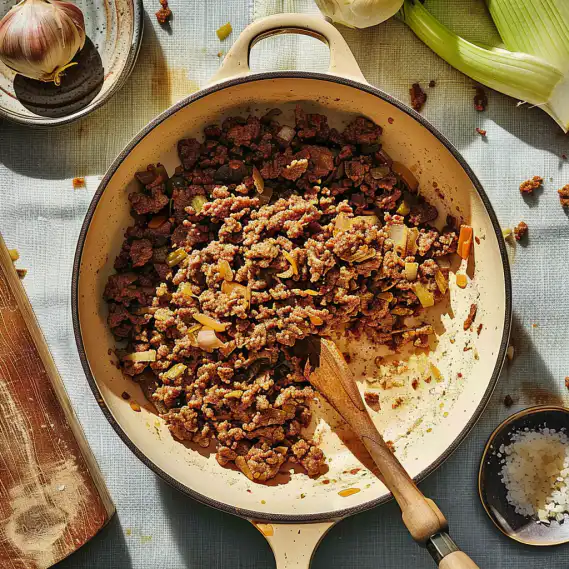
- Brown the Beef: Heat the olive oil in a large skillet or Dutch oven over medium-high heat. Add the ground beef and break it up with a spoon. Cook, stirring occasionally, until the beef is browned and no longer pink. This step is crucial for developing flavor.
- Sauté Aromatics: Drain off any excess fat from the skillet. Add the chopped onion to the skillet with the browned beef. Cook, stirring, until the onion is softened and translucent, about 4-5 minutes. Onions release their natural sugars when cooked, adding a subtle sweetness to the dish and a depth of flavor that complements the beef.
- Add Garlic and Herbs: Stir in the minced garlic, dried thyme, and dried rosemary. Cook for about 1 minute more until fragrant, being careful not to burn the garlic. Season with salt and pepper to your liking. Garlic and herbs are aromatics that build the foundational flavor of many dishes.
- Incorporate Cabbage: Add the thinly sliced cabbage to the skillet. It might seem like a lot, but it will wilt down significantly as it cooks. Cabbage has a high water content, and its volume reduces dramatically when heated.
- Add Liquids and Seasonings: Pour in the beef broth (or water), Worcestershire sauce, and Dijon mustard (if using). Stir everything together to combine.
- Simmer and Wilt: Bring the mixture to a simmer. Reduce the heat to medium-low, cover the skillet, and let it cook for about 10-15 minutes, or until the cabbage is tender and has wilted.
- Adjust Seasoning and Serve: Taste the mixture and adjust salt and pepper if needed. Serve hot, garnished with fresh parsley if desired. Tasting and adjusting seasoning is a critical final step that ensures the dish is perfectly balanced for your palate.
This straightforward process results in a hearty, flavorful dish that’s ready in no time. The beauty of this recipe lies in its simplicity and efficiency, making it an excellent choice for busy evenings when you want a satisfying meal without a lot of effort.
Nutrition at a Glance
- Protein: Ground beef provides a good source of high-quality protein, essential for muscle repair and satiety. Protein is a vital macronutrient that helps you feel full and satisfied, making this dish a good choice for a balanced diet.
- Fiber: Cabbage is a cruciferous vegetable, offering dietary fiber which aids digestion and contributes to a feeling of fullness. Fiber is important for digestive health and can help regulate blood sugar levels.
- Vitamins & Minerals: Cabbage is a good source of Vitamin C, Vitamin K, and various B vitamins. Onions and garlic also contribute beneficial compounds. Vitamin C is an antioxidant, while Vitamin K is important for blood clotting and bone health.
- Low in Calories: When made with lean ground beef, this dish is relatively low in calories, making it a good option for those watching their intake. This makes it a guilt-free indulgence that still provides essential nutrients.
- Versatile Sodium Content: Sodium levels can be adjusted by controlling the salt added and the type of beef broth used. Opting for low-sodium broth is a good practice for those monitoring their sodium intake.
While this is a satisfying meal on its own, it’s also a great base for adding more vegetables or serving alongside other healthy components. Understanding the nutritional profile helps in making informed choices about how to incorporate it into your diet.
How to Serve It
- As a Standalone Meal: Its heartiness makes it a complete and satisfying meal right out of the skillet. The combination of protein and vegetables offers a balanced eating experience, perfect for when you want something quick and wholesome.
- With Mashed Potatoes: A classic pairing, creamy mashed potatoes soak up the savory juices beautifully. Consider making a lighter version with cauliflower mash for a twist. The starchiness of the potatoes complements the richness of the beef and cabbage.
- Over Rice or Quinoa: For added substance and a different texture, serve it over a bed of cooked white or brown rice, or fluffy quinoa. This is a great way to stretch the meal for more servings and add whole grains to your plate.
- With Crusty Bread: A hunk of crusty bread is ideal for scooping up every last bit of the delicious mixture. A hearty soda bread would also be a fitting accompaniment, further enhancing the Irish theme.
- As a Filling for Baked Potatoes: Scoop out some of the fluffy potato and fill it with your beef and cabbage mixture for a loaded baked potato. This transforms it into a more substantial and comforting meal.
- With a Side Salad: A simple green salad with a light vinaigrette can provide a fresh contrast to the richness of the beef and cabbage. The crispness of the salad greens balances the tender cooked vegetables.
- As a Filling for Shepherd’s Pie (Untraditional Twist): While not traditional, you could use this as a base layer for a deconstructed Shepherd’s Pie topped with mashed potatoes. This offers a delightful variation on a classic comfort food.
The beauty of this dish lies in its adaptability; it pairs well with a wide variety of accompaniments, allowing you to tailor it to your preferences and what you have on hand. Whether you’re looking for a simple weeknight dinner or something a bit more substantial.
Common Mistakes
- Overcrowding the Pan: When browning the beef, ensure you’re not adding too much at once. Overcrowding will cause the fat to steam rather than brown, leading to a less flavorful meat. Cook in batches if necessary. Proper browning is key to developing deep flavors from the beef.
- Burning the Garlic: Garlic is fragile. Adding it too early or cooking it over too high heat can result in a bitter taste that impacts the whole dish. Add it in the last minute of sautéing the onions. Its delicate flavor can easily turn unpleasant if overcooked.
- Not Cooking Cabbage Long Enough: Cabbage can take some time to soften. If you undercook it, you’ll end up with tough, chewy pieces. Allow sufficient simmering time for it to become tender. The goal is tender, not raw, cabbage for this dish.
- Skipping the Worcestershire Sauce (or Substitutions): Worcestershire sauce adds a complex layer of umami and tang that is hard to replicate. While you can omit it, the flavor profile will be less rich. It’s a small ingredient that provides a significant flavor boost.
- Not Seasoning Adequately: Salt and pepper are crucial for bringing out the flavors. Taste and adjust seasoning at the end, as the cabbage will absorb a lot of the savory notes. Seasoning is often an afterthought, but it’s vital for a well-balanced dish.
- Using Pre-shredded Cabbage: While convenient, pre-shredded cabbage often contains preservatives that can affect the texture and flavor. Slicing your own cabbage from a fresh head yields better results. Fresh ingredients generally offer superior taste and texture.
- Using Too Much Liquid: Adding too much beef broth can make the dish watery. The goal is to have enough liquid to steam the cabbage tender and create a light sauce, not a soup. Aim for just enough to moisten and tenderize without creating excess liquid.
Avoiding these minor errors will help ensure your Irish Ground Beef & Cabbage is delicious and has the right texture and flavor. Paying attention to these details can elevate the dish from good to great.
You might love this: Quick and Tasty Dirty Rice with Ground Beef
Storage and Reheating
- Storage: Allow the cooked beef and cabbage mixture to cool completely. Transfer it to an airtight container. It will keep well in the refrigerator for 3 to 4 days. Ensure the container is sealed properly to prevent moisture loss or contamination. Cooling food before refrigerating helps prevent creating a warm environment that could encourage bacterial growth.
- Reheating (Stovetop): The best method for reheating is often on the stovetop. Transfer the leftovers to a skillet over medium heat. Add a tablespoon or two of water or beef broth to help loosen the mixture and prevent sticking. Stir occasionally until heated through. This method helps retain moisture and flavor, often yielding the best results.
- Reheating (Microwave): For a quicker option, place the leftovers in a microwave-safe dish. Cover loosely with a damp paper towel to help keep it moist. Microwave on medium power in 30-second to 1-minute intervals, stirring between each, until heated through.
- Freezing: While this dish freezes reasonably well, the texture of the cabbage might change slightly upon thawing. If you plan to freeze it, cool completely, transfer to a freezer-safe container or heavy-duty freezer bag, and freeze for up to 2-3 months.
Storing and reheating correctly preserves the texture and taste of your delicious meal. It’s a practical aspect of home cooking that ensures you can enjoy your culinary efforts over several days.
Leftover Ideas
- Shepherd’s Pie Base: Use the beef and cabbage mixture as the hearty filling for a quick Shepherd’s Pie. Top with mashed potatoes (or even mashed sweet potatoes) and bake until golden and bubbly.
- Stuffed Bell Peppers: Mix the leftovers with a little cooked rice and stuff into hollowed-out bell peppers. Top with a little cheese (if you like) and bake until the peppers are tender and the filling is hot.
- Savory Cabbage Rolls: Use large, blanched cabbage leaves to wrap a portion of the beef and cabbage mixture, along with some cooked rice. Simmer these rolls in a simple tomato sauce until the leaves are tender and the filling is heated through.
- Topping for Baked Sweet Potatoes: Scoop out the flesh of a baked sweet potato and mix it with the beef and cabbage. The sweetness of the potato pairs wonderfully with the savory beef and cabbage, creating a balanced and flavorful combination.
- Quick Cabbage Soup: Add some extra beef broth and a few chopped carrots and celery sticks to the leftovers. Simmer until the vegetables are tender, and you have a quick, hearty soup. You can add a little bit of pasta or barley for extra substance.
- Inside Omelets or Frittatas: Chop the leftovers finely and use them as a flavorful filling for a breakfast omelet or a weekend frittata. The savory notes will be a welcome addition to eggs, offering a robust flavor to start your day.
- On Toast or Crackers: Reheat the mixture and spoon it onto toasted bread or crackers for a simple, satisfying snack or light meal. A dollop of sour cream or a sprinkle of cheese can enhance it, turning it into a quick appetizer or a mini meal.
Transforming leftovers into new meals is a great way to reduce food waste and enjoy more variety in your cooking. It encourages creativity in the kitchen and ensures that no delicious food goes to waste.
PrintIrish Ground Beef & Cabbage – Hearty 30-Minute Meal
- Total Time: 30 minutes
- Yield: 4 servings 1x
Description
A quick and comforting Irish Ground Beef & Cabbage recipe that’s perfect for a weeknight meal. Packed with flavor and comes together in about 30 minutes.
Ingredients
- 1 tablespoon olive oil or other cooking oil
- 1 pound lean ground beef
- 1 medium yellow onion, chopped
- 2 cloves garlic, minced
- 1/2 teaspoon dried thyme
- 1/4 teaspoon dried rosemary
- Salt and freshly ground black pepper to taste
- 1/2 head of green cabbage (about 4–5 cups), thinly sliced or shredded
- 1/2 cup beef broth or water
- 1 tablespoon Worcestershire sauce
- 1 teaspoon Dijon mustard (optional)
- Fresh parsley, chopped, for garnish (optional)
Instructions
- 1. Heat olive oil in a large skillet or Dutch oven over medium-high heat. Add ground beef and cook, breaking it up, until browned. Drain excess fat.
- 2. Add chopped onion to the skillet and cook until softened, about 4-5 minutes. Stir in minced garlic, thyme, and rosemary; cook for 1 minute until fragrant. Season with salt and pepper.
- 3. Add thinly sliced cabbage to the skillet. Pour in beef broth, Worcestershire sauce, and Dijon mustard (if using). Stir to combine.
- 4. Bring to a simmer, then reduce heat to medium-low, cover, and cook for 10-15 minutes, or until cabbage is tender. Stir occasionally.
- 5. Taste and adjust seasoning. Serve hot, garnished with parsley if desired.
Notes
Store leftovers in an airtight container in the refrigerator for up to 4 days. Reheat on the stovetop with a splash of liquid or in the microwave.
- Prep Time: 10 minutes
- Cook Time: 20 minutes
- Category: Main Course
- Method: Stovetop
- Cuisine: American
Nutrition
- Serving Size: 1 serving
- Calories: Approximately 350-400 kcal per serving (will vary based on exact ingredients)
- Sugar: Approximately 5-7g
- Sodium: Approximately 400-600mg (will vary based on broth and added salt)
- Fat: Approximately 20-25g
- Carbohydrates: Approximately 10-15g
- Fiber: Approximately 3-4g
- Protein: Approximately 25-30g