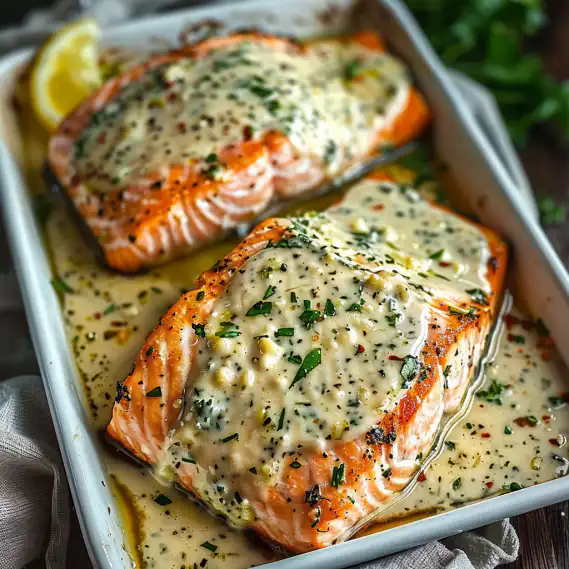
Baked Boursin Salmon with Garlic Herb Salmon is a weeknight favorite in my kitchen. It’s incredibly simple to prepare, uses readily available ingredients, and delivers a burst of flavor that elevates humble salmon into something truly special.
Why This Baked Boursin Salmon Works
This approach to cooking salmon is a winner because the Boursin cheese, with its creamy texture and inherent garlic and herb notes, melts beautifully over the fish. It creates a rich, flavorful sauce that infuses the salmon as it bakes, preventing it from drying out.
Ingredients
- 1.5 pounds salmon fillets (skin on or off, your preference)
- 1 (5.2 ounce) container Boursin Garlic & Fine Herbs cheese, softened
- 2 tablespoons olive oil
- 1 tablespoon fresh lemon juice
- 1 teaspoon dried dill
- 1/2 teaspoon garlic powder
- Salt, to taste
- Freshly ground black pepper, to taste
- Optional: Fresh parsley or chives, chopped for garnish
Let’s take a moment to discuss the ingredients and why they are chosen for this particular recipe.
You might love this: Baked Salmon with Lemon Butter Cream Sauce Recipe
How to Make It
- Preheat your oven to 400°F (200°C). Line a baking sheet with parchment paper or aluminum foil for easy cleanup. This step is crucial to prevent sticking and to make washing up much less of a chore.
- Pat the salmon fillets dry with paper towels. This is a small but important step that helps to create a better texture on the finished salmon by removing excess moisture from the surface.
- In a small bowl, combine the softened Boursin cheese, olive oil, lemon juice, dried dill, and garlic powder. Stir well until thoroughly combined and smooth. If the Boursin is not softening enough, a very short stint in the microwave (10-15 seconds) can help, but be cautious not to overheat it.
- Season the salmon fillets on both sides with salt and freshly ground black pepper. I like to be a little generous with the pepper as it adds a nice biting contrast to the creamy cheese. This initial seasoning directly on the fish is vital as it forms the base flavor profile.
- Carefully spread the Boursin mixture evenly over the top of each salmon fillet, creating a thick, creamy layer. Try to ensure complete coverage for maximum flavor in every bite. You can use a spoon or an offset spatula for this. Really get a nice, thick, and even layer.
- Place the salmon fillets on the prepared baking sheet. Ensure there’s a little space between each fillet to allow for even cooking and to prevent them from steaming each other.
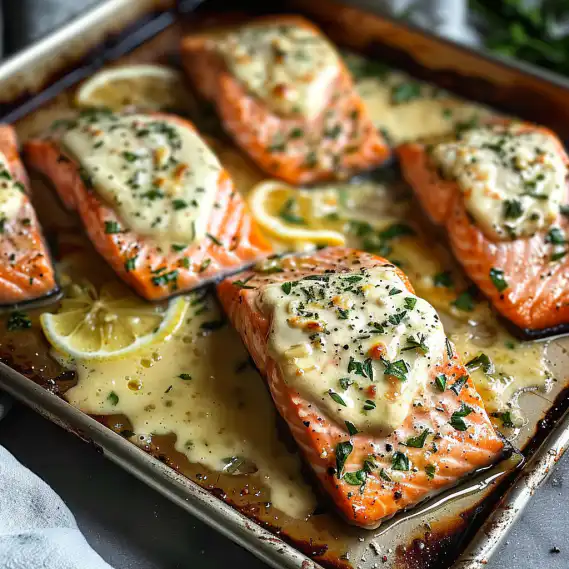
- Bake for 12-18 minutes, or until the salmon is cooked through and flakes easily with a fork. The exact cooking time will depend on the thickness of your salmon fillets and your desired level of doneness. For thinner fillets, start checking around 12 minutes.
- Once cooked, remove the salmon from the oven. You can garnish with fresh herbs if desired. For an extra touch, you can broil for a minute or two at the end of cooking to get a slightly browned, crispy top on the cheese, but watch it very closely to prevent burning.
This method ensures that the salmon cooks gently in its own juices, enhanced by the flavorful cheese topping, resulting in a restaurant-quality dish in your own home.
Nutrition at a Glance
- Calories: Approximately 350-450 calories per serving (depending on salmon fat content and cheese amount). This range accounts for typical portion sizes of salmon fillets and the Boursin cheese topping.
- Protein: A good source of protein, typically offering 25-35 grams per serving. Salmon is a complete protein, essential for muscle building and repair.
- Fat: Contains healthy fats from the salmon and Boursin cheese, generally around 20-30 grams per serving. The majority of fats from salmon are beneficial Omega-3 fatty acids, known for their heart and brain health benefits. The fats from the cheese are saturated and monounsaturated.
- Carbohydrates: Relatively low in carbohydrates, primarily coming from the cheese and minimal added ingredients. A typical serving might contain 3-7 grams of carbohydrates.
- Sodium: Can be moderate due to the Boursin cheese; adjust salt seasoning accordingly. The Boursin cheese is pre-seasoned and can contribute a significant amount of sodium. Those monitoring sodium intake should be mindful of this and use additional salt sparingly.
- Vitamins & Minerals: Salmon is rich in Omega-3 fatty acids, Vitamin D, and B vitamins (like B12, niacin, and B6). The Boursin cheese adds calcium and other minerals from the dairy content.
How to Serve It
- Steamed or Roasted Vegetables: Asparagus, broccoli, green beans, or Brussels sprouts are excellent choices. A simple lemon-butter sauce for the vegetables can complement the salmon beautifully.
- Quinoa or Rice: A fluffy bed of quinoa or a simple pilaf of rice provides a satisfying base for the salmon. Quinoa offers a complete protein and a slightly nutty flavor that pairs well.
- Roasted Potatoes or Sweet Potatoes: Crispy roasted potatoes or tender sweet potato wedges add a comforting starch element. Think about adding herbs like rosemary or thyme to the roasting potatoes for an extra layer of flavor.
- Simple Green Salad: A light, crisp green salad with a vinaigrette dressing offers a refreshing contrast to the richness of the salmon. Use a mix of lettuces, add some cucumber, cherry tomatoes, and perhaps some toasted nuts or seeds for added texture.
- Crusty Bread: Serve with a side of crusty bread for soaking up any extra delicious cheese sauce if you’re feeling indulgent. A good sourdough or a rustic baguette would be perfect for this.
Let the Baked Boursin Salmon be the star of your plate, supported by well-chosen accompaniments that enhance, rather than compete with, its flavors. The goal is to create a cohesive and balanced meal where each component plays its part harmoniously.
Common Mistakes
- Overcooking the Salmon: This is the most frequent error. Salmon cooks quickly. Keep a close eye on it and remove it from the oven as soon as it flakes easily. Overcooked salmon becomes dry and tough, losing its tender, succulent texture. Remember that salmon continues to cook slightly after being removed from the heat due to residual heat.
- Not Softening the Boursin: Using cold, hard Boursin cheese makes it difficult to spread evenly, resulting in uneven flavor distribution and an unappealing texture on top of the salmon. It can lead to dollops of cheese rather than a smooth coating.
- Skipping the Pat-Dry Step: While seemingly minor, patting the salmon dry before adding the cheese helps the topping adhere better and can contribute to a slightly better final texture. Wet fish can cause the topping to slide off or dilute its flavor.
- Using the Wrong Oven Temperature: Baking at too high a temperature can lead to burnt cheese before the salmon is cooked through. Conversely, too low a temperature might result in a longer cooking time and potentially drier fish as it might overcook before the cheese melts and melds properly.
- Not Seasoning Adequately: While Boursin is flavorful, tasting and adjusting the salt and pepper on the salmon itself before topping is important for overall taste balance. The cheese topping is rich, and the underlying salmon needs its own distinct seasoning.
- Overcrowding the Baking Sheet: If you pack too many fillets onto one baking sheet, the salmon will steam rather than bake, resulting in a less desirable texture. Ensure there is adequate space around each fillet for air circulation.
Being mindful of these small details can lead to a significantly improved outcome for your Baked Boursin Salmon, ensuring a moist, flavorful, and beautifully presented dish.
Storage and Reheating
- Storage: Allow the cooked salmon to cool completely at room temperature. Place it in an airtight container and store it in the refrigerator for up to 2-3 days. It’s important for the salmon to cool down before sealing it in a container to prevent condensation from building up, which can make the salmon soggy. I
- Reheating: The best way to reheat is gently to avoid drying out the fish. You can reheat it in a low oven (around 300°F or 150°C) for 5-10 minutes, covered loosely with foil. This allows the salmon to warm through without directly exposing it to dry heat that can cause it to toughen.
Proper storage and gentle reheating will help preserve the moisture and flavor of your leftover Baked Boursin Salmon, making it just as enjoyable as when it was freshly made.
Leftover Ideas
- Salmon Salad: Flake the cold salmon into a bowl. Mix with a little mayonnaise, Dijon mustard, finely chopped celery, red onion, and fresh dill or parsley. Serve on sandwiches, crackers, or over a bed of lettuce. The Boursin will already add a creamy, herbed base, so you might need less mayo than usual. You can also add a squeeze of lemon juice to brighten the flavors.
- Salmon Pasta: Shred or flake the salmon and stir it into cooked pasta with a light cream sauce or pesto. The garlic herb notes from the original dish will blend beautifully into the pasta sauce. You can also add some sautéed spinach or cherry tomatoes for extra color and nutrients. A touch of white wine in the sauce can elevate it further.
- Salmon Omelets or Scrambles: Chop the salmon and add it to your morning eggs for a protein-packed and flavorful start to the day. This is a quick and easy way to add a gourmet touch to breakfast or brunch. The herbs and garlic in the salmon will make a simple omelet feel special.
- Salmon Cakes: Flake the salmon, mix with breadcrumbs, a binder (like egg or a little mayonnaise), and seasonings, then pan-fry into delicious salmon cakes. These are wonderful served with a side of tartar sauce or a fresh salad. Ensure the mixture isn’t too wet; add more breadcrumbs if needed to form patties that hold their shape.
- Salmon and Avocado Toast Topping: Mash or flake the salmon and spread it on toasted bread with mashed avocado. A sprinkle of red pepper flakes or Everything Bagel seasoning can add a nice finishing touch. This makes for a quick and satisfying lunch or snack.
- Salmon Stuffed Bell Peppers or Potatoes: Mix flaked salmon with cooked rice or quinoa, some sautéed vegetables, and a little binder, then stuff into hollowed-out bell peppers or baked potatoes. Bake until the peppers are tender or the potato is heated through.
Transforming your Baked Boursin Salmon into new dishes can be a creative and satisfying way to enjoy its flavors over multiple meals. It’s a testament to how versatile this simple recipe can be, proving that leftovers don’t have to be boring.
Baked Boursin Salmon — Garlic Herb Salmon Dinner
- Total Time: 25 minutes
- Yield: 4 servings 1x
Description
Enjoy moist, flaky salmon topped with creamy Boursin Garlic & Fine Herbs cheese, baked to perfection. A simple and flavorful weeknight meal.
Ingredients
- 1.5 pounds salmon fillets, skin on or off
- 1 (5.2 ounce) container Boursin Garlic & Fine Herbs cheese, softened
- 2 tablespoons olive oil
- 1 tablespoon fresh lemon juice
- 1 teaspoon dried dill
- 1/2 teaspoon garlic powder
- Salt, to taste
- Freshly ground black pepper, to taste
- Optional: Fresh parsley or chives, chopped for garnish
Instructions
- 1. Preheat oven to 400°F (200°C). Line a baking sheet with parchment paper or foil.
- 2. Pat salmon fillets dry with paper towels. Season both sides with salt and pepper.
- 3. In a small bowl, combine softened Boursin cheese, olive oil, lemon juice, dried dill, and garlic powder. Stir until smooth.
- 4. Spread the Boursin mixture evenly over the top of each salmon fillet.
- 5. Place salmon on the prepared baking sheet.
- 6. Bake for 12-18 minutes, or until salmon is cooked through and flakes easily with a fork.
- 7. Garnish with fresh herbs if desired.
Notes
Store leftovers in an airtight container in the refrigerator for up to 2-3 days. Reheat gently in a low oven or skillet to maintain moisture.
- Prep Time: 10 minutes
- Cook Time: 15 minutes
- Category: Main Course
- Method: Baking
- Cuisine: American
Nutrition
- Serving Size: 1 serving
- Calories: 400
- Sugar: 2g
- Sodium: 450mg
- Fat: 28g
- Carbohydrates: 5g
- Fiber: 1g
- Protein: 30g