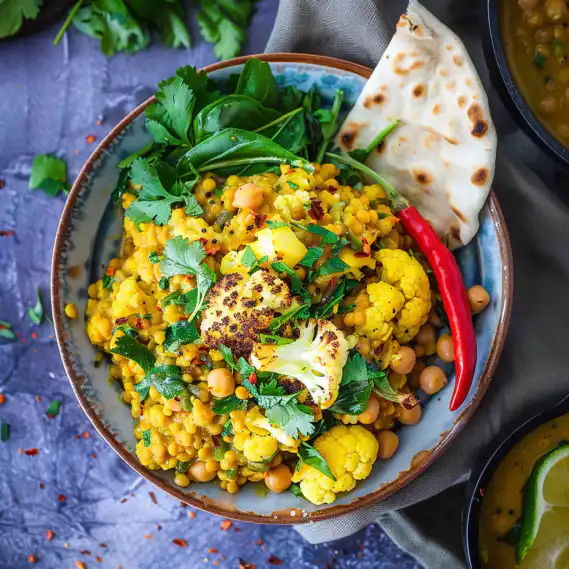
lentil, chickpea, and cauliflower dahl is precisely that for me. It’s nourishing, packed with flavor, and uses ingredients I often have on hand. It’s the kind of meal that feels both wholesome and indulgent, a truly dependable choice when the culinary inspiration just isn’t striking.
Why This Lentil, Chickpea, and Cauliflower Dahl Works
This dahl is a champion for those “what to cook” days because it strikes a beautiful balance. The lentils provide a creamy, hearty base, while the chickpeas add a delightful textural contrast and extra protein.
Ingredients
- 2 tbsp vegetable oil or ghee
- 1 large onion, finely chopped
- 2 cloves garlic, minced
- 1 inch ginger, grated
- 1 tsp ground cumin
- 1 tsp ground coriander
- ½ tsp turmeric powder
- ¼ tsp cayenne pepper (or to taste)
- 1 red chili, deseeded and finely chopped (optional)
- 400g can chopped tomatoes
- 200g red lentils, rinsed
- 500ml vegetable stock
- 200g cauliflower florets
- 400g can chickpeas, drained and rinsed
- 100ml coconut milk (full-fat or light)
- Salt and freshly ground black pepper to taste
- Fresh coriander, chopped, for garnish
- Lemon wedges, for serving
Gathering these ingredients is the first step towards a delicious and comforting meal. I’ve found that having these staples in my pantry makes this recipe accessible on even the busiest weeknights.
How to Make It
- Heat the oil or ghee in a large saucepan or pot over medium heat. Add the chopped onion and cook, stirring occasionally, until softened and lightly golden, about 8-10 minutes.
- Add the minced garlic, grated ginger, ground cumin, ground coriander, turmeric powder, cayenne pepper, and chopped red chili (if using). Cook for another 1-2 minutes, stirring constantly, until fragrant. Be careful not to burn the spices; the heat should be moderate.
- Pour in the chopped tomatoes. Stir well and let them cook for about 5 minutes, allowing the moisture to evaporate slightly and the flavors to meld. This step deepens the tomato flavor and creates a richer sauce.
- Add the rinsed red lentils and vegetable stock. Stir everything together and bring to a simmer. Reduce the heat, cover, and cook for 15 minutes, stirring occasionally to prevent sticking. The lentils will begin to break down and create a creamy consistency.
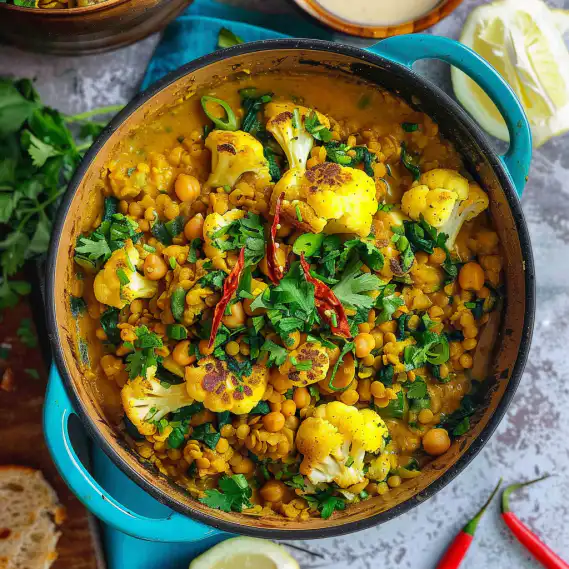
- Stir in the cauliflower florets and the drained and rinsed chickpeas. Continue to simmer, covered, for another 10-15 minutes, or until the cauliflower is tender and the lentils are fully cooked and have a porridge-like consistency. If the dahl becomes too thick, add a little more stock or water.
- Pour in the coconut milk and stir to combine. Cook for a further 2-3 minutes, just to heat through, but do not boil vigorously after adding the coconut milk.
- Season generously with salt and freshly ground black pepper to taste. Taste and adjust any spices as needed. Sometimes, a pinch more salt can really lift the flavors.
- Serve hot, garnished with fresh coriander and with lemon wedges on the side.
Follow these steps, and you’ll find yourself with a wonderfully aromatic and satisfying pot of dahl, ready to be enjoyed.
Nutrition at a Glance
- High in plant-based protein from lentils and chickpeas.
- Good source of dietary fiber, aiding digestion.
- Rich in vitamins and minerals, including iron, folate, and potassium.
- Provides complex carbohydrates for sustained energy.
- Lower in saturated fat, especially when using light coconut milk.
- Cauliflower contributes vitamins C and K, and various antioxidants.
- The spices used offer their own unique health benefits, such as anti-inflammatory properties.
- With careful portion control, it can be a valuable part of a balanced diet.
- The use of vegetable oil or ghee provides healthy fats essential for nutrient absorption.
- Overall, it’s a nutrient-dense meal that feels light yet filling.
- The fiber content helps in maintaining satiety, which can be beneficial for weight management.
- Red lentils are particularly rich in iron, which is important for energy production and preventing anemia.
- The combination of legumes and vegetables makes for a well-rounded nutritional profile.
- Consider the impact of salt added during cooking and adjust as per dietary needs.
- The presence of antioxidants from ginger, garlic, and cauliflower can support overall well-being.
Here’s another great option: How to Cook Lentils
How to Serve It
- Serve hot, straight from the pot, for the best texture and flavor.
- Rice is a classic accompaniment; basmati rice is particularly well-suited.
- Naan bread or roti are excellent for scooping up every last drop of the delicious sauce.
- A dollop of plain yogurt or a swirl of extra coconut milk can add a creamy richness.
- A sprinkle of fresh, chopped coriander is almost essential for freshness and vibrant color.
- Lemon or lime wedges served alongside add a zesty brightness that cuts through the richness.
- A small side salad can provide a refreshing contrast.
- Chutneys or pickles can add an extra layer of flavor and tang.
- The dahl itself is hearty enough to be a main course, but can also work as a side dish.
- Consider a few toasted cashews or slivered almonds sprinkled on top for a little crunch.
- A subtle drizzle of chili oil can add an extra kick for those who enjoy more heat.
- Ensure the serving temperature is warm and inviting, making it comforting and satisfying.
- Portion size can vary depending on whether it’s a main or side; aim for a generous bowl if it’s the star of the meal.
- The visual appeal is enhanced with a vibrant garnish of fresh herbs.
- Don’t be afraid to experiment with serving it alongside other mild curries or lentil dishes for a fuller Indian-inspired meal.
Enjoying this dahl is about more than just eating; it’s about embracing the comfort and warmth it offers, making each serving a moment of culinary delight.
Common Mistakes
- Rushing the onion sauté: Not softening the onions enough means they can remain sharp and overpower the subtler flavors. I always take my time here, until they’re translucent and beginning to turn golden.
- Burning the spices: Adding spices to a hot pan without enough oil or stirring them for too long over high heat can make them bitter. A minute or two of gentle toasting in oil is usually sufficient.
- Overcooked or undercooked lentils: Red lentils break down quickly. If they’re undercooked, they’ll be hard; if overcooked, they can become mushy and gluey. Following the cooking times and stirring is key.
- Not rinsing the lentils: Rinsing removes excess starch, which can prevent the dahl from becoming overly gummy. I never skip this step.
- Adding cauliflower too early: Cauliflower needs less cooking time than lentils. Adding it towards the end ensures it’s tender but not falling apart.
- Skipping the seasoning: Bland dahl is a missed opportunity. Tasting and adjusting salt and pepper at the end is crucial for bringing out all the flavors.
- Using old spices: Ground spices lose their potency over time. If your spices are more than a year or two old, they might need replacing for the best flavor.
- Not stirring enough: Lentils can stick to the bottom of the pot easily, especially as they thicken. Regular stirring prevents this and ensures even cooking.
- Adding too much liquid initially: It’s easier to add more liquid if the dahl is too thick than to rectify a soup that’s too thin. Start with the recommended amount and adjust as needed.
- Boiling vigorously after adding coconut milk: Coconut milk can sometimes curdle if boiled intensely after being added. A gentle simmer is all that’s required to heat it through.
Avoiding these common pitfalls will lead to a much more enjoyable and delicious dahl experience.
Storage and Reheating
- Allow the dahl to cool completely before storing. This is crucial for food safety and to prevent condensation from making it watery.
- Transfer the cooled dahl to an airtight container. This will help to keep it fresh and prevent it from absorbing odors from other foods in the refrigerator.
- Store in the refrigerator for up to 3-4 days. The flavors often meld and deepen further overnight, making it even tastier on the second or third day.
- To reheat, you can gently warm it on the stovetop over low heat, stirring occasionally until heated through. Add a splash of vegetable stock or water if it seems too thick.
- Alternatively, reheat individual portions in the microwave. Cover the container or use a microwave-safe dish with a lid, and heat in 1-2 minute intervals, stirring in between, until piping hot.
- Freezing is also an option. Once cooled, portion the dahl into freezer-safe containers or bags. It can be stored in the freezer for up to 2-3 months.
- When reheating from frozen, it’s best to thaw it in the refrigerator overnight first, then reheat as per the refrigeration instructions. Alternatively, you can reheat directly from frozen on the stovetop, which may take longer and require more liquid.
- Ensure the dahl is piping hot all the way through when reheating to kill any potential bacteria.
- If freezing, consider leaving out any fresh herbs until serving after reheating to maintain their vibrancy.
- Check the consistency after reheating, as some liquids may evaporate. Adjust with a little water or stock if needed.
Proper storage and reheating are key to enjoying this dahl even when you don’t have time to cook from scratch. These methods ensure that the flavor and texture remain delightful, making it a convenient meal option for days to come.
Leftover Ideas
- Dahl Wraps/Pitas: Warm up leftover dahl and spoon it into whole wheat wraps or pita breads with some fresh spinach or lettuce. A dollop of plain yogurt is a nice addition.
- Stuffed Sweet Potatoes: Bake or microwave sweet potatoes until tender. Halve them and scoop out some of the flesh. Mix the leftover dahl with the scooped-out potato flesh and stuff it back into the skins. Reheat until warmed through.
- Dahl Salad Topping: Serve a spoonful of chilled or lightly warmed dahl over a bed of mixed greens, adding a hearty, protein-rich topping to your salad. Incorporate some chopped cucumber, tomatoes, and a light vinaigrette.
- Savory Pancakes/Blinis: Mix leftover dahl with a little flour and egg (or a vegan binder) to create a thicker batter. Pan-fry like small pancakes or blinis and serve as a savory breakfast or appetizer.
- Lentil Shepherd’s Pie Topping: Use the dahl as a flavorful base for a vegetarian shepherd’s pie. Top with mashed sweet potato or cauliflower mash and bake until golden and bubbly.
- Dahl Soup Enhancer: Stir a portion of leftover dahl into a less flavorful vegetable or tomato soup to boost its body, protein, and flavor.
- Quick Curry Base: Use the dahl as a ready-made flavor base for a quick curry. Add extra vegetables, a protein source like tofu or paneer, and a little more liquid if needed.
- Dahl Quesadillas: Spread leftover dahl on one half of a tortilla, sprinkle with cheese (dairy or vegan), fold, and cook in a pan until golden and the cheese is melted.
- Savory Porridge: For a hearty breakfast, warm the dahl and serve it like a savory porridge, perhaps topped with a fried egg or some toasted seeds.
- Dahl Patties/Burgers: Mix the dahl with some breadcrumbs, a binder (like flax egg or regular egg), and perhaps some finely chopped herbs or vegetables. Form into patties and pan-fry or bake.
These creative uses for leftovers mean that not a single drop of this delicious dahl goes to waste, offering a variety of enjoyable meals throughout the week.
When you don’t know what to cook, make this lentil, chickpea and cauliflower dahl recipe
- Total Time: 50 minutes
- Yield: 4 servings 1x
- Diet: Vegetarian
Description
A comforting and flavorful plant-based dahl recipe featuring lentils, chickpeas, and cauliflower, perfect for busy weeknights when you’re unsure what to make. Easy to prepare and highly adaptable.
Ingredients
- 2 tbsp vegetable oil or ghee
- 1 large onion, finely chopped
- 2 cloves garlic, minced
- 1 inch ginger, grated
- 1 tsp ground cumin
- 1 tsp ground coriander
- ½ tsp turmeric powder
- ¼ tsp cayenne pepper (or to taste)
- 1 red chili, deseeded and finely chopped (optional)
- 400g can chopped tomatoes
- 200g red lentils, rinsed
- 500ml vegetable stock
- 200g cauliflower florets
- 400g can chickpeas, drained and rinsed
- 100ml coconut milk (full-fat or light)
- Salt and freshly ground black pepper to taste
- Fresh coriander, chopped, for garnish
- Lemon wedges, for serving
Instructions
- 1. Heat the oil or ghee in a large saucepan or pot over medium heat. Add the chopped onion and cook, stirring occasionally, until softened and lightly golden, about 8-10 minutes.
- 2. Add the minced garlic, grated ginger, ground cumin, ground coriander, turmeric powder, cayenne pepper, and chopped red chili (if using). Cook for another 1-2 minutes, stirring constantly, until fragrant.
- 3. Pour in the chopped tomatoes. Stir well and let them cook for about 5 minutes.
- 4. Add the rinsed red lentils and vegetable stock. Stir everything together and bring to a simmer. Reduce the heat, cover, and cook for 15 minutes, stirring occasionally.
- 5. Stir in the cauliflower florets and the drained and rinsed chickpeas. Continue to simmer, covered, for another 10-15 minutes, or until the cauliflower is tender and the lentils are fully cooked.
- 6. Pour in the coconut milk and stir to combine. Cook for a further 2-3 minutes to heat through.
- 7. Season generously with salt and freshly ground black pepper to taste.
- 8. Serve hot, garnished with fresh coriander and with lemon wedges on the side.
Notes
Store cooled dahl in an airtight container in the refrigerator for up to 3-4 days. Reheat gently on the stovetop or in the microwave. Can be frozen for up to 2-3 months; thaw and reheat thoroughly.
- Prep Time: 15 minutes
- Cook Time: 35 minutes
- Category: Main Course
- Method: Stovetop
- Cuisine: Indian-inspired
Nutrition
- Serving Size: 1 serving
- Calories: Approx. 350-400 per serving (depending on coconut milk and oil used)
- Sugar: Approx. 8g
- Sodium: Varies based on stock and added salt
- Fat: Approx. 12g
- Carbohydrates: Approx. 50g
- Fiber: Approx. 15g
- Protein: Approx. 15g