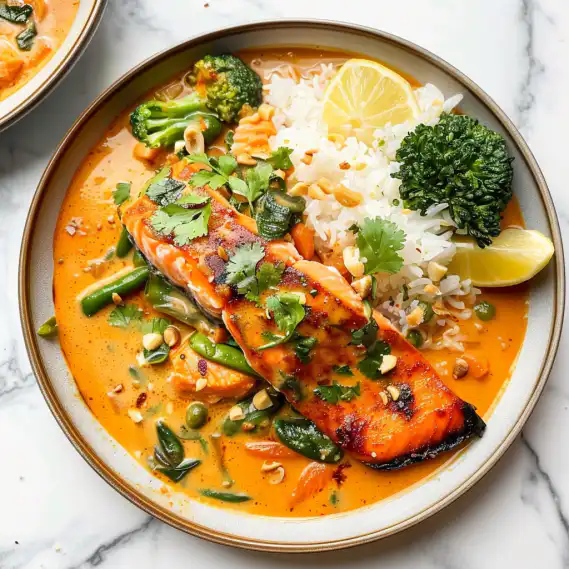
Thai Coconut Salmon Curry is a weeknight wonder, transforming simple ingredients into something truly special. It’s the kind of dish that fills your kitchen with an aromatic promise of good food, satisfying even the most discerning palates.
Why This Thai Coconut Salmon Curry Works
This dish shines because it masterfully balances creamy richness with bright, spicy notes, creating layers of flavor that are deeply satisfying. The tender salmon soaks up the aromatic curry sauce, ensuring every bite is packed with the essence of Southeast Asian cuisine.
Ingredients
- 1.5 lbs salmon fillets, skin removed and cut into 1.5-inch chunks
- 1 tablespoon olive oil or coconut oil, plus more as needed
- 1 large yellow onion, finely chopped
- 3 cloves garlic, minced
- 1-inch piece of fresh ginger, grated
- 1-2 red chilies (like Thai bird’s eye), deseeded and thinly sliced (adjust to spice preference)
- 2 tablespoons red curry paste (use a good quality brand for best flavor)
- 1 teaspoon ground turmeric
- 1 teaspoon ground cumin
- 1 teaspoon curry powder (optional, for added depth)
- 1/4 teaspoon cayenne pepper (optional, for extra heat)
- 1 can (13.5 oz) full-fat coconut milk
- 1/2 cup low-sodium chicken or vegetable broth
- 1 tablespoon fish sauce (or soy sauce for a vegetarian option)
- 1 tablespoon brown sugar or coconut sugar
- Juice of 1/2 lime
- 1 cup broccoli florets
- 1/2 red bell pepper, thinly sliced
- 1/2 yellow bell pepper, thinly sliced
- 1/4 cup chopped fresh cilantro, for garnish
- 1/4 cup chopped fresh basil, for garnish (Thai basil if available)
- Cooked jasmine rice, for serving
Gathering these ingredients is the first step to creating a memorable meal. Having everything prepped and ready makes the cooking process smooth and enjoyable.
How to Make It
- Pat the salmon pieces dry with paper towels and season lightly with salt and pepper. Set aside. This helps create a slightly more seared exterior.
- Heat the olive oil or coconut oil in a large skillet or Dutch oven over medium heat. Add the chopped onion and cook until softened and translucent, about 5-7 minutes. Stir occasionally to prevent sticking.
- Add the minced garlic, grated ginger, and sliced chilies to the skillet. Cook for another 1-2 minutes until fragrant, being careful not to burn the garlic. The aroma at this stage is fantastic, a real signal that something delicious is developing.
- Stir in the red curry paste, ground turmeric, ground cumin, optional curry powder, and optional cayenne pepper. Cook for 1-2 minutes, stirring constantly, until the spices are fragrant and slightly toasted.
- Pour in the full-fat coconut milk and chicken or vegetable broth. Stir to combine, scraping up any browned bits from the bottom of the pan. Bring the mixture to a gentle simmer.
- Add the fish sauce (or soy sauce) and brown sugar (or coconut sugar). Stir well until the sugar is dissolved. Taste the sauce and adjust seasoning as needed. You might want a little more fish sauce for umami, or a touch more sugar for sweetness to balance the spice.
- Add the broccoli florets and sliced bell peppers to the simmering sauce. Cook for 5-7 minutes, or until the vegetables are tender-crisp. We want them cooked through but still with a pleasant bite, not mushy.
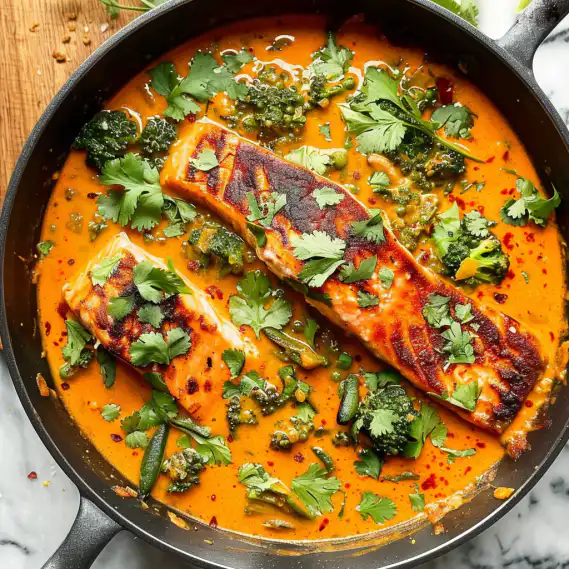
- Gently nestle the salmon chunks into the sauce among the vegetables. Ensure they are mostly submerged. Lower the heat to medium-low, cover the skillet, and let the salmon poach in the sauce for 6-10 minutes, or until cooked through and flakes easily with a fork.
- Just before serving, stir in the fresh lime juice. This adds a crucial burst of brightness that cuts through the richness of the coconut milk and ties all the flavors together.
- Taste the curry one last time and adjust seasonings as needed. You might want another squeeze of lime, a pinch more salt, or a tiny bit more sugar.
- Ladle the Thai Coconut Salmon Curry over fluffy jasmine rice. Garnish generously with fresh cilantro and basil for a vibrant finish.
Following these steps will lead you to a richly flavored and satisfying Thai Coconut Salmon Curry. The process is designed to build flavor layer by layer, resulting in a dish that’s greater than the sum of its parts.
A recipe worth trying: Creamy Lemon Orzo with Salmon Recipe
Nutrition at a Glance
- Rich in Omega-3 fatty acids from the salmon, beneficial for heart health.
- Provides a good source of protein, essential for muscle repair and satiety.
- Coconut milk contributes healthy fats and a creamy texture.
- Vitamins and minerals from the fresh vegetables like broccoli and bell peppers.
- The spices, like turmeric and ginger, offer antioxidant and anti-inflammatory properties.
- Overall, a balanced meal that offers both macronutrients and micronutrients.
How to Serve It
- Serve hot over fluffy jasmine rice. The rice acts as a perfect sponge for the flavorful curry sauce.
- Offer extra lime wedges on the side for those who enjoy an extra citrusy kick.
- A sprinkle of toasted sesame seeds or chopped peanuts can add a delightful crunch and extra layer of flavor.
- Garnish with fresh cilantro and basil just before serving to add vibrant color and fresh aroma.
- Consider a side of simple steamed greens, like bok choy or gai lan, to complement the meal.
This curry is versatile, but the classic pairing with jasmine rice is a winning combination every time.
Common Mistakes
- Overcooking the Salmon: Salmon cooks quickly. If left in the sauce too long, it can become dry and tough. Aim for just until it flakes easily.
- Not Blooming the Spices: Skipping the step of cooking the curry paste and dry spices for a minute or two before adding liquid significantly reduces their flavor potential.
- Using Low-Quality Curry Paste: The curry paste is a flavor powerhouse. Opt for a reputable brand for the best authentic taste.
- Not Tasting and Adjusting Seasoning: The balance of sweet, salty, sour, and spicy is key in Thai cooking. Always taste and adjust the fish sauce, sugar, and lime juice before serving.
- Under-Sautéing Aromatics: Properly sautéing the onions, garlic, and ginger releases their foundational flavors. Rushing this step results in a less developed base.
- Using Water Instead of Broth: While water works in a pinch, broth adds an extra layer of savory depth to the curry sauce.
- Omitting the Lime Juice at the End: This final touch of acidity brightens the entire dish and balances the richness.
Avoiding these common pitfalls will ensure your Thai Coconut Salmon Curry turns out beautifully, capturing the authentic flavors you’re aiming for.
Storage and Reheating
- Storage: Allow the curry to cool completely before transferring it to an airtight container. Store in the refrigerator for up to 3 days. It’s best to store leftover salmon and sauce separately if possible, as salmon can become a bit mushy if it sits in the sauce for too long.
- Reheating Salmon: Gently reheat the salmon pieces in a separate pan over low heat with a little extra sauce or a splash of water or broth, being very careful not to overcook it.
- Reheating Sauce and Vegetables: The sauce and vegetables can be reheated in a saucepan over medium-low heat until warmed through.
- Microwave Reheating: While possible, microwave reheating can sometimes lead to uneven heating and can make the salmon a bit dry. If using a microwave, reheat on a lower power setting in short intervals, stirring as needed.
- Avoid Freezing: Due to the texture of the salmon and coconut milk, this curry doesn’t freeze particularly well. The texture can become watery upon thawing.
Proper storage and reheating are key to enjoying this delicious curry even after the initial meal.
Leftover Ideas
- Salmon and Veggie Fried Rice: Flake the leftover cooked salmon and chop the vegetables. Sauté with cooked rice, soy sauce, a dash of sesame oil, and some scrambled egg for a quick and flavorful fried rice.
- Curry Stuffed Sweet Potatoes: Reheat the curry with the salmon and vegetables, remove the salmon and flake it if needed. Spoon the curry and flaked salmon into baked sweet potato halves.
- Savory Pancakes/Waffles: Mix the flaked salmon and some of the curry sauce into pancake or waffle batter for a unique savory breakfast or brunch.
- Quick Stir-fry Addition: Chop the salmon and vegetables and add them to a quick vegetable stir-fry for added protein and flavor.
- Creamy Salmon Salad: Gently flake the salmon, mix with a spoonful of the curry sauce, a bit of mayonnaise or Greek yogurt, and some chopped celery or onion for a light and flavorful salmon salad for sandwiches or lettuce wraps.
Repurposing leftovers is a fantastic way to minimize food waste and enjoy your culinary creations in new and exciting ways.
Thai Coconut Salmon Curry – Creamy, Spiced, and Bursting with Flavor
- Total Time: 50 minutes
- Yield: 4 servings 1x
Description
A simple yet rich Thai Coconut Salmon Curry recipe featuring flaky salmon, tender vegetables, and a creamy, spiced coconut milk sauce. Easy enough for a weeknight, flavorful enough for guests.
Ingredients
- 1.5 lbs salmon fillets, skin removed and cut into 1.5-inch chunks
- 1 tablespoon olive oil or coconut oil, plus more as needed
- 1 large yellow onion, finely chopped
- 3 cloves garlic, minced
- 1-inch piece of fresh ginger, grated
- 1–2 red chilies (like Thai bird’s eye), deseeded and thinly sliced (adjust to spice preference)
- 2 tablespoons red curry paste (use a good quality brand for best flavor)
- 1 teaspoon ground turmeric
- 1 teaspoon ground cumin
- 1 teaspoon curry powder (optional, for added depth)
- 1/4 teaspoon cayenne pepper (optional, for extra heat)
- 1 can (13.5 oz) full-fat coconut milk
- 1/2 cup low-sodium chicken or vegetable broth
- 1 tablespoon fish sauce (or soy sauce for a vegetarian option)
- 1 tablespoon brown sugar or coconut sugar
- Juice of 1/2 lime
- 1 cup broccoli florets
- 1/2 red bell pepper, thinly sliced
- 1/2 yellow bell pepper, thinly sliced
- 1/4 cup chopped fresh cilantro, for garnish
- 1/4 cup chopped fresh basil, for garnish (Thai basil if available)
- Cooked jasmine rice, for serving
Instructions
- 1. Pat the salmon pieces dry with paper towels and season lightly with salt and pepper. Set aside.
- 2. Heat the olive oil or coconut oil in a large skillet or Dutch oven over medium heat. Add the chopped onion and cook until softened and translucent, about 5-7 minutes.
- 3. Add the minced garlic, grated ginger, and sliced chilies to the skillet. Cook for another 1-2 minutes until fragrant.
- 4. Stir in the red curry paste, ground turmeric, ground cumin, optional curry powder, and optional cayenne pepper. Cook for 1-2 minutes, stirring constantly, until fragrant.
- 5. Pour in the full-fat coconut milk and chicken or vegetable broth. Stir to combine. Bring to a gentle simmer.
- 6. Add the fish sauce (or soy sauce) and brown sugar (or coconut sugar). Stir well until dissolved. Taste and adjust seasoning.
- 7. Add the broccoli florets and sliced bell peppers to the simmering sauce. Cook for 5-7 minutes, or until tender-crisp.
- 8. Gently nestle the salmon chunks into the sauce among the vegetables. Lower the heat to medium-low, cover, and let the salmon poach for 6-10 minutes, or until cooked through.
- 9. Stir in the fresh lime juice just before serving.
- 10. Taste one last time and adjust seasonings as needed.
- 11. Ladle the Thai Coconut Salmon Curry over fluffy jasmine rice. Garnish with fresh cilantro and basil.
Notes
Store leftovers in an airtight container in the refrigerator for up to 3 days. Reheat gently to avoid overcooking the salmon. Does not freeze well.
- Prep Time: 20 minutes
- Cook Time: 30 minutes
- Category: Main Course
- Method: Stovetop
- Cuisine: Thai-inspired
Nutrition
- Serving Size: 1 serving
- Calories: Approximately 550
- Sugar: 10g
- Sodium: 600mg
- Fat: 35g
- Carbohydrates: 20g
- Fiber: 5g
- Protein: 35g