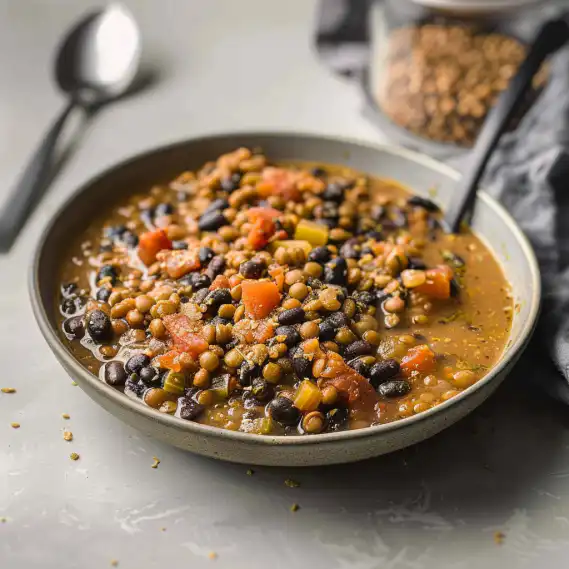
This hearty black bean and lentil soup is a weeknight lifesaver, packed with plant-based protein and comforting flavors. It’s the kind of soup that makes you feel good from the inside out, warming you up and always leaving you satisfied.
Why This Protein Black Bean and Lentil Soup Works
This soup is a champion of simple, wholesome ingredients that come together to create something truly satisfying. The combination of black beans and lentils provides a robust protein punch, making it a filling and nutrient-dense meal.
Ingredients
- 1 tablespoon olive oil
- 1 large yellow onion, chopped
- 2 carrots, peeled and chopped
- 2 celery stalks, chopped
- 3 cloves garlic, minced
- 1 teaspoon ground cumin
- 1 teaspoon smoked paprika
- ½ teaspoon dried oregano
- ¼ teaspoon cayenne pepper (optional, for a touch of heat)
- 1 (15 ounce) can black beans, rinsed and drained
- 1 (15 ounce) can diced tomatoes, undrained
- 1 cup dried brown or green lentils, rinsed and picked over for stones
- 6 cups vegetable broth
- 1 bay leaf
- Salt and freshly ground black pepper to taste
- Juice of ½ lime (optional, for brightness)
- Fresh cilantro or parsley, chopped, for garnish (optional)
Gathering all your ingredients before you begin chopping and cooking is a practice that streamlines the process and helps prevent any forgotten spices or missed steps. This “mise en place” is a hallmark of efficient cooking and ensures a smoother experience from start to finish.
Try this recipe too: Easy Classic Lentil Soup Recipe
How to Make It
- Sauté the Aromatics: Heat the olive oil in a large pot or Dutch oven over medium heat. Add the chopped onion, carrots, and celery. Cook, stirring occasionally, until softened, about 8-10 minutes. This gentle cooking process releases their natural sweetness and lays a flavorful foundation for the soup. Don’t rush this step; it’s crucial for building depth. I often find that covering the pot for a few minutes during this stage helps them soften more evenly.
- Add Garlic and Spices: Stir in the minced garlic, cumin, smoked paprika, oregano, and cayenne pepper (if using). Cook for another minute until fragrant, being careful not to burn the garlic. The toasting of the spices releases their essential oils, intensifying their aroma and flavor. This fragrant burst is one of my favorite parts of making this soup.
- Incorporate Beans, Tomatoes, and Lentils: Add the rinsed and drained black beans, undrained diced tomatoes, and the rinsed lentils to the pot. Stir everything together to coat the lentils and beans with the aromatics and spices. It’s important to ensure the lentils have been thoroughly rinsed and “picked over” to remove any small stones or debris that might have made their way into the bag.
- Liquid and Simmer: Pour in the vegetable broth and add the bay leaf. Bring the mixture to a boil, then reduce the heat to low, cover, and simmer for 30-40 minutes, or until the lentils are tender. Stir occasionally to prevent sticking. The exact time will depend on the age and type of lentils you are using. I usually start checking around the 25-minute mark.
- Season and Finish: Remove and discard the bay leaf. Season the soup generously with salt and freshly ground black pepper to taste. If you like, stir in the fresh lime juice for a touch of acidity that brightens all the flavors. Taste and adjust seasonings as needed. This is where you can really make the soup sing!
This process, from the initial sauté to the final seasoning, results in a deeply flavorful and satisfying soup that’s remarkably easy to bring together. It’s a structured approach that ensures all the individual components contribute to a harmonious final dish, making it a reliable recipe time and time again.
Nutrition at a Glance
- High in Fiber: Both black beans and lentils are excellent sources of dietary fiber, which is essential for digestive health and can contribute to feelings of fullness, making this soup a satisfying meal option.
- Plant-Based Protein Powerhouse: This soup offers a significant amount of protein from the legumes, making it a filling choice for vegetarians and vegans, or for anyone looking to incorporate more plant-based protein into their diet without relying on animal products.
- Rich in Iron: Legumes are also a good source of iron, a vital mineral for energy production and oxygen transport in the body, helping to combat fatigue and maintain overall vitality.
- Packed with Vitamins and Minerals: The vegetables like onions, carrots, and celery contribute vitamins A (important for vision and immune function), C (an antioxidant), and K (essential for blood clotting), as well as essential minerals like potassium (which helps regulate blood pressure).
- Low in Saturated Fat: When made with vegetable broth and olive oil as directed, this soup is naturally low in saturated fat, promoting heart health and a balanced diet.
- Customizable Sodium Content: You have direct control over the sodium levels by choosing low-sodium vegetable broth and carefully adjusting the salt added at the end of cooking, which is a significant advantage for those monitoring their sodium intake.
- Antioxidant Rich: The variety of vegetables and legumes used contribute various antioxidants, which help protect your cells from damage caused by free radicals.
Understanding the nutritional profile of your meals empowers you to make informed choices about your diet and to appreciate the wholesome benefits of the ingredients you use. This soup is a prime example of how simple, affordable ingredients can pack a powerful nutritional punch.
How to Serve It
- As a Standalone Meal: This soup is hearty enough to be a complete meal on its own, especially when served with a side of crusty bread for dipping. The textures and flavors are robust enough to stand up to being the star of the show.
- With a Dollop of Yogurt or Sour Cream: A spoonful of plain Greek yogurt or sour cream can add a creamy richness and a pleasant tang that contrasts beautifully with the earthy flavors of the soup. For a dairy-free option, avocado crema or a swirl of cashew cream from a food processor offers a similar luxurious texture and richness.
- Topped with Fresh Herbs: A generous sprinkle of chopped fresh cilantro or parsley adds a burst of freshness and vibrant color that elevates the soup visually and aromatically. I often find myself reaching for cilantro, as its bright notes pair exceptionally well with the black beans.
- With a Squeeze of Lime: A final squeeze of fresh lime juice right before serving can elevate the flavors, adding a bright, zesty note that cuts through the richness of the soup and awakens the palate. This small step makes a significant difference.
- Alongside a Simple Salad: For a lighter meal that still provides substantial nutrition, pair this protein-rich soup with a crisp green salad dressed with a simple vinaigrette. The lightness of the salad balances the heartiness of the soup.
- With a Sprinkle of Cheese: A small amount of grated cheddar or Monterey Jack cheese, if not strictly vegan or dairy-free, can add another layer of savory flavor and a pleasant gooeyness that many enjoy. A sharp cheddar offers a nice counterpoint to the earthy beans.
- Crumbled Tortilla Chips: For added crunch and a Tex-Mex flair, a sprinkle of crushed tortilla chips on top can be a delightful addition, especially if you’re serving this for a casual lunch or dinner.
Serving this soup with these simple additions can transform it from a comforting bowl into a more complete and appealing dining experience, catering to various preferences and tastes. Each suggestion offers a way to enhance the texture, flavor, or presentation of the soup, making it suitable for different occasions.
Common Mistakes
- Not Rinsing the Lentils: Lentils can sometimes have a dusty coating or small debris from processing. Rinsing them thoroughly under cold water in a fine-mesh sieve ensures a cleaner flavor and removes any unwanted particles that could affect the soup’s texture.
- Using Old or Stale Spices: Expired or poorly stored spices lose their potency and their vibrant flavors. Fresh, aromatic spices will make a world of difference in the overall flavor profile of your soup, so check the freshness of your cumin, paprika, and oregano.
- Overcooking or Undercooking the Lentils: Lentils can go from perfectly tender to mushy very quickly, especially if they are older. Keep an eye on them during the simmering process and err on the side of slightly less cooked if you plan on reheating, as they will continue to soften. Undercooked lentils will remain hard and grainy.
- Forgetting to Remove the Bay Leaf: While bay leaves are invaluable for imparting subtle, aromatic notes during cooking, they are not meant to be eaten. Their texture is unpleasant and they can be a choking hazard. It’s crucial to remove and discard them before serving.
- Under-Seasoning: Beans and lentils absorb a lot of flavor and can blandly disappoint if not seasoned adequately. Don’t be shy with salt and pepper. Taste and adjust seasoning at the end of cooking, and even do a quick taste test midway through simmering to ensure the broth is developing the desired savory depth.
- Burning the Garlic: Adding minced garlic too early in the sautéing process, especially over too high heat, can cause it to burn, resulting in a bitter taste throughout the soup. It should be added towards the end of the aromatic sautéing.
- Not Allowing Flavors to Meld: While delicious immediately, this soup truly shines after a day or two. Rushing to refrigerate or discard leftovers without considering their potential for enhanced flavor is a missed opportunity.
Being aware of these common pitfalls can help you achieve a more successful and delicious outcome with your Protein Black Bean and Lentil Soup every time you make it. They are simple points to remember that contribute significantly to the final quality of the dish.
Storage and Reheating
- Refrigeration: Allow the soup to cool completely to room temperature before transferring it to an airtight container. It can be stored safely in the refrigerator for up to 4 to 5 days. The flavors tend to meld and deepen the longer it sits, making it even better on the second or third day, so don’t be surprised if leftovers are your favorite.
- Freezing: This soup freezes exceptionally well, making it a fantastic option for batch cooking and having healthy meals on hand. Once cooled, portion it into freezer-safe containers or heavy-duty freezer bags. It can be stored in the freezer for up to 3 months. It’s a good idea to leave a little headspace in rigid containers, as liquids expand when frozen, which can crack the container.
- Reheating on the Stovetop: The best way to reheat this soup to preserve its texture and flavor is in a pot over medium-low heat. Stir occasionally to ensure even heating and to prevent any sticking to the bottom of the pot, which can scorch. You may need to add a splash of water or vegetable broth if the soup has become too thick during storage or freezing.
- Reheating in the Microwave: For quicker reheating, ladle a portion of the soup into a microwave-safe bowl. Cover loosely with a microwave-safe lid or plastic wrap, leaving a small vent for steam. Heat in 30-second intervals, stirring thoroughly in between each interval, until the soup is heated through. Be mindful that microwave heating can sometimes lead to uneven temperatures, so ensure it’s thoroughly mixed.
- Thawing Frozen Soup: When you’re ready to use frozen soup, the best method for thawing is to transfer it from the freezer to the refrigerator the night before. This allows for a gradual and safe thaw. Alternatively, you can reheat it directly from frozen over low heat on the stovetop, though this will take longer.
Proper storage and reheating techniques ensure that your delicious soup remains safe to eat and retains its excellent flavor and texture, so you can enjoy it at its best, even days or months later.
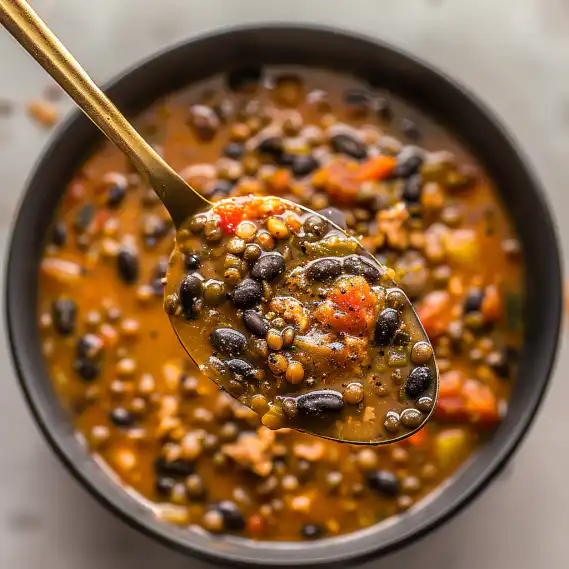
Leftover Ideas
- Soup Base for Other Dishes: You can use the leftover soup as an incredibly flavorful base for a chili or a heartier stew. Simply add additional ingredients like diced bell peppers, corn, or even some cooked grains, and adjust the seasonings for a completely new dish. A pinch of chili powder or a dash of your favorite hot sauce can transform it.
- Savory Filling for Wraps or Quesadillas: Mash some of the beans and lentils from the leftover soup (or blend a portion of the soup for a smoother texture) to use as a wonderfully savory and protein-rich filling for whole wheat wraps or quesadillas. Add some cheese (dairy or vegan) and other desired fillings like spinach or sautéed mushrooms.
- Layered “Dip” or Nacho Topping: Serve warmed leftover soup over a generous bed of tortilla chips as a base for a hearty, layered dip or as a topping for loaded nachos. Complement it with your favorite nacho toppings – salsa, guacamole, jalapeños, shredded lettuce, and a sprinkle of vegan cheese or a dollop of sour cream.
- To Enhance Other Grains: Stir leftover soup into cooked quinoa, rice, or even couscous for a more protein-rich and flavorful side dish. This is a simple yet effective way to boost the nutritional content and add a delicious, savory element to your grains, turning a plain side into something more substantial and exciting.
- Thickened for a “Bean Dip”: If your leftover soup has thickened to a consistency that’s more like a dip, you can simply serve it as is with sturdy crackers, pita bread, or an assortment of fresh vegetable sticks like carrots, celery, and bell pepper strips. For a smoother dip, pulse a portion of it in a food processor.
- Souped-Up Salad Dressing: For an unconventional but delightful use, blend a small amount of the leftover soup with a bit of olive oil, vinegar (such as apple cider or red wine vinegar), water, and your favorite herbs to create a uniquely flavored, nutrient-dense salad dressing. Experiment with the consistency by adding more or less liquid.
- Added to Pasta Sauces: Stir a ladleful or two of leftover soup into your favorite tomato-based pasta sauce. It will add body, protein, and a deeper, more complex flavor to your pasta dish.
Repurposing leftovers is a fantastic way to reduce food waste and get even more enjoyment out of your cooking. These ideas offer creative and delicious alternatives to simply eating the soup as is, breathing new life into yesterday’s meal.
PrintProtein Black Bean and Lentil Soup
- Total Time: 60 minutes
- Yield: 6 servings 1x
- Diet: Vegetarian
Description
A hearty and healthy plant-based soup packed with protein from black beans and lentils. Easy to make, flavorful, and perfect for weeknight meals.
Ingredients
- 1 tablespoon olive oil
- 1 large yellow onion, chopped
- 2 carrots, peeled and chopped
- 2 celery stalks, chopped
- 3 cloves garlic, minced
- 1 teaspoon ground cumin
- 1 teaspoon smoked paprika
- ½ teaspoon dried oregano
- ¼ teaspoon cayenne pepper (optional)
- 1 (15 ounce) can black beans, rinsed and drained
- 1 (15 ounce) can diced tomatoes, undrained
- 1 cup dried brown or green lentils, rinsed and picked over for stones
- 6 cups vegetable broth
- 1 bay leaf
- Salt and freshly ground black pepper to taste
- Juice of ½ lime (optional)
- Fresh cilantro or parsley, chopped, for garnish (optional)
Instructions
- Heat olive oil in a large pot or Dutch oven over medium heat. Add onion, carrots, and celery. Cook until softened, about 8-10 minutes.
- Stir in minced garlic, cumin, smoked paprika, oregano, and cayenne pepper (if using). Cook for 1 minute until fragrant.
- Add rinsed black beans, diced tomatoes (undrained), and rinsed lentils. Stir to combine.
- Pour in vegetable broth and add the bay leaf. Bring to a boil, then reduce heat, cover, and simmer for 30-40 minutes, or until lentils are tender.
- Remove and discard bay leaf. Season with salt and pepper to taste. Stir in lime juice if desired. Garnish with fresh herbs before serving.
Notes
Store cooled soup in an airtight container in the refrigerator for up to 4-5 days. It also freezes well for up to 3 months. Reheat gently on the stovetop or in the microwave.
- Prep Time: 15 minutes
- Cook Time: 45 minutes
- Category: Soup
- Method: Stovetop
- Cuisine: American
Nutrition
- Serving Size: 1 serving
- Calories: Approx. 300-350
- Sugar: 8-12g
- Sodium: Varies (use low-sodium broth)
- Fat: 5-8g
- Carbohydrates: 50-60g
- Fiber: 15-20g
- Protein: 15-20g
1 thought on “Protein Black Bean and Lentil Soup – Healthy & Easy Recipe”