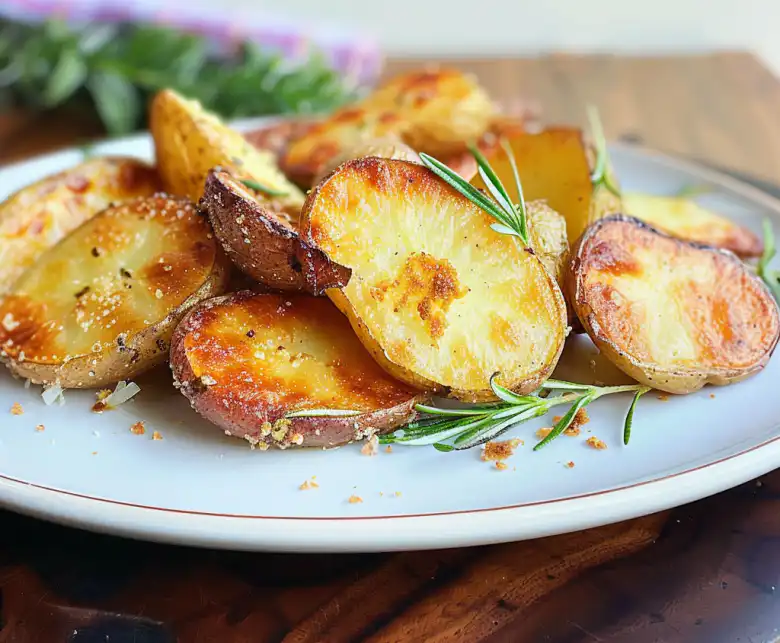
These oven roasted large melting potatoes deliver everything you want in a side dish – crispy golden exteriors that give way to impossibly fluffy, creamy centers. I’ve been making this recipe for years, and it never fails to impress at family dinners and holiday gatherings.
Why This Oven Roasted Large Melting Potatoes Recipe Works
The secret lies in the two-stage cooking process and proper potato selection. Using large russet potatoes ensures you get substantial portions with maximum fluffiness inside. The initial high-heat searing creates that coveted crispy crust, while the lower temperature finish allows the interiors to become tender and creamy without overcooking.
Ingredients
- 6 large russet potatoes (8-10 oz each), peeled
- 1/3 cup olive oil
- 1 1/2 cups chicken broth (or vegetable broth for vegetarian option)
- 4 tablespoons butter, cut into small pieces
- 3 cloves garlic, minced
- 2 sprigs fresh thyme
- 2 sprigs fresh rosemary
- 1 teaspoon coarse kosher salt
- 1/2 teaspoon freshly ground black pepper
- 1/2 teaspoon paprika
- 1/4 teaspoon onion powder
- Fresh chives, chopped (for garnish)
- Flaky sea salt (for finishing)
This ingredient list creates the foundation for potatoes that are both visually stunning and incredibly flavorful, with each component serving a specific purpose in building layers of taste and texture.
How to Make It
- Preheat your oven to 450°F (230°C). Position the rack in the center of the oven to ensure even cooking throughout the roasting process.
- Wash and peel the potatoes thoroughly. Cut each potato into thick rounds, approximately 2 inches thick. You should get 2-3 pieces from each large potato, depending on their size.
- Using a small knife or fork, carefully score the top and bottom of each potato round in a crosshatch pattern, making cuts about 1/4 inch deep. This scoring helps the seasonings penetrate and creates more surface area for crisping.
- Pat the potato rounds completely dry with paper towels. Any excess moisture will prevent proper browning and create steam instead of the desired crispy exterior.
- Heat the olive oil in a large, oven-safe skillet or cast-iron pan over medium-high heat. The oil should shimmer but not smoke – this indicates it’s at the right temperature for searing.
- Carefully place the potato rounds in the hot oil, cut-side down. Don’t overcrowd the pan; work in batches if necessary. Sear for 4-5 minutes without moving them, allowing a golden crust to develop.
- Flip the potatoes using a spatula and sear the other cut side for another 4-5 minutes. The potatoes should have a beautiful golden-brown color on both sides at this point.
- While the potatoes are searing, warm the chicken broth in a small saucepan. Keeping the broth warm prevents shocking the hot pan and ensures even cooking.
- Remove the skillet from the stovetop and carefully pour the warm broth around (not over) the potatoes. The broth should come about halfway up the sides of the potato rounds.
- Distribute the butter pieces evenly around the pan, then sprinkle the minced garlic over and around the potatoes. Add the fresh thyme and rosemary sprigs to the broth.
- Season the tops of the potatoes with kosher salt, black pepper, paprika, and onion powder, distributing the seasonings evenly across all pieces.
- Transfer the skillet to the preheated oven and roast for 25-30 minutes, or until the potatoes are tender when pierced with a fork and the tops are golden brown.
- Remove from the oven and let rest for 5 minutes. The resting period allows the potatoes to finish cooking gently and makes them easier to handle.
- Garnish with freshly chopped chives and a pinch of flaky sea salt before serving. The fresh herbs add color and a mild onion flavor that complements the rich, roasted taste.
This methodical approach ensures each potato develops the signature contrast between crispy exterior and melting interior that makes this dish so memorable and satisfying.
A recipe worth trying: Crispy Parmesan Crusted Potatoes
Nutrition at a Glance
- High in potassium, supporting heart health and proper muscle function
- Good source of vitamin C for immune system support
- Provides vitamin B6, essential for brain development and function
- Contains fiber for digestive health, particularly when skins are left on
- Offers complex carbohydrates for sustained energy
- Rich in antioxidants from the herbs and seasonings used
- Naturally gluten-free and can be made dairy-free by omitting butter
- Lower in calories than many creamy potato dishes while remaining satisfying
- Good source of manganese, important for bone health and metabolism
How to Serve It
- Alongside roasted chicken or turkey for a classic comfort food combination
- With grilled or pan-seared steak, where the potato’s richness complements the meat
- As part of a holiday spread with ham, green beans, and cranberry sauce
- Paired with roasted vegetables like carrots, Brussels sprouts, or asparagus
- With baked fish such as salmon, cod, or halibut for a lighter meal
- As a hearty vegetarian main course when served with a fresh salad
- Alongside pork tenderloin or chops with apple sauce or chutney
- With braised short ribs or pot roast for an elevated comfort meal
- As part of a brunch spread with eggs, bacon, and fresh fruit
These potatoes are versatile enough to complement both casual weeknight dinners and special occasion meals, making them a valuable addition to any cook’s repertoire.
Common Mistakes
- Using waxy potatoes instead of russets – waxy varieties won’t achieve the same fluffy interior texture
- Cutting potatoes too thin – thin slices cook too quickly and don’t develop the melting center
- Skipping the searing step – this crucial step creates the golden crust that contrasts with the creamy interior
- Not drying potatoes thoroughly – excess moisture prevents proper browning and creates soggy results
- Overcrowding the pan – this leads to steaming rather than searing and uneven cooking
- Using cold broth – cold liquid shocks the hot pan and disrupts the cooking process
- Pouring broth directly over potatoes – this washes away seasonings and prevents top browning
- Opening the oven door frequently – this releases heat and extends cooking time unnecessarily
- Not allowing proper resting time – cutting into hot potatoes immediately causes them to fall apart
- Overseasoning initially – flavors concentrate during cooking, so start conservatively
Avoiding these common pitfalls will help ensure your potatoes turn out with the ideal texture and flavor balance every time you make this recipe.
Storage and Reheating
- Store leftover potatoes in the refrigerator for up to 3 days in an airtight container
- Separate any remaining broth and store separately to prevent soggy potatoes
- Reheat in a 375°F oven for 15-20 minutes to restore crispiness
- Cover with foil if tops brown too quickly during reheating
- Add a splash of fresh broth if potatoes seem dry when reheating
- Avoid microwave reheating as it makes potatoes soggy and ruins the texture
- Can be frozen for up to 2 months, though texture will be slightly different
- Thaw frozen potatoes overnight in refrigerator before reheating
- Refresh with additional herbs and seasonings after reheating for best flavor
- Let reheated potatoes rest for 5 minutes before serving to ensure even temperature
Proper storage and reheating techniques help maintain the quality and appeal of these potatoes, making them suitable for meal prep and planned leftovers.
Leftover Ideas
- Dice and add to breakfast hash with eggs and vegetables for a hearty morning meal
- Mash roughly and use as a base for shepherd’s pie or cottage pie
- Slice and layer in a breakfast casserole with eggs, cheese, and herbs
- Cube and add to soups or stews for extra substance and flavor
- Use as a topping for grain bowls with roasted vegetables and protein
- Incorporate into potato salad for added depth and texture variation
- Stuff into quesadillas with cheese and vegetables for a unique twist
- Add to frittatas or quiches for a filling breakfast or brunch dish
- Use as a base for loaded potato skins with cheese, bacon, and green onions
- Incorporate into gratins or casseroles for added heartiness
- Serve cold in summer potato salads with fresh herbs and vinaigrette
- Use in breakfast burritos with scrambled eggs, cheese, and salsa
These creative leftover applications help ensure nothing goes to waste while providing delicious meal options throughout the week that showcase the potatoes’ versatility.
Oven Roasted Large Melting Potatoes
- Total Time: 55 minutes
- Yield: 6 servings 1x
- Diet: Vegetarian
Description
Crispy golden exterior with fluffy, creamy centers – these oven roasted potatoes are seared then braised for the ideal texture contrast.
Ingredients
- 6 large russet potatoes (8–10 oz each), peeled
- 1/3 cup olive oil
- 1 1/2 cups chicken broth
- 4 tablespoons butter, cut into pieces
- 3 cloves garlic, minced
- 2 sprigs fresh thyme
- 2 sprigs fresh rosemary
- 1 teaspoon coarse kosher salt
- 1/2 teaspoon black pepper
- 1/2 teaspoon paprika
- 1/4 teaspoon onion powder
- Fresh chives for garnish
- Flaky sea salt for finishing
Instructions
- 1. Preheat oven to 450°F. Cut potatoes into 2-inch thick rounds.
- 2. Score tops and bottoms in crosshatch pattern, 1/4 inch deep.
- 3. Pat potatoes dry with paper towels.
- 4. Heat olive oil in oven-safe skillet over medium-high heat.
- 5. Sear potato rounds 4-5 minutes per side until golden.
- 6. Add warm broth around potatoes, butter pieces, garlic, and herbs.
- 7. Season tops with salt, pepper, paprika, and onion powder.
- 8. Roast 25-30 minutes until tender and golden brown.
- 9. Rest 5 minutes, garnish with chives and flaky salt.
Notes
Store leftovers up to 3 days. Reheat in 375°F oven for best texture.
- Prep Time: 15 minutes
- Cook Time: 40 minutes
- Category: Side Dish
- Method: Roasting
- Cuisine: American
Nutrition
- Serving Size: 1 potato portion
- Calories: 285
- Sugar: 2g
- Sodium: 520mg
- Fat: 12g
- Carbohydrates: 42g
- Fiber: 4g
- Protein: 6g