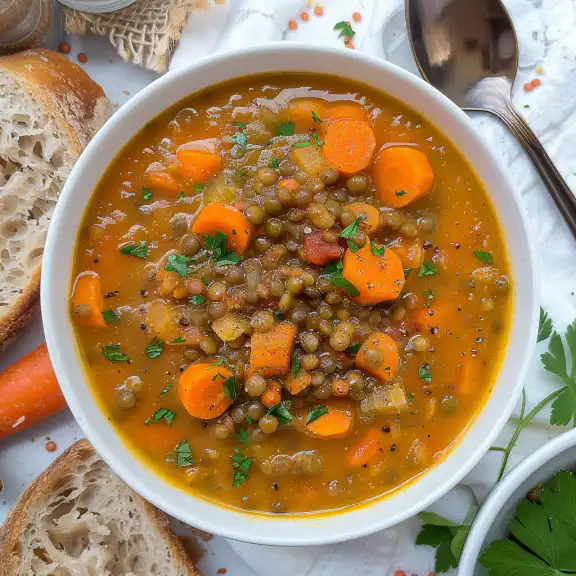
Carrot and Lentil Soup is a staple in my kitchen. It’s simple, nourishing, and uses ingredients that are likely already in your pantry. It comes together without too much fuss, making it a reliable choice for busy weeknights or relaxed weekend lunches.
Why This Carrot and Lentil Soup Works
This soup is a winning combination because it balances the earthy sweetness of carrots with the hearty, satisfying texture of lentils. It’s naturally thick and creamy without needing dairy, relying on the star ingredients to create a luscious consistency.
Ingredients
- 2 tablespoons olive oil
- 1 large onion, chopped
- 2-3 cloves garlic, minced
- 1 pound carrots, peeled and chopped (about 3-4 cups)
- 1 cup brown or green lentils, rinsed
- 6 cups vegetable broth (or chicken broth for non-vegetarian option)
- 1 teaspoon dried thyme
- ½ teaspoon ground cumin
- Salt and freshly ground black pepper to taste
- Optional: a bay leaf
- Optional: a squeeze of lemon juice or a dollop of yogurt/sour cream for serving
Gathering your ingredients is the first step towards a delicious soup. Having everything prepped and ready to go makes the cooking process smooth and enjoyable.
A recipe worth trying: Easy Lentil Bolognese Recipe
How to Make It
- Heat the olive oil in a large pot or Dutch oven over medium heat. Add the chopped onion and cook, stirring occasionally, until softened, about 5-7 minutes.
- Add the minced garlic and cook for another minute until fragrant, being careful not to burn it.
- Stir in the chopped carrots, rinsed lentils, vegetable broth, dried thyme, and ground cumin. If using, add the bay leaf.
- Bring the mixture to a boil, then reduce the heat to low, cover, and simmer for 30-40 minutes, or until the lentils and carrots are tender. Stir occasionally to prevent sticking.
- Remove the bay leaf (if used).
- Season generously with salt and freshly ground black pepper to taste.
- For a smoother consistency, you can blend a portion of the soup using an immersion blender directly in the pot, or transfer some of the soup to a regular blender (being very careful with hot liquids) and then return it to the pot. Blend until you reach your desired texture – some prefer it completely smooth, while others like a bit of texture.
- Serve hot.
This easy-to-follow method ensures a flavorful and satisfying soup with minimal effort. The gentle simmering allows the flavors to meld together beautifully, creating a dish that feels as good as it tastes.
Nutrition at a Glance
- Rich in Fiber: Lentils and carrots are excellent sources of dietary fiber, promoting digestive health and helping you feel fuller for longer. This is particularly beneficial for weight management and maintaining stable blood sugar levels. The fiber content contributes to the soup’s satisfying quality, making it a complete meal in itself.
- Good Source of Vitamins: Carrots are famously high in Vitamin A (in the form of beta-carotene), which is crucial for vision, immune function, and skin health. The other vegetables also contribute various vitamins and minerals, making this soup a nutrient-dense option. Vitamin K, Vitamin C, and several B vitamins are also present in smaller but significant amounts, adding to the overall health profile of the dish.
- Plant-Based Protein: Lentils provide a substantial amount of plant-based protein, which is essential for muscle repair and growth. This makes the soup a great option for vegetarians, vegans, or anyone looking to incorporate more plant-based protein into their diet. The protein in lentils also contributes significantly to satiety, making this a filling and satisfying meal that can help curb cravings.
- Low in Fat (Naturally): With the use of olive oil for sautéing and the inherent low-fat nature of the main ingredients, this soup is generally low in fat, particularly saturated fat. This makes it a heart-healthy choice. The type of fat used, olive oil, is a monounsaturated fat, which is considered beneficial for cardiovascular health.
- Antioxidants: The vibrant colors of carrots indicate the presence of antioxidants, like beta-carotene. These compounds help protect your cells from damage caused by free radicals, potentially reducing the risk of chronic diseases. Other vegetables and spices in the soup may also contribute additional antioxidant benefits.
- Hydrating: As a soup, it contributes to your daily fluid intake, which is essential for overall bodily functions, including regulating body temperature, transporting nutrients, and flushing out waste products. The broth base provides a significant amount of hydration, making it a good choice when you need to replenish fluids.
- Mineral Content: Beyond vitamins, this soup offers minerals like iron, potassium, and folate. Iron is vital for energy production and preventing anemia, potassium helps regulate blood pressure, and folate is important for cell growth and development. These micronutrients play crucial roles in maintaining various bodily processes.
- Complex Carbohydrates: Lentils offer complex carbohydrates, which provide sustained energy release rather than the quick spikes and crashes associated with simple sugars. This sustained energy is perfect for powering through your day without feeling sluggish. These complex carbs are also vital for brain function and overall metabolic health.
- Gluten-Free (Naturally): For those with gluten sensitivities or celiac disease, this recipe is naturally gluten-free, provided you use gluten-free certified vegetable broth. This makes it a safe and delicious option for a wider range of dietary needs. Always ensure your broth is certified if this is a concern for you.
- Customizable Sodium: You have control over the sodium content by choosing low-sodium broth and adjusting the salt added during cooking. This is particularly important for individuals managing blood pressure or following a low-sodium diet. By using salt sparingly and relying on herbs and spices for flavor, you can keep the sodium levels in check.
This soup is a powerhouse of nutrients, making it a truly wholesome meal. It’s a testament to how simple, plant-based ingredients can contribute so much to our well-being.
How to Serve It
- As a Light Lunch: Enjoy a generous bowl on its own for a healthy and filling midday meal. It’s perfect for days when you want something substantial but not too heavy, allowing you to get through the afternoon without feeling weighed down. The fiber and protein will keep you satisfied until your next meal.
- With Crusty Bread: This soup is wonderful for dipping! A slice of warm, crusty bread is the ideal accompaniment to soak up every last drop. Sourdough, whole grain, or even a simple baguette all work beautifully. The contrast between the warm, soft soup and the chewy crust of the bread is incredibly satisfying.
- Topped with Fresh Herbs: A sprinkle of fresh parsley, chives, or cilantro adds a burst of freshness and color. It elevates the soup with a touch of brightness that contrasts with the earthy flavors. Consider chopping them finely for an even distribution of flavor throughout each spoonful.
- With a Swirl of Cream or Yogurt: For a touch of richness, add a dollop of plain yogurt, sour cream, or a swirl of heavy cream. This can add a creamy texture and a slight tang that complements the sweetness of the carrots. For a dairy-free option, a swirl of coconut cream or a vegan sour cream alternative works wonderfully.
- As a Starter: Serve a smaller portion before a main course to whet the appetite. It’s a flavorful and healthy way to begin a meal, setting a delicious tone for what’s to come. This can be particularly effective when hosting guests, as it offers a refined start to a dinner party.
- With a Side Salad: Pair a bowl of this soup with a crisp green salad for a complete and balanced meal. The soup provides warmth and heartiness, while the salad offers freshness and crunch. Consider a simple vinaigrette to complement the flavors of the soup rather than overpower them.
- Garnished with Toasted Seeds or Croutons: For a bit of texture, add some toasted pumpkin seeds, sunflower seeds, or homemade croutons. These add a pleasant crunch that contrasts with the smooth soup, making each bite more interesting. Toasted nuts, like slivered almonds, can also be a delicious addition.
- With a Spoonful of Pesto: A small spoonful of pesto stirred in just before serving adds a vibrant herby and garlicky punch that can transform the soup’s flavor profile. This is a creative way to add another layer of complexity and appeal.
- As Part of a Soup Flight: If you’re serving multiple soups, this Carrot and Lentil Soup can be a hearty and grounding option alongside lighter or more delicate varieties. Its robust flavor makes it a great anchor.
- With a sprinkle of Red Pepper Flakes: For those who enjoy a little heat, a pinch of red pepper flakes adds a subtle warmth that awakens the palate and enhances the other flavors in the soup.
This versatile soup can be dressed up or down to suit any occasion. The simple act of adding a garnish can significantly change its appearance and flavor, making it adaptable to your mood and preferences.
Common Mistakes
- Not Rinsing the Lentils: While not strictly essential for safety, rinsing lentils helps remove any dust or debris and can also remove some of the starches that can make soup gummy. It’s a small step that contributes to a cleaner flavor profile. Skipping this step might result in a slightly cloudier broth.
- Overcooking the Vegetables: While you want the carrots and lentils to be tender, overcooking can lead to mushy vegetables and a less appealing texture. Keep an eye on the cooking time and aim for fork-tender rather than falling apart. This ensures a more pleasant mouthfeel.
- Undercooking the Lentils: Conversely, undercooked lentils can be hard and gritty, making the soup unpleasant to eat. Ensure they are fully tender before seasoning and serving. This means tasting them to check for doneness, not just relying on the clock.
- Not Tasting and Adjusting Seasoning: Salt and pepper are crucial for bringing out the full flavor of the soup. Don’t be afraid to taste and adjust the seasoning throughout the cooking process, especially after the lentils and vegetables are tender, as flavors can concentrate.
- Forgetting to Remove the Bay Leaf: A bay leaf adds a subtle aromatic depth, but its texture is tough and unchewable. Always remember to remove it before blending or serving to avoid an unexpected surprise.
- Blending Too Much or Too Little: When blending, find the texture that you enjoy. Blending too much can result in a very smooth, baby-food-like consistency if that’s not what you’re going for. Not blending enough might leave larger chunks than desired. It’s all about personal preference here.
- Using Stale Spices: Old, dusty spices won’t contribute much flavor. Ensure your thyme and cumin are relatively fresh for the best aromatic impact. Check the expiration dates and give them a sniff before adding them to your pot.
- Impatience with Browning Onions: Allowing the onions to soften and caramelize slightly before adding other ingredients builds a foundational sweetness and depth of flavor. Rushing this step can result in a soup that lacks that savory base.
- Not Adding Enough Liquid: Lentils absorb liquid as they cook. If you find the soup is too thick during simmering, don’t hesitate to add a little more broth or water to reach your desired consistency. It’s always easier to thin a soup than to thicken it unnecessarily.
- Using Low-Quality Broth: The broth is a significant flavor component. A weak or artificial-tasting broth will result in a less flavorful soup. Opt for a good quality vegetable or chicken broth, or even homemade if you have it on hand.
Avoiding these common pitfalls will help ensure your Carrot and Lentil Soup turns out beautifully every time.
Storage and Reheating
- Refrigerator Storage: Allow the soup to cool completely before transferring it to an airtight container. It will keep in the refrigerator for 3-4 days. Ensure the container is well-sealed to prevent any odors from being absorbed or from the soup drying out.
- Freezer Storage: This soup freezes very well. Portion it into freezer-safe containers or heavy-duty freezer bags, leaving some headspace for expansion. It can be stored in the freezer for up to 3 months. For easiest reheating, I like to freeze it in individual portions.
- Reheating on the Stovetop: The best way to reheat is gently on the stovetop over medium-low heat. Stir occasionally to ensure even heating and to prevent sticking. If the soup has thickened too much, you can add a splash of broth or water to loosen it up.
- Reheating in the Microwave: If you’re in a hurry, microwave the soup in a microwave-safe bowl in 1-2 minute intervals, stirring between each, until heated through. Be cautious of hot spots.
- Thawing Frozen Soup: Thaw frozen soup overnight in the refrigerator. Once thawed, reheat as you would refrigerated soup. If you need to thaw it quickly, you can place the sealed container in a bowl of cool water, changing the water periodically, or use the defrost setting on your microwave.
- Checking for Spoilage: Before reheating, always check the soup for any signs of spoilage – off smells, mold, or an unusual appearance. If in doubt, it’s best to discard it. The vibrant color should remain; any significant browning or discoloration could be a warning sign.
- Considering Texture After Freezing: While this soup generally reheats well, some textures might slightly alter after freezing and thawing, especially if you blend it very smooth. This is usually a minor change and doesn’t affect the flavor significantly.
Proper storage ensures that your delicious soup remains safe and enjoyable for days to come, minimizing waste and providing a convenient meal option.
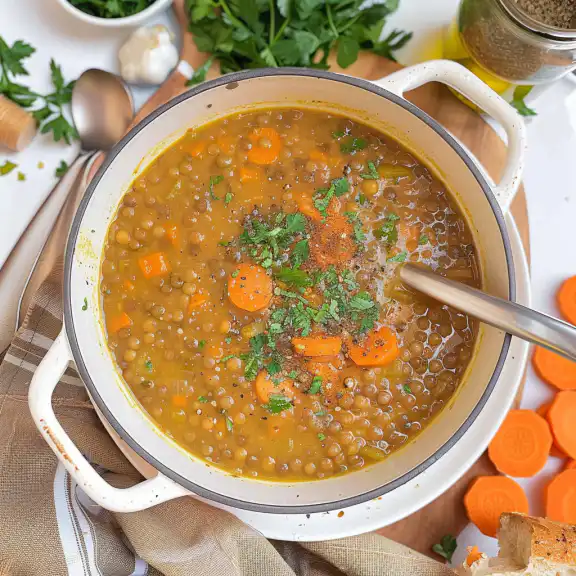
Leftover Ideas
- Savory Lentil Patties: Mash leftover soup with a fork, drain off excess liquid if necessary, and mix with a binder like breadcrumbs or a little flour. Form into patties and pan-fry until golden brown. These make a great vegetarian burger or a savory snack.
- Hearty Base for Other Soups: Use the leftover soup as a base for a new soup creation. Add more vegetables, some cooked grains like quinoa or farro, or even some shredded chicken or sausage for a completely different meal. It provides a rich, flavorful foundation.
- Thickened Dip or Spread: If the soup is particularly thick, you can serve it as a dip with pita bread or crunchy vegetables. For an even thicker consistency, you might gently simmer it a bit more to reduce the liquid.
- Topping for Baked Potatoes: Spoon warmed leftover soup over a fluffy baked potato for a simple yet satisfying meal. The creamy texture of the soup pairs wonderfully with the soft potato.
- Creamy Pasta Sauce: Blend the soup until very smooth and use it as a flavorful, vegetable-packed sauce for pasta. You might need to thin it slightly with a little pasta water or broth, and it pairs well with hearty pasta shapes.
- Filling for Savory Pies or Pastries: If you have a lot of leftover soup, you can thicken it further by simmering and use it as a filling for hand pies, pasties, or even a savory tart. Ensure it’s well-drained if it seems too watery.
- Add to a Shepherd’s Pie Topping: Mix some of the blended soup into your mashed potato topping for a shepherd’s pie. It adds moisture, flavor, and a nutrient boost to the classic dish.
- Flavor Enhancer for Grains: Stir a small amount of the soup into cooking grains like rice or quinoa for added flavor and moisture. This is a subtle way to boost the nutritional profile of simple side dishes.
- Base for a Grain Bowl: Serve the soup over a bed of cooked grains like brown rice or farro, topped with your favorite fresh vegetables, protein, and a drizzle of dressing for a complete and healthy grain bowl.
- Enriching a Casserole: Stir some of the soup into a vegetable or pasta bake to add moisture, flavor, and a creamy texture. It can help bind ingredients together and make the casserole more cohesive.
Don’t let those delicious leftovers go to waste! With a little creativity, you can transform this soup into a multitude of other delightful dishes, ensuring every last spoonful is enjoyed.
PrintCarrot and Lentil Soup
- Total Time: 1 hour
- Yield: 6 servings 1x
- Diet: Vegetarian
Description
A hearty, comforting, and nourishing Carrot and Lentil Soup recipe. Simple ingredients and easy steps for a wholesome meal perfect for any day.
Ingredients
- 2 tablespoons olive oil
- 1 large onion, chopped
- 2–3 cloves garlic, minced
- 1 pound carrots, peeled and chopped (about 3–4 cups)
- 1 cup brown or green lentils, rinsed
- 6 cups vegetable broth (or chicken broth for non-vegetarian option)
- 1 teaspoon dried thyme
- ½ teaspoon ground cumin
- Salt and freshly ground black pepper to taste
- Optional: a bay leaf
- Optional: a squeeze of lemon juice or a dollop of yogurt/sour cream for serving
Instructions
- 1. Heat the olive oil in a large pot or Dutch oven over medium heat. Add the chopped onion and cook, stirring occasionally, until softened, about 5-7 minutes.
- 2. Add the minced garlic and cook for another minute until fragrant, being careful not to burn it.
- 3. Stir in the chopped carrots, rinsed lentils, vegetable broth, dried thyme, and ground cumin. If using, add the bay leaf.
- 4. Bring the mixture to a boil, then reduce the heat to low, cover, and simmer for 30-40 minutes, or until the lentils and carrots are tender. Stir occasionally to prevent sticking.
- 5. Remove the bay leaf (if used).
- 6. Season generously with salt and freshly ground black pepper to taste.
- 7. For a smoother consistency, you can blend a portion of the soup using an immersion blender directly in the pot, or transfer some of the soup to a regular blender (being very careful with hot liquids) and then return it to the pot. Blend until you reach your desired texture.
- 8. Serve hot.
Notes
Store cooled soup in an airtight container in the refrigerator for 3-4 days. For longer storage, freeze in portions for up to 3 months. Reheat gently on the stovetop over medium-low heat, adding a splash of broth or water if needed. Microwave reheating is also an option.
- Prep Time: 15 minutes
- Cook Time: 45 minutes
- Category: Soup
- Method: Stovetop
- Cuisine: American
Nutrition
- Serving Size: 1 serving
- Calories: Approx. 250-300
- Sugar: 10g
- Sodium: Approx. 500mg (depending on broth)
- Fat: 8g
- Carbohydrates: 35g
- Fiber: 12g
- Protein: 15g