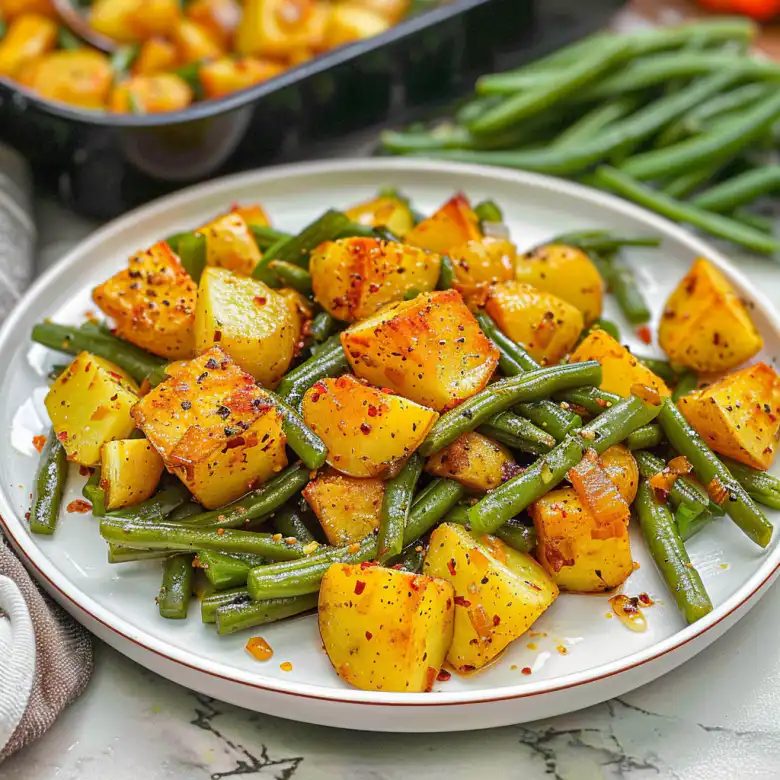
This simple combination of tender potatoes and crisp green beans has been a reliable weeknight dinner in my kitchen for years. The vegetables cook together in one pan, absorbing the flavors of garlic and herbs while maintaining their distinct textures. It’s hearty enough to serve as a main dish yet versatile enough to complement any protein you have on hand.
Why This Potatoes and Green Beans Dish Works
The magic happens when you time the cooking just right—starting with the potatoes since they need more time to become tender, then adding the green beans to maintain their bright color and slight crunch. This timing ensures both vegetables finish cooking simultaneously, creating a balanced dish where neither component is overcooked or undercooked.
Ingredients
- 2 pounds Yukon Gold potatoes, cut into 1-inch cubes
- 1 pound fresh green beans, trimmed and cut into 2-inch pieces
- 3 tablespoons olive oil
- 1 large onion, diced
- 4 cloves garlic, minced
- 1 teaspoon dried oregano
- 1 teaspoon dried thyme
- 1 bay leaf
- 1 can (14.5 oz) diced tomatoes, drained
- 1 cup vegetable broth
- 1 teaspoon salt
- 1/2 teaspoon black pepper
- 2 tablespoons fresh parsley, chopped
- 1 tablespoon lemon juice
These ingredients create layers of flavor that build throughout the cooking process, with the aromatics forming the base and the fresh herbs brightening the finished dish.
How to Make It
- Heat olive oil in a large skillet or Dutch oven over medium heat. The pan should be large enough to hold all the vegetables in a relatively even layer for proper cooking.
- Add the diced onion and cook for 5-6 minutes until softened and translucent. This creates the aromatic foundation that will flavor the entire dish.
- Stir in the minced garlic, oregano, thyme, and bay leaf. Cook for another minute until the garlic becomes fragrant, being careful not to let it burn.
- Add the cubed potatoes to the pan, stirring to coat them with the oil and aromatics. Season with half the salt and pepper.
- Pour in the drained diced tomatoes and vegetable broth. The liquid should come about halfway up the potatoes. If needed, add a bit more broth or water.
- Bring the mixture to a gentle boil, then reduce heat to medium-low. Cover and simmer for 15 minutes, stirring occasionally to prevent sticking.
- Add the green beans to the pan, nestling them among the partially cooked potatoes. Season with the remaining salt and pepper.
- Cover again and continue cooking for 12-15 minutes more, until the potatoes are fork-tender and the green beans are crisp-tender but still bright green.
- Remove the bay leaf and stir in the fresh parsley and lemon juice. Taste and adjust seasoning as needed.
- Let the dish rest for 5 minutes before serving to allow the flavors to meld and the liquid to reduce slightly.
This method ensures both vegetables cook evenly while developing rich, complementary flavors that make the dish satisfying and complete.
Nutrition at a Glance
- High in fiber from both potatoes and green beans, supporting digestive health
- Good source of potassium from potatoes, important for heart health and muscle function
- Rich in vitamin C from green beans, supporting immune system function
- Contains folate, essential for cell division and DNA synthesis
- Provides vitamin K from green beans, important for bone health
- Low in saturated fat, making it heart-healthy
- Naturally cholesterol-free and suitable for plant-based diets
- Complex carbohydrates provide sustained energy
- Antioxidants from tomatoes and herbs help fight inflammation
- Approximately 220 calories per serving, making it a satisfying yet moderate option
How to Serve It
- Serve as a hearty main dish with crusty bread and a simple green salad
- Pair with grilled chicken, fish, or tofu for added protein
- Offer alongside roasted meats as a flavorful vegetable side dish
- Top with crumbled feta cheese or grated Parmesan for extra richness
- Serve over rice or quinoa to make it more filling
- Accompany with a dollop of Greek yogurt or sour cream
- Present with warm pita bread for a Mediterranean-style meal
- Garnish with additional fresh herbs like dill or basil
This versatile dish adapts well to different serving styles, working equally well as a standalone vegetarian meal or as part of a larger spread.
Common Mistakes
- Cutting potatoes too large, which results in uneven cooking and some pieces remaining hard while others become mushy
- Adding green beans too early, causing them to lose their vibrant color and become overcooked
- Using too much liquid, which can make the dish watery rather than allowing the vegetables to develop concentrated flavors
- Skipping the aromatics like garlic and herbs, missing the opportunity to build deep, complex flavors
- Not seasoning in layers, which results in bland vegetables that only taste seasoned on the surface
- Cooking over too high heat, which can cause the bottom to burn while the vegetables remain undercooked
- Forgetting to remove the bay leaf before serving, which can be unpleasant to bite into
- Not letting the dish rest before serving, missing the chance for flavors to meld properly
Avoiding these pitfalls ensures your potatoes and green beans turn out flavorful and properly textured every time.
Storage and Reheating
- Store leftovers in the refrigerator for up to 4 days in an airtight container
- Cool completely before refrigerating to prevent condensation and maintain food safety
- Reheat in a skillet over medium heat, adding a splash of broth if needed to prevent sticking
- Microwave individual portions in 30-second intervals, stirring between heating to ensure even warming
- Avoid freezing as the potatoes can become grainy and the green beans lose their texture
- Add fresh herbs after reheating to brighten the flavors
- Refresh with a squeeze of lemon juice when serving leftovers
- Consider adding a drizzle of good olive oil when reheating to restore richness
Proper storage and gentle reheating help maintain the dish’s appealing texture and fresh flavors even as leftovers.
Leftover Ideas
- Transform into a hearty soup by adding more broth and simmering until desired consistency
- Use as a filling for omelets or frittatas with added cheese
- Mash roughly and use as a topping for baked fish or chicken
- Incorporate into grain bowls with quinoa or brown rice
- Stuff into pita pockets with fresh greens for a quick lunch
- Mix with beaten eggs and form into patties for pan-frying
- Add to minestrone or vegetable soup for extra heartiness
- Serve cold as a potato salad-style dish with additional lemon juice and olive oil
- Use as a base for shepherd’s pie topped with mashed potatoes
- Blend a portion smooth to create a creamy soup base
These creative uses help stretch your cooking efforts and prevent good food from going to waste while providing variety in your meal planning.
Variations and Substitutions
The beauty of this potatoes and green beans recipe lies in its adaptability to different tastes and dietary needs. I’ve experimented with numerous variations over the years, each bringing its own character to the dish.
For a Mediterranean twist, replace the oregano and thyme with fresh rosemary and add Kalamata olives during the last few minutes of cooking. The briny olives complement the earthy potatoes beautifully, while rosemary adds a pine-like fragrance that transports you to the Greek islands.
When fresh green beans aren’t available, frozen ones work well too. Add them straight from the freezer about 8-10 minutes before the potatoes are done, as they’ll cook faster than fresh beans. Yellow wax beans or Romano beans can substitute for green beans, offering slightly different flavors and textures.
Different potato varieties change the dish’s character significantly. Russets break down more during cooking, creating a slightly thicker, more rustic sauce, while red potatoes hold their shape well and provide a waxy texture. Fingerling potatoes add visual appeal and cook more quickly due to their smaller size.
For those following specific dietary needs, this recipe adapts easily. Use vegetable broth instead of chicken broth to keep it vegetarian, or substitute the broth entirely with white wine for a more sophisticated flavor profile. The wine should be added early in the cooking process to allow the alcohol to cook off while leaving behind its complex flavors.
Spice variations can completely transform the dish’s personality. A teaspoon of smoked paprika adds depth and a subtle smoky flavor, while a pinch of red pepper flakes brings gentle heat. For an Indian-inspired version, substitute cumin and coriander for the oregano and thyme, and add a bay leaf and some garam masala near the end of cooking.
Seasonal Adaptations
This recipe shines particularly bright when you can source ingredients seasonally. Summer brings the best fresh green beans, with their crisp texture and sweet flavor. During this time, I often add fresh corn kernels in the last five minutes of cooking for additional sweetness and color.
Fall adaptations might include adding diced bell peppers or chunks of zucchini. Winter calls for heartier additions like diced carrots or parsnips, added at the same time as the potatoes since they need similar cooking times. Spring offers opportunities to incorporate fresh peas or asparagus, though these should be added in the final minutes to maintain their bright color and tender texture.
The herb profile can shift with the seasons too. Summer’s abundance of fresh basil, oregano, and thyme can replace dried herbs entirely—use about three times the amount of fresh herbs as dried, adding them in the last few minutes of cooking to preserve their vibrant flavors.
Cooking Tips from Experience
After making this dish countless times, I’ve learned several techniques that consistently improve the results. First, don’t skip the step of cooking the onions until truly softened. This foundation of properly cooked aromatics makes an enormous difference in the final flavor. Rush this step, and you’ll taste raw onion throughout the dish.
The size of your potato cubes matters more than you might think. Aim for uniformity so everything cooks evenly. I’ve found that 1-inch cubes work best—large enough that they don’t fall apart but small enough to cook through without the green beans overcooking.
Pay attention to your pan choice. A heavy-bottomed skillet or Dutch oven distributes heat more evenly and prevents hot spots that can cause burning. If your pan isn’t large enough to hold everything in roughly a single layer, cook in batches or use two pans.
The liquid level requires some attention during cooking. You want enough to create steam and prevent sticking, but not so much that you end up with soup. If the pan seems dry during cooking, add liquid a few tablespoons at a time. If it seems too wet near the end, remove the lid and let some moisture evaporate.
Testing for doneness involves checking both vegetables. Potatoes should yield easily to a fork but not fall apart, while green beans should still have a slight bite. The timing can vary based on your specific stove, pan, and even the age of your vegetables, so taste-testing is crucial.
Pairing Suggestions
This potatoes and green beans combination pairs beautifully with a wide range of proteins and other dishes. For meat eaters, it complements grilled or roasted chicken particularly well, with the herbs in the vegetable dish echoing nicely with rosemary or thyme used on the protein.
Fish lovers will find this dish works wonderfully with salmon, cod, or any white fish. The lemon juice in the vegetables brightens the entire meal and creates cohesion between the components. For a complete Mediterranean meal, serve alongside grilled fish with a simple cucumber and tomato salad.
Vegetarians can make this dish more substantial by serving it over grains. Brown rice, quinoa, or farro all work well, with each grain adding its own texture and nutritional profile. A dollop of Greek yogurt on top adds protein and creamy richness that balances the vegetables’ earthiness.
Wine pairing opportunities abound with this versatile dish. A crisp Sauvignon Blanc complements the green beans’ freshness, while a light Pinot Noir works well if you’re serving this alongside red meat. For non-alcoholic options, sparkling water with lemon or a light iced tea with herbs creates refreshing contrasts.
Making It Your Own
The true joy of this potatoes and green beans recipe lies in how easily it accepts personal touches and family preferences. Some cooks in my circle add a splash of balsamic vinegar near the end for subtle sweetness and acidity. Others incorporate sun-dried tomatoes for concentrated tomato flavor and chewy texture.
PrintPotatoes and Green Beans
- Total Time: 50 minutes
- Yield: 6 servings 1x
- Diet: Vegetarian
Description
A hearty one-pan dish featuring tender potatoes and crisp green beans simmered with aromatics, tomatoes, and herbs. This versatile recipe works as a main course or side dish.
Ingredients
- 2 pounds Yukon Gold potatoes, cut into 1-inch cubes
- 1 pound fresh green beans, trimmed and cut into 2-inch pieces
- 3 tablespoons olive oil
- 1 large onion, diced
- 4 cloves garlic, minced
- 1 teaspoon dried oregano
- 1 teaspoon dried thyme
- 1 bay leaf
- 1 can (14.5 oz) diced tomatoes, drained
- 1 cup vegetable broth
- 1 teaspoon salt
- 1/2 teaspoon black pepper
- 2 tablespoons fresh parsley, chopped
- 1 tablespoon lemon juice
Instructions
- 1. Heat olive oil in a large skillet or Dutch oven over medium heat.
- 2. Add diced onion and cook for 5-6 minutes until softened and translucent.
- 3. Stir in garlic, oregano, thyme, and bay leaf. Cook for 1 minute until fragrant.
- 4. Add cubed potatoes, stirring to coat with oil and aromatics. Season with half the salt and pepper.
- 5. Pour in diced tomatoes and vegetable broth. Bring to a gentle boil.
- 6. Reduce heat to medium-low, cover and simmer for 15 minutes, stirring occasionally.
- 7. Add green beans, nestling among the potatoes. Season with remaining salt and pepper.
- 8. Cover and cook 12-15 minutes more until potatoes are fork-tender and green beans are crisp-tender.
- 9. Remove bay leaf and stir in fresh parsley and lemon juice.
- 10. Let rest for 5 minutes before serving.
Notes
Store leftovers in refrigerator for up to 4 days. Reheat gently in skillet with a splash of broth if needed.
- Prep Time: 15 minutes
- Cook Time: 35 minutes
- Category: Main Dish
- Method: Braising
- Cuisine: American
Nutrition
- Serving Size: 1 serving
- Calories: 220
- Sugar: 8g
- Sodium: 580mg
- Fat: 7g
- Carbohydrates: 38g
- Fiber: 6g
- Protein: 6g