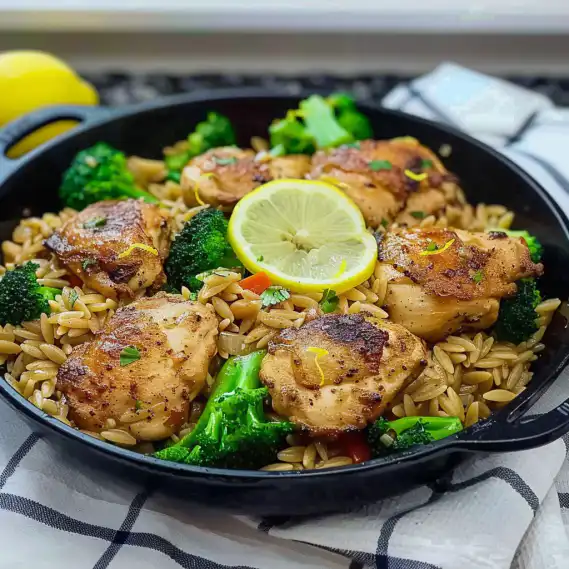
This Lemon Chicken & Veggie Orzo Stir Fry is a vibrant and satisfying weeknight meal that comes together surprisingly quickly. It’s a dish I’ve turned to countless times when I need something healthy, flavorful, and easy to prepare, using ingredients I often have on hand. The combination of tender chicken, crisp vegetables, and chewy orzo pasta, all coated in a bright, zesty lemon sauce, makes it a crowd-pleaser that feels both comforting and fresh.
Why This Lemon Chicken & Veggie Orzo Stir Fry Works
This dish harmonizes bright lemon, tender chicken, and crisp vegetables with the delightful chewiness of orzo. It’s a fantastic way to incorporate a variety of produce into a single, cohesive meal that feels both comforting and lively.
Ingredients
- For the Chicken:
- 1 ½ pounds boneless, skinless chicken breasts or thighs, cut into bite-sized pieces
- 2 tablespoons olive oil
- 1 teaspoon garlic powder
- ½ teaspoon onion powder
- ¼ teaspoon salt
- ¼ teaspoon black pepper
- For the Orzo:
- 1 cup orzo pasta
- 2 cups chicken broth (or vegetable broth for a vegetarian option)
- 1 tablespoon butter or olive oil
- For the Vegetables:
- 2 tablespoons olive oil
- 1 medium onion, thinly sliced
- 2 cloves garlic, minced
- 1 red bell pepper, thinly sliced
- 1 yellow bell pepper, thinly sliced
- 1 cup broccoli florets
- 1 cup snap peas or snow peas, trimmed
- ½ cup sliced carrots (use pre-sliced or thinly slice yourself)
- For the Lemon Sauce:
- ¼ cup fresh lemon juice (from about 1-2 lemons)
- 2 tablespoons soy sauce (or tamari for gluten-free)
- 1 tablespoon honey or maple syrup
- 1 teaspoon Dijon mustard
- ½ teaspoon dried oregano
- Pinch of red pepper flakes (optional, for a little heat)
- For Garnish (Optional):
- Fresh parsley, chopped
- Lemon wedges
How to Make It
- Cook the Chicken: In a medium bowl, toss the chicken pieces with 2 tablespoons of olive oil, garlic powder, onion powder, salt, and pepper. Heat a large skillet or wok over medium-high heat. Add the seasoned chicken in a single layer. Cook for 5-7 minutes, flipping halfway through, until browned and cooked through. Remove the chicken from the skillet and set aside on a plate. Don’t overcrowd the pan; cook in batches if necessary. This ensures the chicken gets a nice sear rather than steaming. A good sear on the chicken adds a wonderful depth of flavor and a pleasing texture. If you try to cook too much at once, the chicken pieces will steam, becoming pale and losing some of their pleasant chewiness. Taking the time to cook in batches, even if it adds a few extra minutes to the overall process, is well worth it for the superior outcome.
- Cook the Orzo: While the chicken is cooking, or immediately after, prepare the orzo. In a medium saucepan, melt the butter or heat the olive oil over medium heat. Add the dry orzo and toast it for 1-2 minutes, stirring frequently, until it smells slightly nutty. This step adds a lovely depth of flavor to the pasta. Carefully pour in the chicken broth, bring to a boil, then reduce heat to low, cover, and simmer for about 10-12 minutes, or until the orzo is tender and most of the liquid has been absorbed. Stir occasionally to prevent sticking. Toasting the orzo beforehand transforms it from a plain starch into a more flavorful component of the dish. It’s a small step that makes a noticeable difference. Using broth instead of water also infuses the orzo with extra flavor, making it a more integrated part of the final stir-fry rather than just a neutral base. Keep an eye on the simmering orzo to ensure it doesn’t boil dry too quickly.
- Prepare the Sauce: While the orzo is simmering, whisk together the lemon juice, soy sauce, honey or maple syrup, Dijon mustard, oregano, and red pepper flakes (if using) in a small bowl. Set aside. This simple yet flavorful sauce will tie all the elements of the stir fry together. Ensuring even the sauce is pre-mixed means a smoother addition to the hot pan later. The Dijon mustard adds a subtle tang and helps to emulsify the sauce, while the honey or maple syrup provides a touch of sweetness to balance the acidity of the lemon and the saltiness of the soy sauce. The dried oregano contributes an herbaceous note that complements the other flavors. Having the sauce ready to go means you can add it right when the vegetables are perfectly cooked, preventing overcooking while ensuring the flavors are well-distributed. This is a critical step in maintaining the integrity of the stir-fry’s textures.
- Stir-Fry the Vegetables: Add the remaining 2 tablespoons of olive oil to the same skillet used for the chicken (no need to wash it – those browned bits add flavor!). Heat over medium-high heat. Add the sliced onion and cook for 2-3 minutes until it starts to soften. Add the minced garlic and cook for 30 seconds more until fragrant. Next, add the bell peppers, broccoli florets, snap peas, and carrots. Stir-fry for 5-7 minutes, or until the vegetables are tender-crisp – still vibrant and with a slight bite. You don’t want them to be mushy. This is where the variety of textures comes from. Cooking the onion and garlic first builds an aromatic base for the vegetables. The key here is the “tender-crisp” stage. Overcooked vegetables turn limp and lose their nutritional value and appealing texture. The broccoli should still have a bright green color and a slight crunch, the peppers should be slightly softened but not floppy, and the snap peas should retain their crispness. Thinly sliced carrots cook faster and add a pleasant sweetness and color.
- Combine Everything: Return the cooked chicken to the skillet with the vegetables. Pour the prepared lemon sauce over the mixture. Stir well to coat everything evenly. Let it simmer for 1-2 minutes to allow the sauce to thicken slightly and meld the flavors. Bringing the chicken back into the pan at this stage ensures it gets warmed through and coated in the delicious sauce. This brief simmering period allows the flavors to meld together, creating a cohesive dish. The sauce will also reduce slightly, concentrating its flavor and slightly thickening its consistency, which helps it cling better to the chicken and vegetables. It’s important not to over-simmer at this point, as you want to retain the vibrant freshness of the vegetables.
- Add the Orzo: Finally, add the cooked orzo to the skillet. Stir gently to combine it with the chicken, vegetables, and sauce. Cook for another 1-2 minutes, just until everything is heated through. Gently incorporate the cooked orzo into the mix. The orzo will absorb some of the sauce, further enhancing its flavor and adding to the dish’s overall satisfaction. Stirring gently helps to prevent the orzo from breaking up too much. The goal is simply to heat everything through and ensure the orzo is well coated in the sauce. A final minute or two of cooking is usually sufficient to achieve this.
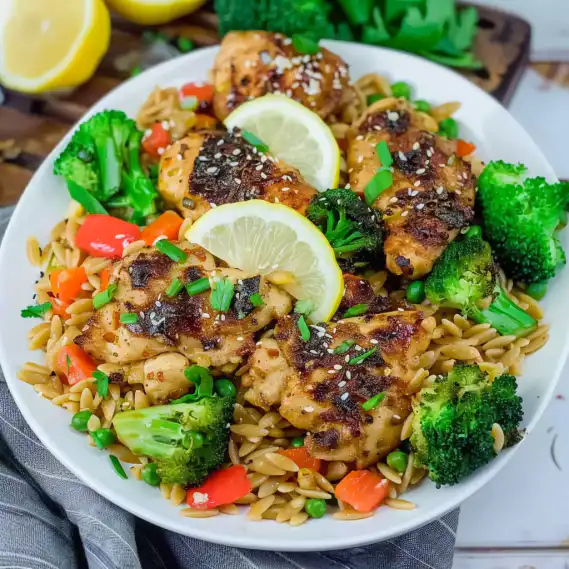
- Serve: Serve immediately. Garnish with fresh chopped parsley and lemon wedges, if desired. Serving this dish hot off the stove is ideal for the best texture and flavor. The fresh parsley adds a pop of color and a bright, herbaceous note, while the lemon wedges allow for an extra burst of citrus to be added by each diner. The presentation matters, and these simple garnishes elevate the dish from everyday to something a bit special. Enjoying this meal right away ensures the vegetables remain at their peak crispness and the orzo maintains its delightful chew.
Try this recipe too: Easy One Skillet Salmon with Lemon Orzo Recipe
Nutrition at a Glance
- Lean Protein: The chicken provides a substantial amount of high-quality protein, crucial for muscle repair and satiety. Protein is fundamental for bodily functions, including enzyme production, immune system support, and maintaining muscle mass. Choosing lean cuts like chicken breast minimizes saturated fat intake while maximizing protein benefits.
- Complex Carbohydrates: Orzo pasta offers carbohydrates for energy, and when cooked with broth, it doesn’t absorb as much starchy residue as pasta cooked in plain water might. Carbohydrates are the body’s primary source of fuel. Opting for orzo provides a good source of quick energy, and when part of a balanced meal, such as this one with vegetables and protein, it contributes to sustained energy release.
- Vitamins and Minerals: The variety of vegetables—bell peppers, broccoli, snap peas, carrots—contributes a wealth of vitamins (like Vitamin C and A), minerals (like potassium and folate), and antioxidants. These micronutrients are vital for a myriad of bodily processes, from immune function to cellular repair and eye health. The vibrant colors of the vegetables often indicate a rich diversity of beneficial compounds.
- Healthy Fats: Olive oil contributes monounsaturated fats, which are beneficial for heart health. These fats can help lower LDL cholesterol and reduce the risk of heart disease. Using olive oil in moderation as part of this recipe adds beneficial fats without contributing excessive calories.
- Fiber: The vegetables and whole grains (if using a whole wheat orzo alternative) provide dietary fiber, aiding digestion and promoting a feeling of fullness. Fiber is essential for digestive regularity, helps control blood sugar levels, and can contribute to weight management by increasing satiety.
- Sodium Control: Using lower-sodium soy sauce and broth can help manage sodium intake. The amount can be adjusted based on personal dietary needs and preferences. While some sodium is essential for bodily functions, excessive intake can be detrimental to health, particularly cardiovascular health. Opting for reduced-sodium versions is a simple way to make this dish healthier.
- Low Saturated Fat: With lean chicken and minimal added butter, the saturated fat content is relatively low. Saturated fats should be consumed in moderation, as they can raise LDL cholesterol levels. This recipe emphasizes lean protein sources, keeping the saturated fat content manageable.
How to Serve It
- As a Standalone Meal: Its inherent heartiness makes it a perfectly satisfying main course without any accompaniments. The blend of protein, carbohydrates, and vegetables provides a comprehensive nutritional profile that stands well on its own. It’s a testament to the fact that a well-balanced dish doesn’t always need external support.
- With Fresh Herbs: A generous sprinkle of fresh parsley or cilantro just before serving adds a burst of freshness and color. Fresh herbs are excellent for lifting flavors and adding a vibrant visual appeal. Parsley offers a clean, slightly peppery note, while cilantro brings a more pungent, citrusy aroma that pairs well with the lemon.
- Citrus Boost: Serve with extra lemon wedges on the side so diners can add a further zing of lemon flavor if they wish. The acidity of lemon is a powerful flavor enhancer, and offering extra wedges allows individuals to customize their dish to their exact preference. This simple addition can completely transform the brightness of the meal for those who enjoy a more pronounced citrus taste.
- Crunchy Topping: Toasted slivered almonds or a sprinkle of sesame seeds can add a pleasant textural contrast. The crunch adds another dimension to the dish, providing a satisfying bite that complements the soft orzo and tender vegetables. The toasted nuts also impart a subtle, nutty flavor that works well with the lemon and soy notes.
- Creamy Element (Optional): A small dollop of Greek yogurt or a swirl of extra virgin olive oil can add a touch of richness. A spoonful of plain Greek yogurt can offer a cooling, creamy contrast to the tangy lemon sauce, while a drizzle of high-quality olive oil can enhance the overall mouthfeel and add a subtle fruity depth.
- Side Salad: A simple side salad with a light vinaigrette can complement the dish beautifully without overpowering it. A fresh, crisp salad provides a refreshing counterpoint to the cooked elements of the stir fry, adding more vegetables and a different textural experience. A light vinaigrette, perhaps with a hint of lemon or herbs, will harmonize well with the main dish’s flavor profile.
Serving this dish promptly after it’s finished ensures the textures remain at their best, with the vegetables still possessing a slight bite and the orzo maintaining its delightful chew. The immediate serving also means the aromas are at their most enticing.
Common Mistakes
- Overcrowding the Pan: This is perhaps the most common mistake in stir-frying. If you add too much chicken or too many vegetables to the skillet at once, they will steam instead of searing. This leads to paler, less flavorful ingredients and a soggier dish. Cook in batches if necessary. When ingredients are crowded, they release moisture, and the high heat needed for searing cannot evaporate this moisture quickly enough. Instead, the trapped steam cooks the food unevenly and softly, preventing that desirable caramelization and crisp texture.
- Not Prepping Ingredients: Stir-frying is a fast process. If you’re still chopping vegetables or measuring sauce ingredients when things are already cooking, you risk burning your food or having undercooked components. Have everything ready to go (mise en place). The rapid nature of stir-frying means that tasks need to happen quickly and efficiently. Without pre-measured and pre-chopped ingredients, you can easily burn the garlic or overcook the vegetables while you’re still hunting for the soy sauce. It’s the foundation of successful stir-frying.
- Mushy Vegetables: Overcooking the vegetables is a frequent issue. They should be tender-crisp, meaning they are cooked through but still have a slight bite and vibrant color. Test a piece of broccoli or pepper to gauge doneness. Vegetables lose their appealing texture, flavor, and nutritional value when overcooked. The goal of stir-frying vegetables is to cook them quickly over high heat to retain their crispness and vibrant colors, showcasing their natural flavors and textures.
- Undercooked Orzo: Ensure the orzo is cooked according to package directions, or until tender. If it’s too al dente, it won’t absorb the sauce as well and can be chewy in an unpleasant way. Toasting the orzo before adding liquid helps with even cooking and texture. While orzo is a small pasta, it still requires adequate cooking time. Under-cooked orzo can be hard and unpleasantly chewy, detracting from the overall enjoyment of the dish. Proper cooking ensures a pleasant, consistent texture throughout.
- Sauce Too Thin/Thick: If your sauce is too thin, it might need a bit more time to simmer and reduce, or you can thicken it slightly by whisking in a cornstarch slurry (1 teaspoon cornstarch mixed with 2 teaspoons water) at the end. If it’s too thick, add a splash of water or chicken broth. The sauce is crucial for bringing all the elements together. Adjusting its consistency ensures it coats the ingredients attractively and adds the perfect amount of moisture and flavor without making the dish either watery or pasty.
Avoiding these common errors will lead to a more enjoyable cooking experience and a delicious outcome. By paying attention to these details, you can elevate your stir-frying skills and ensure your Lemon Chicken & Veggie Orzo Stir Fry is consistently excellent.
Storage and Reheating
- Storage: Allow the stir fry to cool completely before transferring it to an airtight container. Store in the refrigerator for up to 3-4 days. Cooling prevents condensation from forming in the container, which can lead to a mushier texture and can also promote bacterial growth if left at room temperature for too long. Ensuring the container is airtight helps to prevent the absorption of other odors in the refrigerator and keeps the food fresh.
- Reheating (Stovetop): This is often the best method to retain texture. Reheat in a skillet over medium heat, adding a tablespoon or two of water, broth, or olive oil to prevent sticking and help redistribute moisture. Stir frequently until heated through. The direct heat and ability to stir allow for more even reheating and the opportunity to control the moisture, helping to revive the vegetables and orzo. The added liquid prevents the food from drying out and sticking to the pan, while the stirring ensures all parts are heated uniformly. This method often yields results closest to the fresh dish.
- Reheating (Microwave): Place the stir fry in a microwave-safe dish, cover loosely, and heat on medium power, stirring halfway through, until hot. The texture may be slightly softer when reheated in the microwave. Microwaving is convenient and quick, but the uneven heating and tendency to steam can sometimes lead to a softer, less appealing texture, particularly for the vegetables and orzo. Covering loosely allows steam to escape, preventing excessive moisture buildup, while stirring helps distribute heat more evenly.
- Freezing: While possible, the texture of the vegetables and orzo might be compromised significantly upon thawing and reheating. It’s generally not recommended for optimal results. Freezing can alter the cell structure of vegetables, leading to a mushier consistency after thawing. Cooked pasta can also become gummy. If you do choose to freeze it, ensure it’s cooled completely and stored in a freezer-safe container, but be prepared for a change in texture upon thawing and reheating.
Proper storage and careful reheating are key to enjoying your leftovers. By taking these simple steps, you can ensure your Lemon Chicken & Veggie Orzo Stir Fry remains a tasty and convenient meal option.
Leftover Ideas
- Stir Fry Fried Rice: Dice some cooked chicken or other protein, chop any remaining vegetables finely, and stir-fry them with cooked rice (day-old rice works best for this) and a splash of soy sauce and sesame oil. You can even add a scrambled egg for extra heartiness. This is a classic way to use up stir-fry leftovers, creating a comforting and familiar dish with added value. The day-old rice is ideal because its grains are drier and firmer, preventing the fried rice from becoming clumpy or mushy.
- Stuffed Bell Peppers: If you have whole bell peppers, scoop out the seeds and membranes. Mix the leftover orzo stir fry with some cooked rice or quinoa, stuff the mixture into the peppers, top with a bit of cheese if desired, and bake until the peppers are tender. This transforms the stir fry into a hearty, baked dish. The bell peppers provide a delicious edible vessel, and the baking process melds all the flavors together beautifully.
- Savory Orzo Patties: Combine the leftover orzo stir fry with a beaten egg and a tablespoon or two of breadcrumbs or flour. Form into patties and pan-fry until golden brown and heated through. These make a great quick lunch or light dinner. These patties are a fantastic way to repurpose the ingredients into a handheld treat. The egg acts as a binder, and the breadcrumbs or flour help create a crisp exterior when pan-fried.
- Omelet or Frittata Filling: Chop the leftovers into small pieces and use them as a flavorful filling for an omelet or frittata. The lemon and vegetable flavors will add a bright twist to your breakfast or brunch. This is a quick and easy way to add a punch of flavor to a simple egg dish, making breakfast or brunch more exciting and substantial.
- Soup Booster: Chop the leftovers and add them to a broth-based soup for an instant boost of flavor, protein, and vegetables. It works surprisingly well in chicken noodle or vegetable soups. Imagine adding a portion of this stir fry to a simmering chicken broth; it instantly adds depth, texture, and a medley of flavors that can elevate a simple soup into a complete meal.
Leftovers are a cook’s best friend, and this versatile dish can easily be transformed into something new and exciting. By thinking creatively, you can maximize enjoyment and minimize waste, making your cooking efforts even more rewarding.
Lemon Chicken & Veggie Orzo Stir Fry
- Total Time: 45 minutes
- Yield: 4–6 servings 1x
Description
A quick and flavorful weeknight meal featuring tender chicken, crisp vegetables, and orzo pasta tossed in a bright lemon sauce. Easy to make and delicious!
Ingredients
- For the Chicken:
- 1 ½ pounds boneless, skinless chicken breasts or thighs, cut into bite-sized pieces
- 2 tablespoons olive oil
- 1 teaspoon garlic powder
- ½ teaspoon onion powder
- ¼ teaspoon salt
- ¼ teaspoon black pepper
- For the Orzo:
- 1 cup orzo pasta
- 2 cups chicken broth (or vegetable broth)
- 1 tablespoon butter or olive oil
- For the Vegetables:
- 2 tablespoons olive oil
- 1 medium onion, thinly sliced
- 2 cloves garlic, minced
- 1 red bell pepper, thinly sliced
- 1 yellow bell pepper, thinly sliced
- 1 cup broccoli florets
- 1 cup snap peas or snow peas, trimmed
- ½ cup sliced carrots
- For the Lemon Sauce:
- ¼ cup fresh lemon juice
- 2 tablespoons soy sauce (or tamari)
- 1 tablespoon honey or maple syrup
- 1 teaspoon Dijon mustard
- ½ teaspoon dried oregano
- Pinch of red pepper flakes (optional)
- For Garnish (Optional):
- Fresh parsley, chopped
- Lemon wedges
Instructions
- 1. Cook the Chicken: Toss chicken with olive oil, garlic powder, onion powder, salt, and pepper. Heat a large skillet/wok over medium-high heat. Cook chicken in a single layer for 5-7 minutes, flipping, until browned and cooked through. Remove and set aside. Cook in batches if needed.
- 2. Cook the Orzo: In a saucepan, melt butter or heat oil. Add orzo and toast for 1-2 minutes until nutty. Carefully add chicken broth, bring to a boil, then reduce heat, cover, and simmer for 10-12 minutes until tender and liquid is absorbed. Stir occasionally.
- 3. Prepare the Sauce: Whisk together lemon juice, soy sauce, honey/maple syrup, Dijon mustard, oregano, and red pepper flakes (if using) in a small bowl. Set aside.
- 4. Stir-Fry the Vegetables: Add remaining olive oil to the same skillet. Heat over medium-high heat. Add onion and cook for 2-3 minutes. Add garlic and cook for 30 seconds until fragrant. Add bell peppers, broccoli, snap peas, and carrots. Stir-fry for 5-7 minutes until tender-crisp.
- 5. Combine Everything: Return cooked chicken to the skillet with vegetables. Pour lemon sauce over the mixture. Stir to coat and simmer for 1-2 minutes to thicken slightly.
- 6. Add the Orzo: Add cooked orzo to the skillet. Stir gently to combine with chicken, vegetables, and sauce. Cook for another 1-2 minutes until heated through.
- 7. Serve: Serve immediately. Garnish with fresh parsley and lemon wedges, if desired.
Notes
Store cooled leftovers in an airtight container in the refrigerator for up to 3-4 days. Reheat gently on the stovetop with a little added liquid for best texture, or in the microwave. Avoid freezing for optimal texture.
- Prep Time: 20 minutes
- Cook Time: 25 minutes
- Category: Main Course
- Method: Stovetop
- Cuisine: American
Nutrition
- Serving Size: 1 serving
- Calories: N/A
- Sugar: N/A
- Sodium: N/A
- Fat: N/A
- Carbohydrates: N/A
- Fiber: N/A
- Protein: N/A