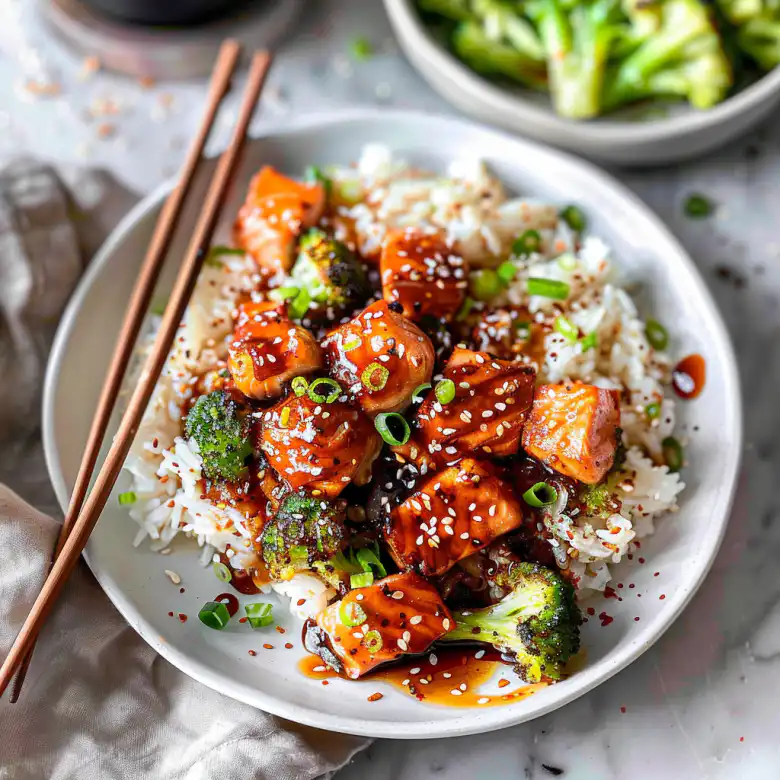
This baked teriyaki salmon has become my go-to weeknight dinner when I want something that feels special but doesn’t require much effort. The sweet and savory glaze caramelizes beautifully in the oven, creating a restaurant-quality meal that’s ready in under 30 minutes. It’s the kind of recipe that makes busy evenings feel manageable.
Why This Baked Teriyaki Salmon Works
Baking salmon with teriyaki sauce eliminates the guesswork of stovetop cooking while ensuring the fish stays moist and flaky. The high heat caramelizes the sauce without burning, and the controlled oven environment means consistent results every time. This method also frees up your stovetop for preparing sides.
Ingredients
The beauty of this recipe lies in its simplicity. Most of these ingredients are pantry staples, and the fresh components are easy to find at any grocery store.
For the salmon:
- 4 salmon fillets (6 oz each), skin-on or skinless
- 1 tablespoon olive oil
- 1/2 teaspoon salt
- 1/4 teaspoon black pepper
For the teriyaki sauce:
- 1/3 cup soy sauce (low-sodium preferred)
- 3 tablespoons honey
- 2 tablespoons brown sugar
- 2 tablespoons rice vinegar
- 1 tablespoon fresh ginger, minced
- 3 cloves garlic, minced
- 1 tablespoon cornstarch
- 2 tablespoons water
- 1 teaspoon sesame oil
For garnish:
- 2 green onions, sliced thin
- 1 tablespoon sesame seeds
- 1 lime, cut into wedges
I always keep these ingredients stocked because this recipe has saved me countless times when dinner plans fall through. The combination creates a glossy, flavorful glaze that transforms simple salmon into something memorable.
How to Make It
This straightforward method produces consistent results every time. The key is timing the sauce preparation with the salmon baking for optimal flavor and texture.
- Preheat your oven to 425°F (220°C). Line a baking sheet with parchment paper or lightly grease a baking dish. I prefer parchment because it makes cleanup effortless and prevents any sticking.
- Prepare the salmon fillets. Pat the salmon completely dry with paper towels. This step is crucial for getting a good sear and preventing the sauce from sliding off. Brush both sides with olive oil, then season with salt and pepper. Place the fillets on the prepared baking sheet, leaving space between each piece.
- Make the teriyaki sauce. In a small saucepan, whisk together soy sauce, honey, brown sugar, rice vinegar, minced ginger, and garlic. Bring the mixture to a simmer over medium heat, stirring occasionally. Let it bubble for about 2 minutes to allow the flavors to meld.
- Thicken the sauce. In a small bowl, whisk cornstarch and water until smooth, creating a slurry. Slowly pour this into the simmering sauce while whisking constantly. Continue cooking for 1-2 minutes until the sauce thickens enough to coat the back of a spoon. Remove from heat and stir in sesame oil.
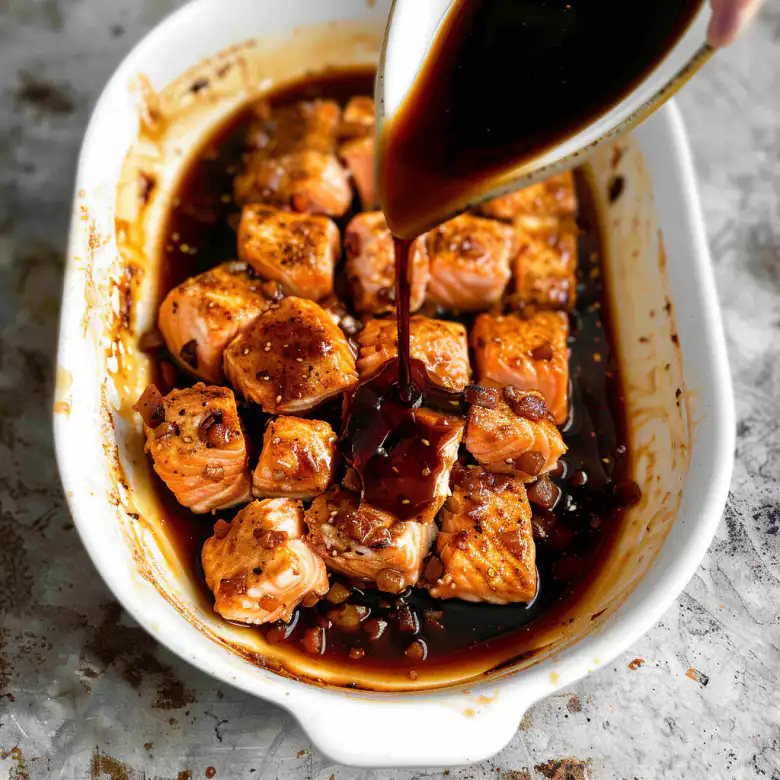
- Brush salmon with sauce. Reserve about 1/4 cup of the teriyaki sauce for serving. Brush the remaining sauce generously over the top and sides of each salmon fillet. The sauce should coat the fish well but not pool excessively on the pan.
- Bake the salmon. Place the baking sheet in the preheated oven and bake for 12-15 minutes, depending on the thickness of your fillets. For fillets about 1-inch thick, 12 minutes usually works well. The salmon is done when it flakes easily with a fork and reaches an internal temperature of 145°F (63°C).
- Broil for caramelization. If you want extra caramelization on top, switch to broil for the last 1-2 minutes of cooking. Watch carefully to prevent burning. The surface should become glossy and slightly darkened.
- Rest and serve. Let the salmon rest for 2-3 minutes after removing from the oven. This allows the juices to redistribute. Garnish with sliced green onions, sesame seeds, and serve with lime wedges alongside the reserved teriyaki sauce.
The entire process takes less than 30 minutes from start to finish, making this an excellent choice for busy weeknights when you want something more exciting than basic baked fish.
Here’s another great option: Lemon garlic salmon tray bake.
Nutrition at a Glance
This baked teriyaki salmon provides a well-balanced meal that’s rich in protein and healthy fats. Here’s what you’re getting per serving:
- High-quality protein: About 35 grams per serving supports muscle health and keeps you satisfied
- Omega-3 fatty acids: Essential fats that support heart and brain health
- Low carbohydrates: Only about 15 grams, mostly from the natural sugars in honey and brown sugar
- Moderate calories: Approximately 320 calories per serving, making it suitable for various dietary goals
- Rich in B vitamins: Particularly B12, which supports energy metabolism
- Good source of potassium: Important for heart health and muscle function
- Selenium content: An antioxidant mineral that supports immune function
The sauce adds minimal calories while providing maximum flavor impact. Using honey instead of refined sugar adds trace minerals and antioxidants, though the amounts are small.
How to Serve It
This versatile salmon pairs beautifully with a variety of sides, making it easy to create complete, satisfying meals. Here are my favorite combinations:
- With steamed rice: Jasmine or brown rice absorbs the extra teriyaki sauce beautifully
- Over quinoa: Adds protein and creates a more filling, nutritious base
- Alongside roasted vegetables: Broccoli, asparagus, or Brussels sprouts complement the Asian flavors
- With stir-fried vegetables: Snap peas, bell peppers, and carrots make a colorful, crunchy side
- On a bed of greens: Mixed greens or spinach create a lighter, salad-style meal
- With coconut rice: The subtle sweetness pairs wonderfully with the teriyaki glaze
- Accompanied by edamame: Simple steamed edamame adds protein and fiber
- With Asian cucumber salad: The cool, crisp texture provides a refreshing contrast
I often serve this as part of a larger Asian-inspired spread, especially when entertaining, because it looks impressive but requires minimal last-minute attention.
Common Mistakes
After making this recipe countless times and hearing feedback from friends who’ve tried it, I’ve identified several pitfalls that can affect the final result:
- Not drying the salmon properly: Excess moisture prevents proper browning and makes the sauce slide off
- Overcooking the fish: Salmon continues cooking after removal from the oven, so slight undercooking is better than overdoing it
- Using high-sodium soy sauce without adjusting: This can make the final dish too salty; taste and adjust accordingly
- Skipping the cornstarch slurry: The sauce won’t thicken properly and will run off the salmon
- Adding cornstarch directly: This creates lumps that won’t dissolve; always make a slurry first
- Not reserving sauce for serving: The cooked sauce on the fish can become quite reduced; extra sauce enhances the meal
- Crowding the baking sheet: This steams the fish rather than allowing it to caramelize
- Using frozen salmon without proper thawing: Ice crystals create excess moisture and uneven cooking
- Ignoring thickness variations: Thicker fillets need longer cooking times; adjust accordingly
Most of these mistakes are easily avoided with a little attention to detail, and even imperfect results usually taste good thanks to the flavorful sauce.
Storage and Reheating
Proper storage and reheating techniques help maintain the salmon’s texture and flavor for enjoyable leftovers:
- Refrigerator storage: Store in airtight containers for up to 3 days; separate any extra sauce to prevent sogginess
- Freezer storage: Freeze for up to 2 months, though texture may be slightly different after thawing
- Gentle reheating: Use low oven heat (300°F) for 8-10 minutes to prevent drying out
- Microwave option: Heat in 30-second intervals at 50% power, covering with a damp paper towel
- Room temperature first: Let refrigerated salmon sit for 10-15 minutes before reheating for more even warming
- Add moisture: Brush with reserved sauce or a little water before reheating
- Avoid overheating: Salmon is done when just warmed through; overcooking makes it dry and tough
- Fresh garnishes: Add new green onions and sesame seeds after reheating for the best appearance
I find that leftover teriyaki salmon actually makes excellent cold additions to salads or grain bowls, so don’t feel compelled to reheat everything.
Leftover Ideas
Leftover baked teriyaki salmon transforms easily into new meals, making this recipe even more valuable for meal planning:
- Salmon fried rice: Flake the salmon and stir it into fried rice during the last few minutes of cooking
- Asian-style salad: Serve cold salmon over mixed greens with sesame dressing and crunchy vegetables
- Salmon burgers: Flake and mix with breadcrumbs, egg, and seasonings to form patties
- Grain bowls: Combine with quinoa, roasted vegetables, and avocado for a nutritious lunch
- Pasta salad: Toss with cooked noodles, vegetables, and Asian-inspired dressing
- Salmon onigiri: Mix flaked salmon with sushi rice for Japanese-style rice balls
- Lettuce wraps: Use flaked salmon as filling with fresh herbs and vegetables
- Breakfast hash: Combine with diced potatoes and vegetables for a protein-rich morning meal
- Salmon poke bowl: Dice cold salmon and serve over rice with traditional poke accompaniments
- Asian tacos: Use flaked salmon in soft tacos with cabbage slaw and spicy mayo
These leftover transformations often become favorites in their own right, making the initial cooking effort even more worthwhile for busy households.
PrintBaked Teriyaki Salmon
- Total Time: 25 minutes
- Yield: 4 servings 1x
Description
Tender, flaky salmon glazed with homemade teriyaki sauce and baked to caramelized perfection. Ready in under 30 minutes.
Ingredients
- 4 salmon fillets (6 oz each), skin-on or skinless
- 1 tablespoon olive oil
- 1/2 teaspoon salt
- 1/4 teaspoon black pepper
- 1/3 cup soy sauce (low-sodium preferred)
- 3 tablespoons honey
- 2 tablespoons brown sugar
- 2 tablespoons rice vinegar
- 1 tablespoon fresh ginger, minced
- 3 cloves garlic, minced
- 1 tablespoon cornstarch
- 2 tablespoons water
- 1 teaspoon sesame oil
- 2 green onions, sliced thin
- 1 tablespoon sesame seeds
- 1 lime, cut into wedges
Instructions
- 1. Preheat oven to 425°F (220°C). Line a baking sheet with parchment paper.
- 2. Pat salmon dry with paper towels. Brush with olive oil and season with salt and pepper. Place on prepared baking sheet.
- 3. In a small saucepan, combine soy sauce, honey, brown sugar, rice vinegar, ginger, and garlic. Bring to a simmer over medium heat for 2 minutes.
- 4. Whisk cornstarch and water until smooth. Add to simmering sauce while whisking constantly. Cook 1-2 minutes until thickened. Remove from heat and stir in sesame oil.
- 5. Reserve 1/4 cup sauce for serving. Brush remaining sauce generously over salmon fillets.
- 6. Bake for 12-15 minutes, until salmon flakes easily with a fork and reaches 145°F internal temperature.
- 7. Optional: Broil for 1-2 minutes for extra caramelization.
- 8. Let rest 2-3 minutes. Garnish with green onions and sesame seeds. Serve with lime wedges and reserved sauce.
Notes
Store leftovers in refrigerator for up to 3 days. Reheat gently in 300°F oven for 8-10 minutes. Salmon thickness affects cooking time – adjust accordingly.
- Prep Time: 10 minutes
- Cook Time: 15 minutes
- Category: Main Course
- Method: Baking
- Cuisine: Asian
Nutrition
- Serving Size: 1 fillet
- Calories: 320
- Sugar: 13g
- Sodium: 890mg
- Fat: 14g
- Carbohydrates: 15g
- Fiber: 0g
- Protein: 35g