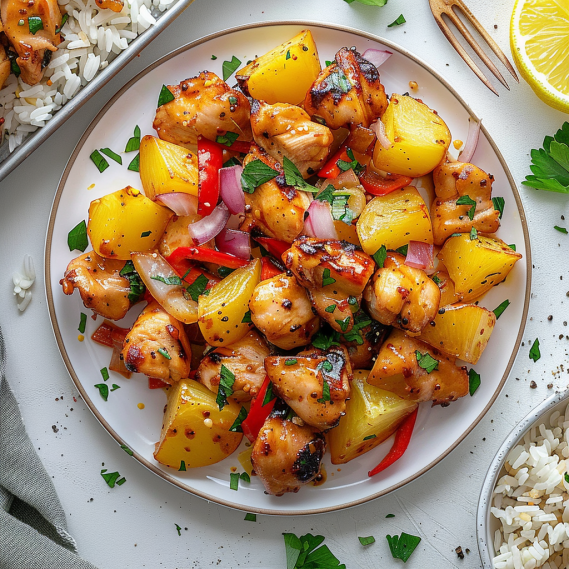
This Hawaiian Chicken Sheet Pan recipe has become a staple in my busy weeknight rotation. It’s a dish that delivers bright, tropical flavors without a lot of fuss, perfect for those evenings when you want something delicious and satisfying with minimal cleanup. The combination of tender chicken, sweet pineapple, and savory vegetables, all roasted together, creates a wonderfully balanced meal.
Why This Hawaiian Chicken Sheet Pan Works
This recipe shines because it streamlines the cooking process. Roasting everything on a single sheet pan means less washing up, and the flavors meld together beautifully in the oven. The pineapple caramelizes, adding a delightful sweetness that complements the chicken and vegetables. It’s a complete meal in one pan.
Ingredients
- 1.5 pounds boneless, skinless chicken thighs or breasts, cut into 1-inch pieces
- 1 tablespoon olive oil
- 1 teaspoon garlic powder
- 1 teaspoon onion powder
- 1/2 teaspoon salt
- 1/4 teaspoon black pepper
- 1 cup fresh pineapple chunks (about 1/2-inch pieces)
- 1 red bell pepper, seeded and cut into 1-inch pieces
- 1 yellow bell pepper, seeded and cut into 1-inch pieces
- 1/2 medium red onion, cut into 1-inch wedges
- 1/4 cup soy sauce (low sodium is a good option)
- 2 tablespoons honey or brown sugar
- 1 tablespoon rice vinegar
- 1 teaspoon grated fresh ginger (or 1/2 teaspoon ground ginger)
- Optional garnishes: chopped fresh cilantro, sesame seeds, cooked rice for serving
Gathering all your ingredients before you begin is part of setting yourself up for a smooth cooking experience. This prep work ensures you can move efficiently through the steps and enjoy the process, rather than searching for something mid-recipe.
Don’t miss this delicious recipe:French Chicken Casserole à la Normande
How to Make It
- Preheat Oven and Prep Pan: Preheat your oven to 400°F (200°C). Line a large baking sheet with parchment paper or aluminum foil for easier cleanup. This is a simple step that truly makes a difference when it comes to post-meal chores. The parchment paper ensures that nothing sticks, allowing for effortless removal of the cooked food and making the cleanup process for the baking sheet a breeze, often just requiring a quick wipe-down.
- Season the Chicken: In a medium bowl, toss the chicken pieces with olive oil, garlic powder, onion powder, salt, and pepper until evenly coated. Make sure each piece of chicken is thoroughly coated with the seasoning mix. This ensures that every bite of chicken is flavorful and tender, forming the base of the dish’s overall taste profile.
- Prepare the Sauce: In a small bowl, whisk together the soy sauce, honey or brown sugar, rice vinegar, and grated ginger. This simple sauce will be the flavor base for our Hawaiian chicken. Grating fresh ginger adds a more potent and aromatic flavor than ground ginger, but either works. The rice vinegar adds a subtle tang that cuts through the sweetness of the honey and pineapple, creating a well-rounded marinade.
- Arrange on Baking Sheet: Place the seasoned chicken pieces on one side of the prepared baking sheet. On the other side, spread out the pineapple chunks, red and yellow bell pepper pieces, and red onion wedges. Ensure everything is in a single layer for even cooking. Overcrowding can lead to steaming rather than roasting, affecting the texture and caramelization. Allowing adequate space is key to achieving beautifully roasted ingredients with slightly crispy edges. This even distribution also means that all components of the dish will be ready at the same time.
- Roast: Place the baking sheet in the preheated oven and roast for 15 minutes. This initial roasting period begins the tenderizing and cooking process for the chicken and vegetables. The high heat of the oven is crucial for achieving the desired roasted texture and flavor development.
- Toss with Sauce: Carefully remove the baking sheet from the oven. Drizzle about half of the prepared sauce over the chicken and vegetables. Toss them gently on the baking sheet to coat everything. This step is vital for allowing the sauce to begin simmering and caramelizing onto the ingredients, infusing them with the sweet and savory flavors.
- Continue Roasting: Return the baking sheet to the oven and roast for another 10-15 minutes, or until the chicken is cooked through and the vegetables are tender-crisp and slightly caramelized. The pineapple should be softened and slightly browned. The internal temperature of the chicken should reach 165°F (74°C). Keep a close eye to prevent overcooking, as chicken can dry out quickly.
- Final Drizzle and Serve: Once cooked, remove the sheet pan from the oven. Drizzle the remaining sauce over the chicken and vegetables. This final drizzle adds a glossy finish and ensures that some fresh sauce flavor is present. Serve immediately. This Hawaiian Chicken Sheet Pan recipe is designed for simplicity and flavor, resulting in a wonderfully cohesive meal with minimal effort.

Nutrition at a Glance
- Protein: Chicken is a good source of lean protein, essential for muscle repair and satiety. This dish provides a substantial protein serving, making it a satisfying and balanced meal option for lunch or dinner.
- Vitamins: Bell peppers contribute vitamins A and C, vital for immune function and skin health. Pineapple also provides vitamin C and manganese. The vibrant colors of the bell peppers are a testament to their rich nutrient content.
- Fiber: Vegetables and pineapple offer dietary fiber, supporting digestive health. Fiber aids in digestion and contributes to a feeling of fullness, making this a well-rounded meal.
- Minerals: Ingredients like soy sauce and chicken provide sodium and other minerals, while pineapple offers manganese. While sodium is present, using low-sodium soy sauce can help manage intake.
Please consult a professional nutritionist for precise dietary information tailored to your needs, as individual ingredient choices and portion sizes can significantly impact these values. The specific types of chicken, exact measurements of soy sauce, and the choice between honey or brown sugar can all lead to variations in the final nutritional breakdown.
How to Serve It
- Over Rice: Serve hot off the baking sheet over steamed white rice, brown rice, or even quinoa for a complete and filling meal. The rice absorbs some of the delicious pan juices, making every bite flavorful. For an authentic touch, consider serving with jasmine rice.
- As a Bowl: Create a “bowl” by layering the chicken and vegetables over a base of rice, then topping with optional garnishes like fresh cilantro or toasted sesame seeds. This presentation makes for an attractive and easy-to-eat meal, especially for weeknights.
- With Noodles: Toss with cooked noodles, such as lo mein or ramen, for a stir-fry-like experience. The warm noodles absorb the sauce beautifully, creating a deeply satisfying dish. Try adding a bit of chili garlic sauce for a spicy kick.
- In Lettuce Wraps: Spoon the mixture into large lettuce leaves (like butter or romaine) for a lighter, refreshing option. This is a fantastic choice for those looking for a low-carb meal or a lighter lunch. The crisp lettuce provides a nice textural contrast.
- Garnishes: A sprinkle of chopped fresh cilantro adds a burst of herbaceousness, while a scattering of toasted sesame seeds provides a nutty crunch. Other suitable garnishes include thinly sliced green onions or a drizzle of sriracha for those who enjoy a bit of heat.
The beauty of this dish lies in its adaptability, making it suitable for a variety of meal preferences and occasions. Whether you’re feeding a family, preparing a meal for one, or looking for something new to try for a casual gathering, this Hawaiian Chicken Sheet Pan fits the bill.
Common Mistakes
- Overcrowding the Pan: This is perhaps the most frequent mistake. If you pile too much food onto the baking sheet, it will steam instead of roast. This means your vegetables won’t get those nicely caramelized edges, and your chicken might not cook as evenly. Overcrowding also prevents the sugars in the sauce from properly caramelizing, leading to a less flavorful result. If your baking sheet isn’t large enough, it’s better to use two. A good rule of thumb is to allow about 2-3 inches of space between the pieces of food. You want the air to circulate around each piece for optimal roasting.
- Uneven Cutting: Cutting your chicken and vegetables into similarly sized pieces is crucial for even cooking. If you have some chicken pieces that are significantly larger than others, they might be raw when the smaller ones are overcooked. Likewise, if your bell pepper pieces are huge and your onion pieces are tiny, they’ll cook at very different rates. Aim for consistent 1-inch chunks for everything, including the pineapple if it’s very large. This consistency ensures that all parts of the dish are ready to eat at the same time.
- Skipping the Preheat: Putting your food into a cold oven will dramatically increase cooking time and lead to less desirable textures. An oven that’s not at the correct temperature won’t effectively roast or caramelize your ingredients. Make sure your oven is fully preheated before you place the baking sheet inside. This is especially important for a quick cooking method like sheet pan meals, where precise temperature control is key to success.
- Not Tossing with Sauce: While the initial drizzle is important, tossing the chicken and vegetables halfway through with some of the sauce helps to distribute the flavors and encourages better caramelization. The sugars in the sauce will start to break down and bake onto the ingredients, creating that lovely sticky glaze synonymous with Hawaiian flavors. This step also ensures that the sauce is not just on top but integrated throughout the dish.
- Overcooking: Because sheet pan meals cook relatively quickly, it’s easy to get distracted and overcook everything. Keep an eye on the chicken to ensure it’s cooked through but still moist, and check the vegetables to ensure they reach your desired tenderness. The pineapple should be soft and slightly browned, not mushy. Using a meat thermometer to check the chicken’s internal temperature is the most reliable way to determine doneness (165°F/74°C).
- Using Too Little Sauce: While you don’t want to drown everything, having enough sauce is important for flavor. The sauce not only adds a delicious glaze but also helps to keep ingredients moist during the roasting process. If you prefer a saucier dish, you can always make a little extra sauce to drizzle on top after cooking, or even reduce some of the sauce in a small saucepan to create a more concentrated glaze.
Being mindful of these common errors can help ensure your Hawaiian Chicken Sheet Pan meal turns out delicious and satisfying every time. Each of these points contributes to the overall quality of the dish, from texture and flavor to overall cooking success.
Storage and Reheating
- Storage: Once the meal has cooled completely, transfer any leftovers to an airtight container. Store in the refrigerator for up to 3-4 days. It’s important to ensure the container is well-sealed to prevent the ingredients from drying out or picking up other odors from the refrigerator. Allow the food to cool to room temperature before refrigerating to prevent condensation from making the food soggy.
- Reheating: For the best results, reheat leftovers in an oven or toaster oven at around 350°F (175°C) until warmed through. This helps to restore some of the crispness to the vegetables and chicken. Alternatively, you can reheat gently in a non-stick skillet over medium-low heat, stirring occasionally, which can also help to re-crisp some of the elements. Microwaving is also an option, though it may result in a softer texture for the vegetables and chicken. If you plan to serve over rice, reheat the chicken and vegetables separately from the rice to prevent the rice from becoming gummy or mushy.
Effective storage and reheating are key to enjoying this meal even after the initial cooking. Following these guidelines will help maintain the quality and flavor of your Hawaiian Chicken Sheet Pan. Properly stored leftovers can be just as enjoyable as the freshly cooked meal, provided they are reheated correctly.
Leftover Ideas
- Chicken Salad: Chop the leftover chicken and mix it with mayonnaise, celery, a bit of chopped pineapple, and a dash of hot sauce for a tropical-inspired chicken salad sandwich or wrap filling. Add a pinch of salt and pepper to taste.
- Quesadillas: Shred the chicken and chop the vegetables. Layer them with shredded cheese (like Monterey Jack or cheddar) between two tortillas and cook in a skillet until golden brown and the cheese is melted. This is a quick and satisfying way to use up smaller amounts of leftovers.
- Fried Rice: Dice the leftover chicken and vegetables. Stir-fry them with cooked rice, a scrambled egg, soy sauce, and any other desired seasonings for a quick and flavorful fried rice. This is a great way to stretch leftovers into another full meal component.
- Stuffed Bell Peppers: If you have whole bell peppers on hand, hollow them out, mix the Hawaiian chicken and vegetables with some rice and cheese, stuff them into the peppers, and bake until tender. This elevates the leftovers into a new, visually appealing dish.
- Salad Topping: Dice the chicken and vegetables and serve them cold over a bed of mixed greens with a light vinaigrette for a refreshing salad. This is a particularly good option for lighter lunches or as a side dish.
Giving leftovers a new life can make meal planning even more efficient and enjoyable. The versatility of this Hawaiian Chicken Sheet Pan means you can enjoy it in multiple ways throughout the week, reducing food waste and providing variety.
Hawaiian Chicken Sheet Pan
- Total Time: 45-50 minutes
- Yield: 4 servings 1x
Description
A simple and flavorful Hawaiian Chicken Sheet Pan recipe loaded with chicken, pineapple, and colorful vegetables, perfect for a weeknight meal with easy cleanup.
Ingredients
- 1.5 pounds boneless, skinless chicken thighs or breasts, cut into 1-inch pieces
- 1 tablespoon olive oil
- 1 teaspoon garlic powder
- 1 teaspoon onion powder
- 1/2 teaspoon salt
- 1/4 teaspoon black pepper
- 1 cup fresh pineapple chunks (about 1/2-inch pieces)
- 1 red bell pepper, seeded and cut into 1-inch pieces
- 1 yellow bell pepper, seeded and cut into 1-inch pieces
- 1/2 medium red onion, cut into 1-inch wedges
- 1/4 cup soy sauce (low sodium recommended)
- 2 tablespoons honey or brown sugar
- 1 tablespoon rice vinegar
- 1 teaspoon grated fresh ginger (or 1/2 teaspoon ground ginger)
- Optional garnishes: chopped fresh cilantro, sesame seeds, cooked rice for serving
Instructions
- 1. Preheat your oven to 400°F (200°C). Line a large baking sheet with parchment paper or aluminum foil.
- 2. In a medium bowl, toss the chicken pieces with olive oil, garlic powder, onion powder, salt, and pepper until evenly coated.
- 3. In a small bowl, whisk together the soy sauce, honey or brown sugar, rice vinegar, and grated ginger.
- 4. Place the seasoned chicken pieces on one side of the prepared baking sheet. On the other side, spread out the pineapple chunks, red and yellow bell pepper pieces, and red onion wedges. Ensure everything is in a single layer.
- 5. Place the baking sheet in the preheated oven and roast for 15 minutes.
- 6. Carefully remove the baking sheet from the oven. Drizzle about half of the prepared sauce over the chicken and vegetables. Toss them gently on the baking sheet to coat everything.
- 7. Return the baking sheet to the oven and roast for another 10-15 minutes, or until the chicken is cooked through and the vegetables are tender-crisp and slightly caramelized. The pineapple should be softened and slightly browned.
- 8. Once cooked, remove the sheet pan from the oven. Drizzle the remaining sauce over the chicken and vegetables. Serve immediately.
Notes
Store leftovers in an airtight container in the refrigerator for up to 3-4 days. Reheat in an oven or toaster oven at 350°F (175°C) until warmed through for best results. Alternatively, reheat gently in a skillet over medium-low heat.
- Prep Time: 15 minutes
- Cook Time: 30-35 minutes
- Category: Main Course
- Method: Sheet Pan Roasting
- Cuisine: American
Nutrition
- Serving Size: 1 serving
- Calories: Approx. 350-450 (variance based on specific ingredients)
- Sugar: Approx. 15-20g
- Sodium: Approx. 500-700mg (variance with soy sauce and added sugar)
- Fat: Approx. 10-15g
- Carbohydrates: Approx. 25-35g
- Fiber: Approx. 3-5g
- Protein: Approx. 30-35g