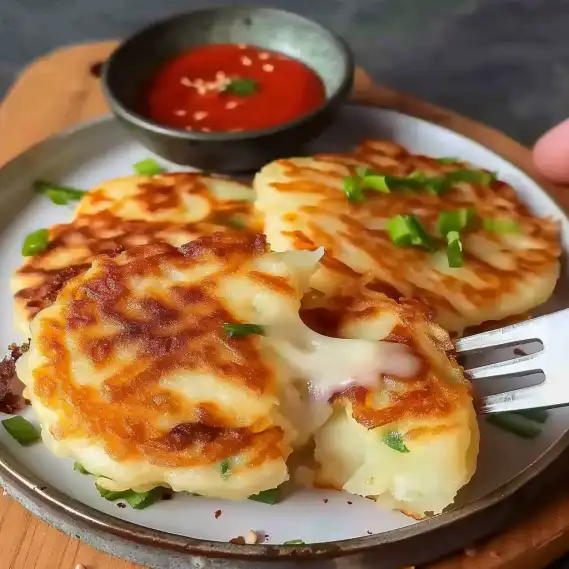
There’s something incredibly comforting about a warm potato pancake. When I discovered the Korean twist, gamjajeon, I was instantly drawn in. Adding a touch of cheese elevated it from simply delicious to something truly special.
Why This Gamjajeon Korean Potato Pancakes with Cheese Works
This recipe for Gamjajeon Korean Potato Pancakes with Cheese is a winner because it bridges the gap between a simple comfort food and an exciting international flavor profile.
Ingredients
- 2 large Russet potatoes (about 1.5 pounds / 680g), peeled and roughly chopped
- 1/2 medium yellow onion, roughly chopped
- 1 clove garlic, roughly chopped
- 2 tablespoons all-purpose flour
- 1 tablespoon cornstarch or potato starch (for extra crispiness)
- 1/2 teaspoon salt
- 1/4 teaspoon black pepper
- 1/4 teaspoon freshly ground black pepper
- 2-4 tablespoons cold water, as needed
- 1/4 cup shredded cheese (such as mozzarella, cheddar, or a blend), divided
- 2-3 tablespoons neutral cooking oil (like vegetable, canola, or grapeseed oil)
- For the Dipping Sauce (Optional but Recommended):
- 2 tablespoons soy sauce
- 1 tablespoon rice vinegar
- 1 teaspoon sesame oil
- 1/2 teaspoon gochugaru (Korean chili flakes), or to taste
- 1/2 teaspoon toasted sesame seeds
- 1/2 teaspoon finely chopped fresh chives or green onion (optional)
Once you have all your ingredients laid out, you’re ready to start transforming these simple components into something extraordinary. The process is quite straightforward, and the results are well worth the effort.
How to Make It
- Prepare the Potato Mixture: In a food processor, combine the peeled and roughly chopped potatoes, yellow onion, and garlic. Pulse until the mixture is finely grated or chopped into small pieces. Be careful not to over-process into a paste; you want some texture.
- Drain Excess Moisture: This is a crucial step for achieving crispiness. Transfer the potato and onion mixture to a fine-mesh sieve set over a bowl. Press down on the mixture with the back of a spoon or your hands to squeeze out as much liquid as possible.
- Combine Batter Ingredients: In a medium bowl, combine the drained potato and onion mixture with the all-purpose flour, cornstarch (or potato starch), salt, and black pepper. Mix well to coat the potato shreds evenly.
- Add Starch from Reserved Liquid: Let the reserved potato liquid sit undisturbed for a few minutes. You’ll notice a white, starchy sediment at the bottom. Carefully pour off most of the clear liquid, leaving the starchy sediment behind.
- Adjust Consistency: Stir the mixture again. If it seems too dry and crumbly, add the cold water a tablespoon at a time until a cohesive, but not runny, batter forms. You want it to hold together when pressed, but not be overly wet.
- Incorporate Cheese: Gently fold in about half of the shredded cheese into the potato batter. This ensures pockets of melted cheese throughout the pancake. Reserve the remaining cheese for topping the pancakes while they cook.
- Heat the Pan: Heat 2 tablespoons of neutral cooking oil in a large non-stick skillet or cast-iron pan over medium-high heat. The oil should be hot enough that a drop of batter sizzles immediately.
- Form and Cook Pancakes: Drop spoonfuls of the potato batter into the hot oil, flattening them into thin, round pancakes using the back of your spoon or a spatula. Aim for pancakes about 4-5 inches in diameter. Don’t overcrowd the pan; cook in batches if necessary.
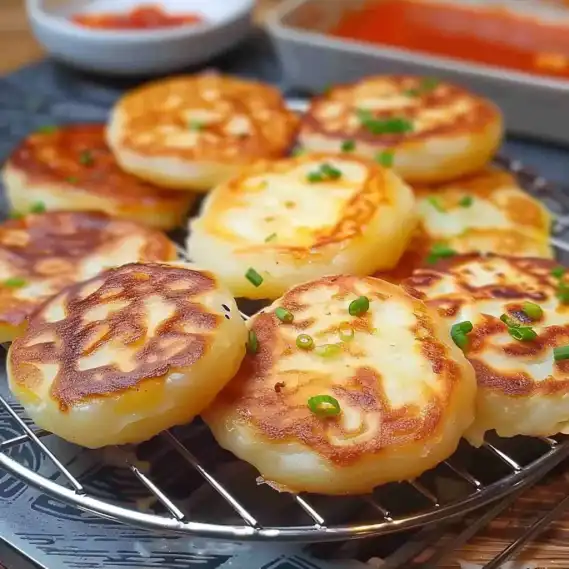
- Fry Until Golden and Crispy: Cook for 3-5 minutes per side, or until the edges are deeply golden brown and crispy, and the pancakes are cooked through. You may need to adjust the heat to ensure the inside cooks without the outside burning.
- Drain and Repeat: Once cooked, remove the pancakes from the skillet and place them on a wire rack set over a baking sheet or on paper towels to drain any excess oil.
- Prepare Dipping Sauce (Optional): While the pancakes are cooking or draining, whisk together the soy sauce, rice vinegar, sesame oil, gochugaru, toasted sesame seeds, and chopped chives or green onion (if using) in a small bowl.
Following these steps will lead you to a plate of beautifully cooked, golden-brown Korean potato pancakes, ready to be enjoyed with a flavorful dipping sauce.
Nutrition at a Glance
- Calories: Moderate, primarily from the potatoes, oil, and cheese.
- Carbohydrates: The main source is from the potatoes, providing energy.
- Fat: Contributed by the cooking oil and the cheese. Opting for less oil and lower-fat cheese can adjust this.
- Protein: Some protein comes from the potatoes, onion, and notably from the cheese.
- Fiber: Potatoes and onions offer a decent amount of dietary fiber.
- Sodium: Can be influenced by the salt added and the soy sauce in the dipping sauce.
How to Serve It
- With Traditional Dipping Sauce: This is the most classic way to serve gamjajeon. The salty, tangy, and slightly spicy sauce cuts through the richness of the pancake and complements the potato flavor beautifully.
- As a Side Dish: These pancakes make an excellent accompaniment to Korean main dishes like bulgogi, bibimbap, or spicy stir-fries, adding a different texture and flavor profile to the meal.
- For Brunch or Light Lunch: Serve them alongside a simple green salad or a few slices of fresh fruit for a satisfying and flavorful light meal.
- As an Appetizer: Cut the larger pancakes into smaller wedges or squares, making them easy to share and enjoy as a starter.
- Garnished: A sprinkle of fresh green onions or a few extra toasted sesame seeds can add visual appeal and a burst of freshness.
Presentation matters, and by considering these serving suggestions, you can turn a simple pancake into a delightful culinary experience for yourself and your guests.
Check this out: Easy French Onion Potato Bake
Common Mistakes
- Not Draining Enough Moisture: This is, perhaps, the most critical mistake. If you don’t wring out enough liquid from the grated potatoes and onions, your pancakes will be gummy and soggy, rather than crispy. Squeeze with all your might!
- Overcrowding the Pan: Trying to cook too many pancakes at once will lower the temperature of the oil. This leads to greasy, undercooked pancakes that don’t develop a good crust. Cook in batches, giving each pancake ample space.
- Using the Wrong Heat: If the heat is too low, the pancakes will absorb too much oil and become greasy. If it’s too high, the outside will burn before the inside is cooked through. Medium-high heat is usually ideal, but you may need to adjust as you go.
- Not Letting the Oil Get Hot Enough: Adding the batter to lukewarm oil will result in a greasy pancake that sticks to the pan. Ensure your oil is shimmering and hot before dropping in the batter. A quick sizzle is a good indicator.
- Making the Pancakes Too Thick: Thicker pancakes are harder to cook through and less likely to achieve a uniform crispiness. Aim for a relatively thin layer of batter in the pan.
- Not Using Enough Oil: While you don’t want to drown the pancakes, a sufficient amount of oil is necessary for proper frying and achieving that golden-brown, crispy exterior. Skimping too much will result in a less satisfying texture.
- Skipping the Starch from the Reserved Liquid: While flour is a binder, the potato starch released from the potatoes is excellent for creating a better texture and crisp. Don’t discard all that cloudy liquid!
By being mindful of these common missteps, you can significantly improve your gamjajeon-making skills and consistently produce delicious, crispy, and well-cooked potato pancakes.
Storage and Reheating
- Storage: Once completely cooled, store leftover pancakes in an airtight container or a resealable plastic bag in the refrigerator. It’s best to place a piece of parchment paper between layers of pancakes to prevent them from sticking together.
- Reheating in an Oven or Toaster Oven: This is often the best method for regaining crispiness. Preheat your oven or toaster oven to 375°F (190°C). Arrange the pancakes in a single layer on a baking sheet (lined with parchment paper for easier cleanup).
- Reheating on the Stovetop: You can also reheat them in a skillet. Add a small amount of oil (about 1-2 teaspoons) to a non-stick skillet over medium heat. Place the pancakes in the skillet and cook for 3-5 minutes per side, until heated through and re-crisped.
- Reheating in a Microwave (Least Recommended for Crispiness): While this is the fastest method, microwaving will likely result in softer, less crispy pancakes. If you must use a microwave, heat them in short 30-second intervals until warm, but be prepared for a texture change.
Taking these steps ensures that your leftover gamjajeon can be enjoyed almost as much as the freshly made batch.
Leftover Ideas
- Savory Breakfast Hash: Chop the leftover pancakes into bite-sized pieces and pan-fry them with some diced onions, bell peppers, and perhaps some cooked breakfast sausage or ham for a hearty and flavorful hash. Top with a fried egg.
- Quesadilla Filling: Use the chopped pancakes as a unique filling for quesadillas. Layer them between tortillas with extra cheese, and cook until golden brown and melted. The gooey cheese and potato filling will be a delicious surprise.
- Topping for Salads: Cut the pancakes into small strips or crouton-like pieces. These can add a wonderful textural element and savory flavor to a green salad. Toss them with your favorite dressing just before serving.
- “Nachos” Variation: Break or cut the pancakes into smaller shards. Arrange them on a baking sheet, top with extra cheese, some black beans, corn, and a dollop of kimchi or pickled jalapeños. Bake until the cheese is melted and bubbly. Serve with salsa or sour cream.
- Stuffed Bell Peppers: Mix chopped leftover gamjajeon with cooked ground meat, rice, and a bit of tomato sauce. Stuff this mixture into bell pepper halves and bake until the peppers are tender and the filling is heated through.
- Soup Topper: Cut the pancakes into thin strips and lightly pan-fry or bake them until extra crispy. Use these as a crunchy garnish on top of a hearty vegetable soup, a creamy tomato soup, or even a spicy kimchi jjigae for an added layer of texture and flavor.
These ideas demonstrate how versatile leftover gamjajeon can be, transforming a simple snack into exciting new meals.
Gamjajeon Korean Potato Pancakes with Cheese
- Total Time: 45 minutes
- Yield: 4 servings 1x
- Diet: Vegetarian
Description
Crispy and savory Korean potato pancakes infused with melted cheese. A delightful and easy dish perfect for lunch, as an appetizer, or a side.
Ingredients
- 2 large Russet potatoes (about 1.5 pounds / 680g), peeled and roughly chopped
- 1/2 medium yellow onion, roughly chopped
- 1 clove garlic, roughly chopped
- 2 tablespoons all-purpose flour
- 1 tablespoon cornstarch or potato starch
- 1/2 teaspoon salt
- 1/4 teaspoon black pepper
- 2–4 tablespoons cold water, as needed
- 1/4 cup shredded cheese (such as mozzarella, cheddar, or a blend), divided
- 2–3 tablespoons neutral cooking oil (like vegetable, canola, or grapeseed oil)
- For the Dipping Sauce (Optional but Recommended):
- 2 tablespoons soy sauce
- 1 tablespoon rice vinegar
- 1 teaspoon sesame oil
- 1/2 teaspoon gochugaru (Korean chili flakes), or to taste
- 1/2 teaspoon toasted sesame seeds
- 1/2 teaspoon finely chopped fresh chives or green onion (optional)
Instructions
- 1. Prepare the Potato Mixture: In a food processor, combine the peeled and roughly chopped potatoes, yellow onion, and garlic. Pulse until the mixture is finely grated or chopped into small pieces.
- 2. Drain Excess Moisture: Transfer the potato and onion mixture to a fine-mesh sieve set over a bowl. Press down on the mixture to squeeze out as much liquid as possible. Reserve this liquid.
- 3. Combine Batter Ingredients: In a medium bowl, combine the drained potato and onion mixture with the all-purpose flour, cornstarch (or potato starch), salt, and black pepper. Mix well.
- 4. Add Starch from Reserved Liquid: Let the reserved potato liquid sit. Pour off most of the clear liquid, leaving the starchy sediment. Add this starch to your potato mixture.
- 5. Adjust Consistency: Stir the mixture again. If too dry, add cold water a tablespoon at a time until a cohesive, but not runny, batter forms.
- 6. Incorporate Cheese: Gently fold in about half of the shredded cheese into the potato batter.
- 7. Heat the Pan: Heat 2 tablespoons of neutral cooking oil in a large non-stick skillet over medium-high heat.
- 8. Form and Cook Pancakes: Drop spoonfuls of batter into the hot oil, flattening them into thin pancakes. Sprinkle reserved cheese over the top of each.
- 9. Fry Until Golden and Crispy: Cook for 3-5 minutes per side, until deeply golden brown and crispy.
- 10. Drain and Repeat: Remove pancakes from the pan and drain on a wire rack. Add more oil if needed and repeat with remaining batter.
- 11. Prepare Dipping Sauce (Optional): Whisk together soy sauce, rice vinegar, sesame oil, gochugaru, sesame seeds, and chives/green onion in a small bowl.
Notes
Storage: Store cooled pancakes in an airtight container in the refrigerator for 2-3 days, with parchment paper between layers. Reheating: Reheat in a 375°F (190°C) oven or toaster oven for 8-12 minutes, or on the stovetop with a little oil for 3-5 minutes per side until crispy. Microwaving is not recommended for crispiness.
- Prep Time: 20 minutes
- Cook Time: 25 minutes
- Category: Main Course, Appetizer
- Method: Pan-Frying
- Cuisine: Korean
Nutrition
- Serving Size: 1 serving
- Calories: 300
- Sugar: 3g
- Sodium: 450mg
- Fat: 15g
- Carbohydrates: 32g
- Fiber: 3g
- Protein: 8g