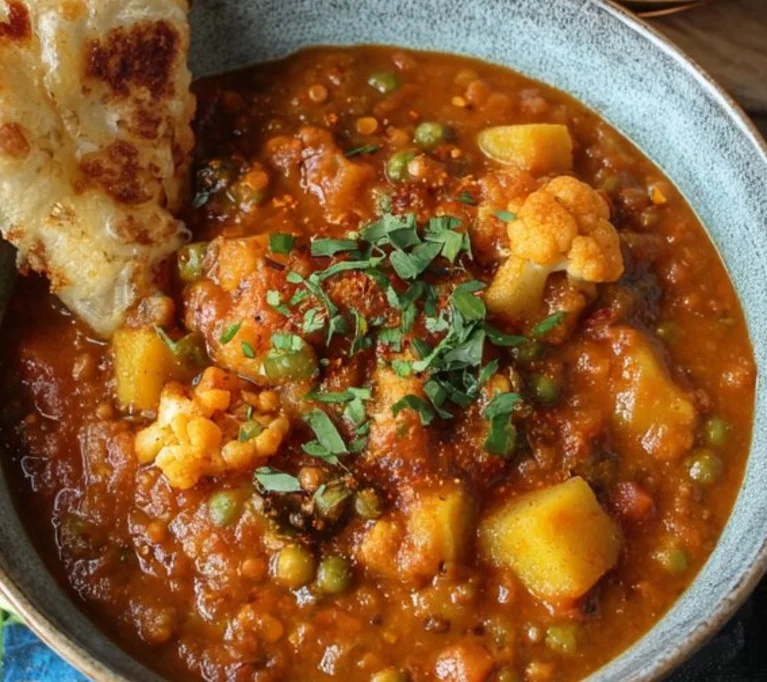
Some weeknights I have twenty minutes and a hungry family; other nights I want something that simmers slowly and fills the house. This vegetable and red lentil curry is my go-to when I want both, it stretches easily, packs a good dose of plant protein from red lentils, and the tomatoes and spices give a comforting, slightly tangy depth. The texture becomes silky as the lentils break down and the veggies soften, and I often make a double batch to have dinner-ready leftovers. If you like a richer, coconut-forward version, try the high-protein coconut red lentil curry I sometimes make for extra creaminess.
Print
Vegetable and Red Lentil Curry
- Total Time: 140 minutes
- Yield: 6 servings 1x
- Diet: Vegan
Description
A nourishing and flexible vegetable and red lentil curry that is wholesome, easy to prepare, and great for leftovers.
Ingredients
- 2 tsp vegetable oil
- 1 large onion, diced
- 4 tbsp curry paste
- 3 cloves garlic, minced
- 500 g potatoes, peeled and cut into chunks
- 400 g courgette, sliced
- 1 cauliflower, cut into florets
- 1 large pepper, cut into chunks
- 250 g green beans
- 2 x 400 g tins chopped tomatoes
- 1 tbsp tomato puree
- 800 ml vegetable stock
- 250 g split red lentils, rinsed
- 1 and a half tsp sea salt
- 0.5 tsp black pepper
- chopped fresh coriander
Instructions
- Heat vegetable oil in a large pan over medium heat. Add diced onion and minced garlic, sauté for 2-3 minutes until soft and translucent.
- Stir in the curry paste and fry for 1 minute until fragrant.
- Add potatoes, courgette, cauliflower, pepper, and green beans, stirring to coat in the curry paste.
- Mix in tomato puree, chopped tomatoes, and vegetable stock; bring to a simmer within 5-7 minutes.
- Add rinsed red lentils, sea salt, and black pepper; bring to a boil, then reduce heat to medium-low and cover.
- Let curry simmer, uncovered, stirring every 20 minutes, for about 1 hour 50 minutes to 2 hours until soft.
- If the curry thickens too much, add water or stock in small increments until desired consistency is reached.
- Adjust seasoning with salt or lemon juice if needed, then serve sprinkled with chopped coriander.
Notes
Curry pairs well with rice or naan; can easily be made ahead for better flavor. Store in the fridge for up to 4 days or freeze for 3 months.
- Prep Time: 20 minutes
- Cook Time: 120 minutes
- Category: Main Course
- Method: Simmering
- Cuisine: Indian
Nutrition
- Serving Size: 1 serving
- Calories: 400
- Sugar: 8g
- Sodium: 700mg
- Fat: 10g
- Saturated Fat: 1.5g
- Unsaturated Fat: 8.5g
- Trans Fat: 0g
- Carbohydrates: 60g
- Fiber: 12g
- Protein: 18g
- Cholesterol: 0mg
Why This Is a Go-To in My Kitchen
This curry hits the practical notes: affordable pantry staples, easy prep, and a forgiving cook time that rewards patience. Expect bold curry aroma, softened vegetables that still hold shape, and a thick, stew-like sauce that’s great on rice or with flatbreads. I rely on it when I need something nourishing that also travels well for lunches.
What You’ll Need
- 2 tsp vegetable oil — neutral oil for frying the base, heats quickly.
- 1 large onion, diced — provides sweetness and body when caramelized.
- 4 tbsp curry paste — use your favorite jarred paste or homemade for depth; adjust to taste.
- 3 cloves garlic, minced — brightens the sauce and layers flavor.
- 500 g potatoes, peeled and cut into chunks — starchy bite that helps thicken the curry.
- 400 g courgette, sliced — tender summer veg that soaks up sauce without falling apart.
- 1 cauliflower, cut into florets — hearty vegetable that holds texture after long cooking.
- 1 large pepper, cut into chunks — color and slight sweetness; any color works.
- 250 g green beans — snap and freshness near the end of cooking keep things lively.
- 2 x 400 g tins chopped tomatoes — the tomato backbone; use a good-quality brand.
- 1 tbsp tomato puree — concentrates tomato flavor and helps thicken the sauce.
- 800 ml vegetable stock — use low-sodium if you prefer control over salt.
- 250 g split red lentils, rinsed in cold water — cook down to slightly creamy texture and add protein.
- 1 and a half tsp sea salt — adjust to taste at the end.
- half tsp black pepper — simple seasoning to finish.
- chopped fresh coriander — bright herb to finish, chopped and sprinkled just before serving.
How It Comes Together
- Add the oil to a large pan over medium heat, and once the oil shimmers add the onion and garlic to sweat for 2–3 minutes until soft and translucent (texture cue: onions should be soft, not browned).
- Stir in the curry paste and fry for 1 minute to wake the spices, coating the onions evenly (aroma cue: spices should smell fragrant and slightly toasted).
- Add all of the vegetables — potatoes, courgette, cauliflower, pepper, and green beans — and stir to coat them in the curry paste so each piece is glossy (texture cue: vegetables should be well-coated and beginning to soften).
- Mix in the tomato puree, tinned tomatoes, and vegetable stock, stirring to combine and deglaze any browned bits from the pan bottom (timing cue: bring to a simmer within 5–7 minutes).
- Add the rinsed red lentils, salt, and pepper, and let the stock come to a boil, then reduce the heat to medium-low and cover with a lid (texture cue: lentils will thicken the liquid as they cook).
- Let the curry gently bubble away, uncovered or partially covered, stirring every 20 minutes to prevent sticking and to check consistency (timing cue: total cook time about 1 hour 50 minutes to 2 hours until soft).
- If the curry sticks or becomes too thick, add up to 500 ml more water or stock in 100 ml increments, stirring after each addition to reach a stew-like but saucy consistency (texture cue: aim for a spoon-coating sauce, not dry).
- Taste and adjust seasoning with more salt or a squeeze of lemon if needed, then spoon into bowls and serve sprinkled with chopped coriander (aroma cue: finish should smell bright and spiced, not flat).
A Look at the Nourishing Side
This recipe makes about 6 generous servings; per serving it’s roughly 350–420 calories depending on portion size and rice or sides. Each serving delivers approximately 15–20 g protein from the red lentils, 45–60 g carbohydrates mostly from potatoes and tomatoes, 8–12 g fat depending on oil used, 8–10 g fiber from the lentils and vegetables, and moderate sodium around 600–800 mg (lower if you use low-sodium stock). One real-life health insight: the red lentils provide a good plant-based protein and fiber combo that helps keep blood sugar steady and supports satiety between meals.
How This Recipe Shows Up at Mealtime
This curry is flexible and suits different mealtime needs.
- Weeknight family dinner: Serve over steamed basmati rice or brown rice with a dollop of yogurt for cooling contrast.
- Casual entertaining: Spoon into bowls and set out naan, chutney, and a simple cucumber raita so guests can assemble.
- Comfort meal: Pair with buttered flatbreads and roasted chickpeas for crunch.
Simple pairings: steamed rice, warm naan, plain yogurt, quick pickled onions, or cilantro-lime rice for a brighter plate.
Storing and Reheating Without Ruining It
- Fridge: Cool to room temperature then store in airtight containers for up to 4 days. Reheat gently on the stove or in the microwave until steaming.
- Freezer: Freeze in portioned containers for up to 3 months; thaw overnight in the fridge before reheating.
- Reheating tip: Add a splash of water or stock when reheating to loosen the sauce, and stir frequently to prevent sticking. A freshness tip: stir in fresh chopped coriander and a squeeze of lemon after reheating to revive brightness.
Small Details That Make a Big Difference
- Use the right lentil: Split red lentils break down and thicken the sauce; whole lentils will stay firmer and change texture.
- Toast the curry paste: Frying the curry paste briefly in oil unlocks essential oils and deepens flavor; don’t skip this step.
- Control the texture with stock additions: Add extra stock in small amounts instead of water to preserve flavor while adjusting thickness.
- Finish with acid: A little lemon juice or tamarind at the end wakes up flavors and balances richness.
- Make it ahead: The flavor improves after a day; if prepping early, undercook the vegetables slightly and finish cooking before serving.
How to Adapt This Recipe
- Seasonal: In summer, swap cauliflower for sliced eggplant and add cherry tomatoes near the end for brightness.
- Comfort-focused: Stir in 200 ml coconut milk in the last 10 minutes of cooking for a creamier, richer curry that kids often prefer.
- Slightly elevated: Finish with roasted spiced cashews and a drizzle of browned butter or ghee for nutty richness and crunch.
What Can Go Wrong and How to Fix It
- Mistake: Lentils are undercooked but vegetables are soft. Fix: Simmer longer with the lid on and add a little extra stock; lentils will absorb moisture and soften.
- Mistake: Curry tastes flat. Fix: Add a final squeeze of lemon or a teaspoon of sugar to balance acidity, and re-season with salt.
- Mistake: Sauce is too thin. Fix: Remove lid and simmer to reduce, or mash a cup of cooked vegetables into the sauce to thicken naturally.
- Mistake: Vegetables are mushy. Fix: Next time add softer vegetables (like courgette) later in the cooking and reserve green beans for the last 10–15 minutes.
Next-Day Meals That Work
- Curry bowls: Reheat and serve over quinoa or brown rice with fresh herbs and a fried egg for breakfast-for-dinner vibes.
- Stuffed sweet potatoes: Spoon reheated curry into halved baked sweet potatoes and top with yogurt and cilantro for a portable meal.
- Layered bake: Mix leftovers with cooked pasta or rice, top with breadcrumbs and cheese, and bake briefly for a gratin-style dish.
Questions Readers Often Ask
Can I make this curry in a slow cooker?
Yes. Brown the onions, garlic, and curry paste in a pan first, then transfer everything to the slow cooker with stock and lentils. Cook on low for 6–8 hours or high for 3–4 hours. Add delicate veg like courgette and green beans in the last hour.
Can I substitute other lentils or beans?
You can use brown or green lentils but they will remain firmer and need longer cooking. Canned lentils or drained canned beans work in a pinch; reduce initial cook time and add them near the end to warm through without falling apart.
Is this recipe spicy and can I adjust heat?
Spice depends on the curry paste. Start with less paste if you’re unsure and add more at the end if needed. You can also add fresh chopped chili, chili flakes, or a touch of cayenne for heat, or plain yogurt to cool it down.
How do I make this gluten-free and kid-friendly?
This recipe is naturally gluten-free if your curry paste and stock are labeled gluten-free. For kids, reduce the curry paste by half and add it back slowly, offering yogurt or plain coconut milk on the side for dipping.