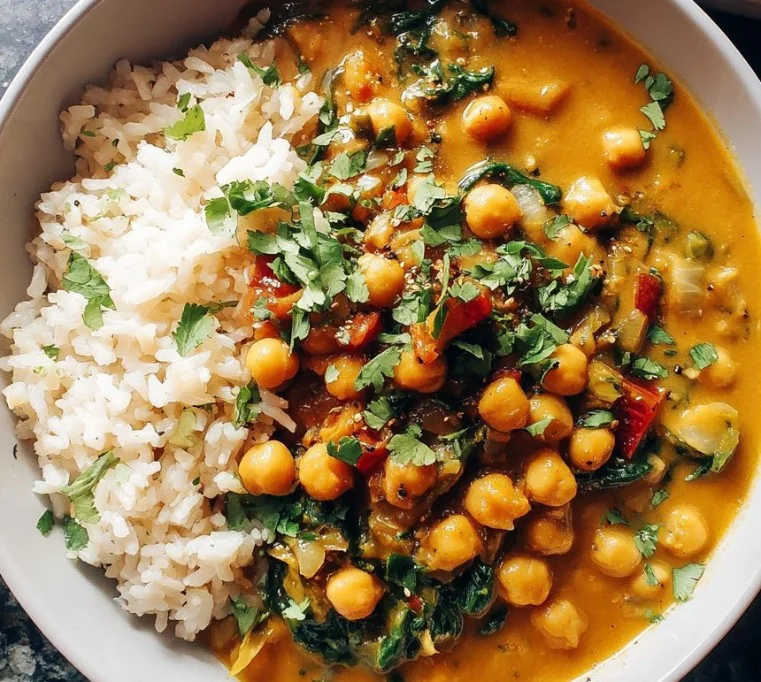
Weeknight dinners in my house often need to be fast, filling, and forgiving, this chickpea curry with spinach and rice checks every box. It delivers plant-based protein and iron from chickpeas and spinach, plus a creamy coconut base that sings with warm spices and a little heat. I make this when I want something healthy and simple that still tastes like effort; it reheats beautifully and the flavors deepen the next day. If you like reliable one-pot meals, you might also enjoy black beans and rice with sausage, which follows the same simple, pantry-forward logic.
Print
Chickpea Curry with Spinach and Rice
- Total Time: 40
- Yield: 4 servings 1x
- Diet: Vegan
Description
A quick and nourishing chickpea curry featuring creamy coconut milk, fresh spinach, and a blend of warm spices, served with jasmine rice.
Ingredients
- 1 tablespoon avocado oil
- 2 cloves garlic, minced
- 1 tablespoon brown sugar
- 1 and 1/2 tablespoons red curry paste
- One 14-ounce can full fat coconut milk
- 1 and 1/2 tablespoons soy sauce
- One 14-ounce can chickpeas, drained and rinsed
- 2 to 3 cups fresh spinach, chopped
- 1/2 cup cilantro, chopped
- 1 and 1/2 cups jasmine rice, uncooked
- 3 small cucumbers, thinly sliced (for pickled cucumber salad)
- Small chunk of red onion (for pickled cucumber salad)
- 1 tablespoon white vinegar (for pickled cucumber salad)
- 2 tablespoons avocado oil (for pickled cucumber salad)
- 1/2 teaspoon salt (for pickled cucumber salad)
- 1/2 teaspoon sugar (for pickled cucumber salad)
Instructions
- Cook the jasmine rice according to package directions, using a tight-fitting lid.
- Heat the avocado oil over medium heat, add the garlic and curry paste, and sauté until softened and fragrant, about 1-2 minutes.
- Add the brown sugar, coconut milk, and soy sauce, stirring to combine and bring to a low simmer until slightly thickened, about 4-5 minutes.
- Add the chickpeas and simmer for 6-8 minutes, mashing a few chickpeas for a creamier texture.
- Stir in the chopped spinach and cilantro, cooking until the spinach is wilted, about 1-2 minutes.
- For the pickled cucumber salad, slice cucumbers and onion, then toss them with white vinegar, avocado oil, salt, and sugar; let sit for 20-30 minutes before serving.
Notes
For added flavor, taste and adjust the seasoning with lime juice or additional sugar as needed. Store leftovers separately to maintain texture.
- Prep Time: 15
- Cook Time: 25
- Category: Main Course
- Method: Stovetop
- Cuisine: Indian
Nutrition
- Serving Size: 1 serving
- Calories: 500
- Sugar: 7g
- Sodium: 700mg
- Fat: 23g
- Saturated Fat: 18g
- Unsaturated Fat: 5g
- Trans Fat: 0g
- Carbohydrates: 60g
- Fiber: 10g
- Protein: 15g
- Cholesterol: 0mg
Why This Is a Go-To in My Kitchen
This is the dish I reach for when I want dinner ready in under 40 minutes without sacrificing comfort. Expect a silky coconut sauce, tender chickpeas that soak up spices, and spinach that brightens the bowl, it’s nourishing, satisfying, and easy to scale up for guests. I make small swaps based on what I have, but the core method stays the same so it’s reliably good every time.
What You’ll Need
- 1 tablespoon avocado oil — neutral and heats well.
- 2 cloves garlic, minced — use more if you love garlic.
- 1 tablespoon brown sugar (more to taste) — balances acidity and heat.
- 1 and 1/2 tablespoons red curry paste — or use Thai yellow for a milder profile.
- One 14-ounce can full fat coconut milk — gives body and creaminess.
- 1 and 1/2 tablespoons soy sauce — adds umami and salt; sub tamari for gluten-free.
- One 14-ounce can chickpeas, drained and rinsed — the heart of the dish; save the liquid for flavor if you like.
- 2 to 3 cups fresh spinach, chopped — folds in at the end and wilts quickly.
- 1/2 cup cilantro, chopped — fresh finish; parsley works too.
- 1 and 1/2 cups jasmine rice, uncooked — fragrant and comforting; basmati is fine.
- 3 small cucumbers (for pickled cucumber salad) — thinly sliced for a bright side.
- Small chunk of red onion (for pickled cucumber salad) — balances the cucumber.
- 1 tablespoon white vinegar (for pickled cucumber salad) — quick pickle acid.
- 2 tablespoons avocado oil (for pickled cucumber salad) — simple dressing base.
- 1/2 teaspoon salt (for pickled cucumber salad) — or to taste.
- 1/2 teaspoon sugar (for pickled cucumber salad) — tames the sharpness.
From Stove to Bowl
- Cook rice according to package directions, using a tight-fitting lid so it steams evenly and stays fluffy (timing cue: jasmine usually takes 15 minutes).
- Heat the avocado oil over medium heat, add the garlic and curry paste, and sauté until softened and fragrant, about 1-2 minutes (aroma cue: you should smell the curry paste bloom).
- Add the brown sugar, coconut milk, and soy sauce, stirring to combine and bring to a low simmer until slightly thickened, about 4-5 minutes (texture cue: sauce should coat the back of a spoon).
- Add the chickpeas and simmer for 6-8 minutes so they soften and absorb flavors; mash a few against the pan with a spoon if you want a creamier base (texture cue: some whole chickpeas, some mashed gives body).
- Stir in the chopped spinach and cilantro and cook just until the spinach is wilted, about 1-2 minutes (timing cue: spinach wilts fast — don’t overcook).
- Taste and adjust with lime juice, a pinch more sugar, or a splash of soy sauce to balance acidity, sweetness, and salt (flavor cue: aim for a rounded, slightly tangy finish).
- For the pickled cucumber salad, thinly slice cucumbers and red onion, toss with white vinegar, avocado oil, salt, and sugar, and let sit for 20-30 minutes before serving (texture cue: cucumbers should remain crisp but flavorful).
Why This Recipe Feels Balanced
Per serving (recipe makes about 4 servings): about 480–550 calories depending on coconut milk and oil, roughly 15–18 grams of protein, 60–75 grams of carbohydrates with most from rice and chickpeas, 18–28 grams of fat (primarily from coconut milk and oil), 8–10 grams of fiber, and an estimated 700–900 mg sodium depending on soy sauce quantity. This bowl gives a solid mix of plant protein, fiber, and healthy fats which help keep you satisfied; for a lower-sodium option, use low-sodium soy sauce and rinse the canned chickpeas well.
How I Like to Serve It
- Family weeknight: ladle over jasmine rice, set out chili crisp, lime wedges, and extra cilantro so everyone customizes their bowl.
- Casual dinner for friends: serve with warm naan or a stack of chapati and a big bowl of the pickled cucumber salad for brightness.
- Quick weekday lunch: skip the rice and serve a smaller portion over a bed of greens for a lighter meal.
Pair with something crunchy and acidic — a simple green salad or the quick pickled cucumbers included here — and a spoonful of chili crisp or plain yogurt for cooling contrast.
Keeping It Fresh for Another Day
- Fridge: Store curry and rice in separate airtight containers for up to 4 days; keeping rice separate prevents it from soaking up too much sauce.
- Freezer: Freeze the curry (without rice) in freezer-safe containers for up to 3 months; thaw overnight in the fridge before reheating.
- Reheating tip: Gently reheat on the stove over low-medium heat, adding a splash of water or broth to loosen the sauce; microwave in 60-second bursts, stirring between intervals to heat evenly. For freshness, stir in a handful of fresh cilantro or a squeeze of lime after reheating.
Small Details That Make a Big Difference
- Use full-fat coconut milk — it gives the curry a velvety mouthfeel that light coconut milk can’t replicate.
- Bloom the curry paste in oil with garlic — this unlocks the paste’s aromatics and deepens the flavor faster than simply stirring it into liquid.
- Mash a few chickpeas intentionally — that slight creaminess makes the sauce cling to rice better without needing extra thickeners.
- Keep greens for last-minute addition — spinach wilts in seconds and staying mindful here keeps color and texture bright.
- Taste and adjust at the end — small tweaks with lime, sugar, or soy sauce transform a good curry into a great one.
Ways to Change It Without Breaking It
- Seasonal: In late summer, swap spinach for a mix of chopped Swiss chard and baby kale; cook the sturdier greens a minute longer to wilt.
- Comfort-focused: Add a diced sweet potato with the coconut milk and simmer until tender for a heartier, spoon-licking bowl that leans into sweetness and comfort.
- Slightly elevated: Finish with pan-toasted cashews and a drizzle of tempered mustard seeds and curry leaves in hot oil for a restaurant-style crunch and scent.
What Can Go Wrong and How to Fix It
- Bland sauce — fix by increasing acidity with lime juice or vinegar and adding a touch more salt or soy sauce; a pinch of brown sugar can balance it.
- Watery curry — simmer a bit longer uncovered to reduce, or mash extra chickpeas to thicken without adding starch.
- Overcooked spinach — add spinach at the very end and remove from heat as soon as it’s wilted; if it’s gone limp, serve with fresh herbs and a squeeze of lime to revive flavor.
- Too spicy — stir in plain yogurt (dairy or coconut yogurt) or a spoonful of sugar to temper heat; coconut milk also cools immediately if added.
- Rice clumps or dries out — cook rice with the right water ratio and fluff with a fork; if dry later, steam briefly with a damp paper towel in the microwave.
Turning Leftovers Into Something New
- Curry-stuffed sweet potatoes: Reheat curry, scoop into halved baked sweet potatoes, top with cilantro and a squeeze of lime for a fast, satisfying lunch.
- Curry grain bowls: Mix reheated curry with leftover quinoa or farro, add a raw crunchy topping like sliced radish or cucumber for texture contrast.
- Wrap or flatbread fold: Warm a tortilla or naan, spoon in curry, add fresh greens and pickles, fold and press lightly for a portable dinner.
FAQs From the Kitchen
Can I make this curry without coconut milk?
Yes, you can substitute with 1 cup full-fat plain Greek yogurt stirred in off-heat for creaminess, or use a cup of blended cashews and water (soaked cashews blended until smooth) to keep it dairy-free while maintaining richness. Adjust liquid so the sauce isn’t too thin.
Is this recipe gluten-free?
It can be: use tamari or a gluten-free soy sauce instead of regular soy sauce to ensure it’s gluten-free. Also check your curry paste label because some packaged pastes contain shrimp paste or gluten-containing additives.
How do I boost the protein without changing the flavor much?
Stir in a drained can of lentils or a cup of cubed, firm tofu when you add the chickpeas; both absorb the curry flavors while increasing protein. Lentils soften and meld, while tofu holds shape and takes on the sauce.
Can I use dried chickpeas instead of canned?
Yes, but plan ahead: soak dried chickpeas overnight and simmer until tender (about 1 to 1.5 hours) or use a pressure cooker to speed it up. Using cooked-from-dry chickpeas gives a firmer texture and can reduce sodium since you control the cooking liquid.