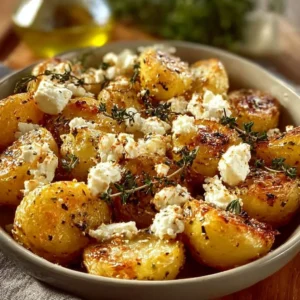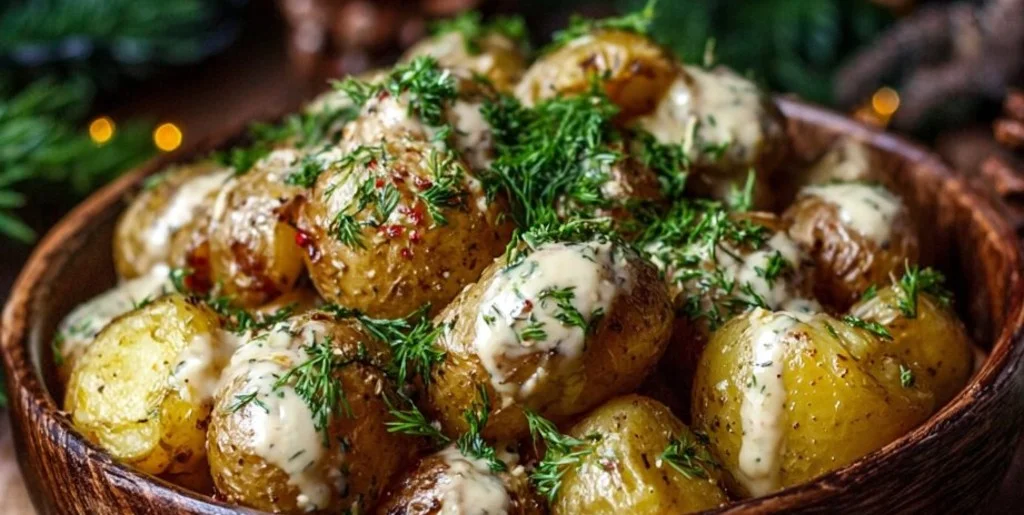
Mustard Roasted Potatoes are roasted baby potatoes finished in a tangy, creamy mustard sauce, giving crisp, browned skins and a silky, sauced interior. I keep it in rotation because the contrast of caramelized exterior and velvety sauce delivers bright, savory flavor while coming together with minimal hands-on time. They pair especially well with simple roasted proteins like this garlic herb roasted salmon, for easy weeknights.
Print
Creamy Mustard Roasted Potatoes
- Total Time: 55 minutes
- Yield: 6 servings 1x
- Diet: Vegetarian
Description
Roasted baby potatoes finished in a tangy, creamy mustard sauce, delivering a contrast of crisp, browned skins and a silky interior.
Ingredients
- 3 lb (1.36 kg) baby potatoes
- Extra virgin olive oil (as needed)
- Kosher salt (as needed)
- Pepper (as needed)
- 1 tbsp (14 g) butter
- 1 shallot (finely diced)
- 2 garlic cloves (minced)
- 1 cup (250 ml) chicken or vegetable broth
- 1 ½ tbsp (22 ml) Dijon mustard
- 1 tbsp (15 ml) grainy mustard
- ¾ cup (175 ml) heavy cream
- 1 ½ tsp (3.5 g) cornstarch
- 2 tsp (10 ml) water
- 1 tsp (5 ml) lemon juice
- 2 tbsp (30 ml) chopped fresh dill (or as needed)
Instructions
- Preheat the oven to 400°F.
- Transfer the potatoes to a baking sheet, drizzle with olive oil, and season with salt and pepper.
- Roast for 35-40 minutes until tender and browned.
- In a skillet over medium heat, add butter and olive oil, then sauté shallots for 3-4 minutes.
- Stir in garlic and sauté for another minute.
- Pour in broth, bring to a simmer, and whisk in mustards, salt, and pepper.
- Add heavy cream, bringing to a simmer again.
- Whisk cornstarch with water and add to the sauce to thicken.
- Stir in lemon juice, adjusting seasoning.
- Layer roasted potatoes in a serving bowl, spoon over mustard sauce, and sprinkle with dill before serving.
Notes
Serve immediately for best texture. Pair with roasted proteins for a balanced meal.
- Prep Time: 15 minutes
- Cook Time: 40 minutes
- Category: Side Dish
- Method: Roasting
- Cuisine: American
Nutrition
- Serving Size: 1 serving
- Calories: 330
- Sugar: 3g
- Sodium: 500mg
- Fat: 17g
- Saturated Fat: 10g
- Unsaturated Fat: 7g
- Trans Fat: 0g
- Carbohydrates: 38g
- Fiber: 5g
- Protein: 5g
- Cholesterol: 30mg
Why This Creamy Mustard Roasted Potatoes Works Every Time
This Creamy Mustard Roasted Potatoes is reliable because roasting concentrates the potato flavor and crisps the skins, while the stove-top mustard cream reintroduces moisture and tang. The method separates textures, so you get that crisp-to-tender contrast every time, and the sauce can be made while the potatoes roast, which keeps timing straightforward in a busy kitchen.
Ingredient Section
- 3 lb (1.36 kg) baby potatoes
- Extra virgin olive oil (as needed)
- Kosher salt (as needed)
- Pepper (as needed)
- 1 tbsp (14 g) butter
- 1 shallot (finely diced)
- 2 garlic cloves (minced)
- 1 cup (250 ml) chicken or vegetable broth
- 1 ½ tbsp (22 ml) Dijon mustard
- 1 tbsp (15 ml) grainy mustard
- ¾ cup (175 ml) heavy cream
- 1 ½ tsp (3.5 g) cornstarch
- 2 tsp (10 ml) water
- 1 tsp (5 ml) lemon juice
- 2 tbsp (30 ml) chopped fresh dill (or as needed)
Cooking Method Section
- Preheat the oven to 400°F. You want a hot oven so the potatoes brown rather than steam, this creates a crisp, slightly caramelized skin. Expert tip, position a rack in the center to get even browning.
- Transfer the potatoes to a baking sheet. Drizzle with olive oil and season generously with kosher salt and pepper, toss to coat and spread them out evenly. Roast for 35-40 minutes until tender and browned, you should see golden patches and the potatoes will give slightly when pierced. Expert tip, space them in a single layer so steam escapes and edges crisp.
- In a skillet over medium heat, add butter and olive oil. Sauté minced shallots for 3-4 minutes until softened, they should turn translucent and sweet without browning. Expert tip, keep the heat moderate so shallots soften without turning bitter.
- Stir in garlic and sauté for another minute, the pan will fill with a toasty garlic aroma. Expert tip, watch closely and stir constantly so the garlic does not burn.
- Pour in broth, bring to a simmer, and whisk in Dijon and grainy mustards, salt, and pepper. Reduce by a third, the liquid should concentrate and the mustard flavors will sharpen. Expert tip, scrape the pan bottom to pick up any browned bits for deeper flavor.
- Add heavy cream, bringing back to a simmer, the sauce will go from thin to glossy and start to coat the back of a spoon. Expert tip, keep the heat low enough to avoid boiling the cream aggressively.
- Whisk cornstarch with water, adding to the sauce to thicken for another minute, the sauce should slightly cling to the spatula when ready. Expert tip, mix cornstarch slurry thoroughly before adding to prevent lumps.
- Stir in lemon juice, adjust seasoning, the lemon brightens and lifts the creaminess without making it tart. Expert tip, add lemon sparingly and taste as you go.
- Layer roasted potatoes in a serving bowl, spoon over mustard sauce, and sprinkle with dill. Repeat layering, the sauce will cling to the warm potatoes and dill provides a fresh finish. Expert tip, serve immediately so the potatoes keep their crisp edges against the silky sauce.
Nutrition Section
- Serving size, about 1/6 of the recipe
- Calories, approximately 330 per serving
- Protein, approximately 5 g per serving
- Carbs, approximately 38 g per serving
- Fat, approximately 17 g per serving
- Fiber, approximately 5 g per serving
Serving and Pairing Section
- Serve alongside roasted or grilled fish for a bright, balanced plate, or pair with roasted chicken for a heartier meal.
- For a red-meat pairing, try it with a skillet style dish like the beef and potatoes skillet for a rustic dinner.
- Turn it into a casual family meal by adding a green salad or steamed vegetables to cut through the creaminess.
Storage and Reheat Section
- Refrigerator storage, keep in an airtight container for 3 to 4 days, store potatoes and sauce together if you plan to reheat within that window.
- Freezer storage, freeze roasted potatoes alone for up to 2 months on a tray then transfer to a bag, the cream sauce can be frozen but may separate; freeze sauce in a separate container if needed.
- Reheating method, reheat potatoes in a 375°F oven on a baking sheet until hot and re-crisped, warm the sauce gently in a skillet and combine, this restores texture better than microwaving.
- Freshness tip, if sauce has separated after freezing or cooling, whisk in a splash of broth while gently warming to bring it back together.
Pro Tips Section
- Crisp control, give the potatoes room on the baking sheet and roast until golden to ensure contrast between a crunchy exterior and tender interior.
- Sauce texture, bring the cream to a gentle simmer, then add the cornstarch slurry slowly so the sauce thickens just enough to coat the potatoes.
- Flavor balance, reduce the sauce slightly to concentrate mustard flavor, then brighten with lemon to prevent the cream from tasting flat.
- Timing trick, make the sauce while the potatoes roast so everything finishes hot at the same time.
Flavor Variations Section
- Seasonal, for summer double the dill garnish and a touch more lemon juice for a brighter, fresher finish without changing other ingredients.
- Elevated, reduce the cream very slightly and fold in a little extra grainy mustard at the end to add texture and a bolder mustard note while keeping the same components.
- Simple, keep the sauce on the side for dipping, this preserves the potatoes crispness and lets guests control sauciness.
Mistakes Section
- Problem, potatoes steam instead of browning. Fix, do not overcrowd the pan, give each potato space so edges can caramelize.
- Problem, shallots or garlic burn and taste bitter. Fix, sauté shallots gently until translucent, add garlic at the end and cook only until fragrant.
- Problem, sauce becomes too thin. Fix, whisk a bit more cornstarch slurry in and simmer briefly until it reaches a sauce that coats the spoon.
- Problem, sauce becomes too thick. Fix, loosen with a splash of broth until it has a glossy, spoon-coating texture.
Leftover Section
- Reheated plated side, re-crisp leftover potatoes in a hot oven and warm the sauce separately, then assemble to preserve texture.
- Breakfast hash, chop leftover potatoes, sauté gently, then spoon warmed mustard sauce on top for a savory morning dish.
- Packed lunch, keep sauce in a separate container and add just before serving to keep potatoes from becoming soggy.
FAQ Section
Q, Can I make Creamy Mustard Roasted Potatoes ahead of time?
A, Yes, you can roast the potatoes a day ahead and store them refrigerated. Reheat the potatoes in a hot oven to regain crispness and warm the mustard cream on the stove, then assemble. Doing this keeps texture and flavor more consistent than reheating everything together.
Q, Will the cream sauce break when reheated for Creamy Mustard Roasted Potatoes?
A, The sauce can separate if overheated. Warm it slowly over low heat and whisk while adding a splash of broth if it looks like it is splitting. Gentle reheating and whisking brings it back to a smooth consistency.
Q, Which potatoes are best for Creamy Mustard Roasted Potatoes?
A, Small, waxy baby potatoes hold their shape and develop a crisp skin while staying tender inside. Their thin skins caramelize, giving that contrast between a crunchy exterior and creamy interior that the recipe relies on.
Q, Can I use vegetable broth in Creamy Mustard Roasted Potatoes instead of chicken broth?
A, Yes, vegetable broth works well and keeps the flavors balanced while maintaining the same texture and sauce consistency. The key is to reduce the broth by about a third so the sauce concentrates before adding the cream.