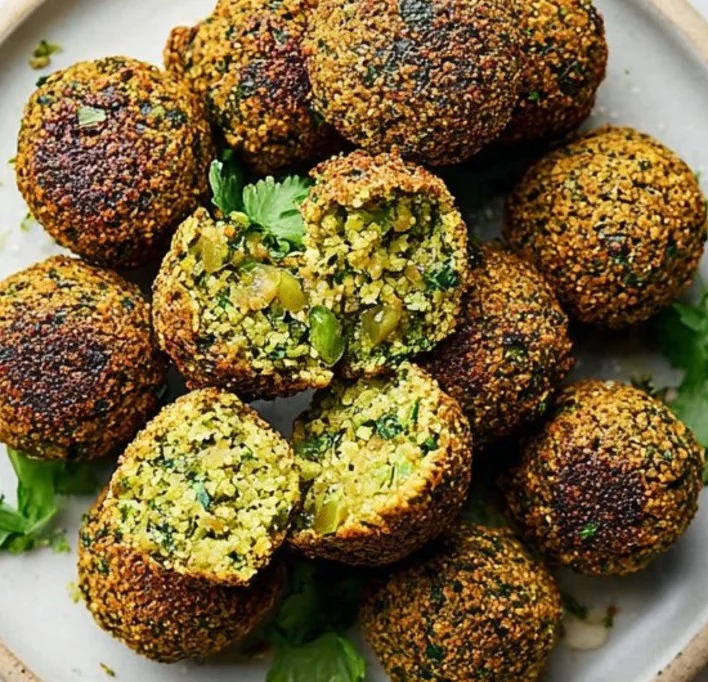
Weeknight dinners in my house live and die by a few fast, reliable recipes. This falafel—crisp on the outside, herb-scented and tender inside, fills in when I need something plant-forward that still feels satisfying. It delivers a good hit of fiber and plant protein, and the warm, herby aroma makes it feel like company food even on a Tuesday. If you enjoy hearty weeknight meals like the Cajun salmon orzo spinach recipe, this falafel will slide right into your rotation.
Print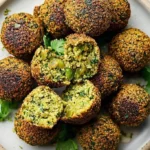
Crispy Herb-Filled Falafel
- Total Time: 70 minutes
- Yield: 4 servings 1x
- Diet: Vegan
Description
A quick, satisfying falafel recipe that’s crisp on the outside and tender inside, perfect for weeknight dinners.
Ingredients
- 1 cup dried chickpeas, soaked overnight
- 1/2 cup roughly chopped onion
- 1 cup roughly chopped parsley
- 1 cup roughly chopped cilantro (optional)
- 1 small green chile pepper, serrano or jalapeno
- 3 garlic cloves, peeled
- 1 teaspoon ground cumin
- 1 teaspoon salt (adjust to taste)
- 1/2 teaspoon ground cardamom (optional)
- 1/4 teaspoon black pepper
- 2 tablespoons chickpea flour
- 1/2 teaspoon baking soda
- Oil for frying
Instructions
- Soak the dried chickpeas overnight or for at least 8 to 12 hours, then drain and rinse them well.
- Pulse the chickpeas, onion, parsley, cilantro, garlic, and green pepper in a food processor until the mixture resembles coarse sand.
- Transfer to a bowl and mix in cumin, salt, cardamom, black pepper, chickpea flour, and baking soda; chill for 30 minutes to 1 hour.
- Shape the mixture into balls or small patties about 1 1/4 inches wide.
- Heat oil to 350°F in a heavy skillet and cook the falafel in batches for 1 to 2 minutes per side until golden brown.
- Remove with a skimmer to a paper towel-lined plate and serve immediately with your choice of sauce.
Notes
Store cooked falafel in an airtight container for 3 to 4 days. They can also be frozen for up to 3 months.
- Prep Time: 60 minutes
- Cook Time: 10 minutes
- Category: Main Course
- Method: Frying
- Cuisine: Middle Eastern
Nutrition
- Serving Size: 3 falafel balls
- Calories: 350
- Sugar: 2g
- Sodium: 500mg
- Fat: 18g
- Saturated Fat: 2g
- Unsaturated Fat: 12g
- Trans Fat: 0g
- Carbohydrates: 40g
- Fiber: 6g
- Protein: 14g
- Cholesterol: 0mg
Why This Is a Go-To in My Kitchen
This section is short and honest: the recipe is fast to assemble, forgiving in the frying or baking step, and scales nicely. Expect a crunchy exterior, a bright herby interior, and simple pantry ingredients. I make a double batch most weekends because the mixture keeps well and the finished falafel becomes a versatile base for lunch bowls, sandwiches, and quick dinners.
Ingredient Lineup
- 1 cup dried chickpeas, soaked overnight (don’t use canned—soaked dry chickpeas give the best texture).
- 1/2 cup roughly chopped onion (yellow or white; adds sweetness and moisture).
- 1 cup roughly chopped parsley (flat-leaf preferred for bright flavor).
- 1 cup roughly chopped cilantro (optional if you want extra herb lift).
- 1 small green chile pepper, serrano or jalapeno, seeded if you want mild heat.
- 3 garlic cloves, peeled (fresh garlic is essential for aroma).
- 1 teaspoon ground cumin (toasty warmth).
- 1 teaspoon salt (adjust to taste).
- 1/2 teaspoon ground cardamom (subtle floral note; optional but lovely).
- 1/4 teaspoon black pepper (freshly ground).
- 2 tablespoons chickpea flour (binds and keeps the gluten-free texture).
- 1/2 teaspoon baking soda (lightens the interior).
- Oil for frying (neutral oil such as canola or sunflower; enough for shallow or deep frying).
How It Comes Together
- Soak the dried chickpeas overnight or for at least 8 to 12 hours, then drain and rinse them well (this rehydrates evenly for a fluffy interior).
- Pulse the chickpeas, onion, parsley, cilantro, garlic, and green pepper in a food processor until the mixture resembles coarse sand—no paste; stop while still a bit grainy (the texture should hold together without becoming a puree).
- Transfer to a bowl and mix in cumin, salt, cardamom, black pepper, chickpea flour, and baking soda; chill the falafel mixture for 30 minutes to 1 hour (chilling firms the mix so balls hold their shape).
- Shape the mixture into balls or small patties about 1 1/4 inches wide using wet hands or a scoop (consistent size helps even cooking).
- Heat oil to 350°F in a heavy skillet or deep pot and cook the falafel in batches for 1 to 2 minutes per side until golden brown, turning carefully (watch for even color; don’t crowd the pan).
- Remove with a skimmer to a paper towel-lined plate and serve immediately with tahini sauce, yogurt sauce, or tucked into pita (serve hot for the best contrast of crunchy outside and tender inside).
How This Dish Fuels the Day
A typical serving is three medium falafel balls (about 150 grams cooked). Rough estimate per serving: 320–380 calories, 12–15 grams protein, 30–40 grams carbohydrates, 18–22 grams fat (depending on oil absorption), 6–8 grams fiber, and 450–650 mg sodium depending on added salt and sauces. Those numbers are rough—if you bake instead of fry the fat and calories drop significantly. Real-life health insight: the mix of fiber and plant protein keeps you satisfied longer than a carb-only side, making it a good option for balanced lunches or dinners.
When This Fits Best on the Table
This falafel is versatile and pairs well with many meals; here’s when I usually reach for it:
- Weeknight vegetarian dinners — serve with a simple salad, warm pita, and tahini for a fast meal.
- Meal prep lunches — add to grain bowls with roasted vegetables and a lemony dressing.
- Casual gatherings — set up a DIY falafel bar with pickles, sliced tomatoes, cucumbers, and sauces so guests assemble their own.
Simple pairings: tahini sauce, tzatziki or plain yogurt with lemon, pickled turnips or cucumbers, chopped tomato and cucumber salad, warm pita or flatbread, or a bed of mixed greens with lemon vinaigrette.
Keeping It Fresh for Another Day
- Refrigerator: Store cooked falafel in an airtight container for 3 to 4 days; keep sauce separate to avoid sogginess.
- Freezer: Freeze uncooked shaped falafel on a sheet pan until solid, then transfer to a zip-top bag for up to 3 months; cook from frozen (add a minute or two). Cooked falafel also freezes well—lay in a single layer then bag for 2 months.
- Reheating: Reheat in a 375°F oven for 8 to 12 minutes until hot and crisp, or air-fry for 4 to 6 minutes; avoid microwaving unless you plan to crisp them again in a pan or oven.
- Freshness tip: Store a paper towel under the falafel in the container to absorb excess moisture and protect the crust.
Small Details That Make a Big Difference
- Use soaked dry chickpeas, not canned—canned are too soft and make a gummy falafel.
- Pulse to a coarse texture—overprocessing leads to a dense, pasty interior; underprocessing leaves it crumbly and hard to shape, so aim for coarse sand.
- Rest the mixture chilled—this firms up the herbs and flour so patties hold together and fry evenly.
- Keep oil at a steady 350°F—too hot will burn the exterior before the center cooks; too cool makes greasy falafel.
- Taste and adjust seasoning after chilling by frying one test patty—small changes in salt or spice can transform the final batch.
Ways to Change It Without Breaking It
- Seasonal: Add a small handful of grated carrot and a teaspoon of lemon zest in spring to brighten the mix and sneak in seasonal veg.
- Comfort-focused: Fold in a tablespoon of tahini and use a little extra chickpea flour for richer, denser patties that feel more indulgent—serve with warm pita and a garlic yogurt sauce.
- Slightly elevated: Add 1 teaspoon of smoked paprika and finish with a drizzle of lemony herb oil and zaatar for a restaurant-style presentation.
Mistakes I’ve Made So You Don’t Have To
- Mistake: Using canned chickpeas. Fix: Use dried chickpeas soaked overnight; they hold texture and make a light interior.
- Mistake: Overprocessing the mix to a paste. Fix: Pulse in short bursts until the texture is coarse and sandy—stop before it becomes smooth.
- Mistake: Not chilling the mixture. Fix: Chill 30–60 minutes; chilled mix binds better and shapes without falling apart.
- Mistake: Crowding the pan while frying. Fix: Fry in batches with room between falafel so oil temperature stays steady and exterior crisps properly.
- Mistake: Skipping the test fry. Fix: Fry one small patty first to check seasoning and texture; adjust before cooking the whole batch.
Turning Leftovers Into Something New
- Falafel Sandwich Upgrade: Warm leftover falafel, stuff into toasted pita with hummus, pickles, shredded cabbage, and a quick tahini drizzle for a crunchy sandwich.
- Salad Topper: Roughly chop leftover falafel and sprinkle over a bowl of mixed greens, roasted beets, cucumber, and a lemon-tahini dressing for an easy protein-packed lunch.
- Breakfast Hash: Crumble falafel into a skillet with sautéed onions, bell peppers, and a handful of greens; top with a fried egg for a savory brunch twist.
Questions Readers Often Ask
How long can I soak the chickpeas, and does time change the result?
Soak 8 to 12 hours for best results; 24 hours is okay if kept cool. Over-soaking can start fermentation and make them softer than you want. Rinsing and draining before processing prevents excess moisture and helps keep the falafel from going gummy.
Can I bake these instead of frying, and how do I keep them crisp?
Yes—bake at 400°F on a parchment-lined sheet brushed with oil for about 18 to 22 minutes, turning halfway. For extra crispness, brush lightly with oil before baking and finish under the broiler for 1 to 2 minutes while watching closely.
What can I use if I don’t have chickpea flour?
Use a tablespoon or two of all-purpose flour or rice flour to help bind, but chickpea flour contributes flavor and a cohesive texture. If gluten-free is required, use a certified gluten-free flour blend that binds well.
How do I make the falafel more herb-forward without changing the structure?
Increase parsley and cilantro by another 1/4 cup combined and reduce the onion a touch to keep moisture balanced. Add a squeeze of lemon juice before chilling for a brighter herb flavor without compromising shape.