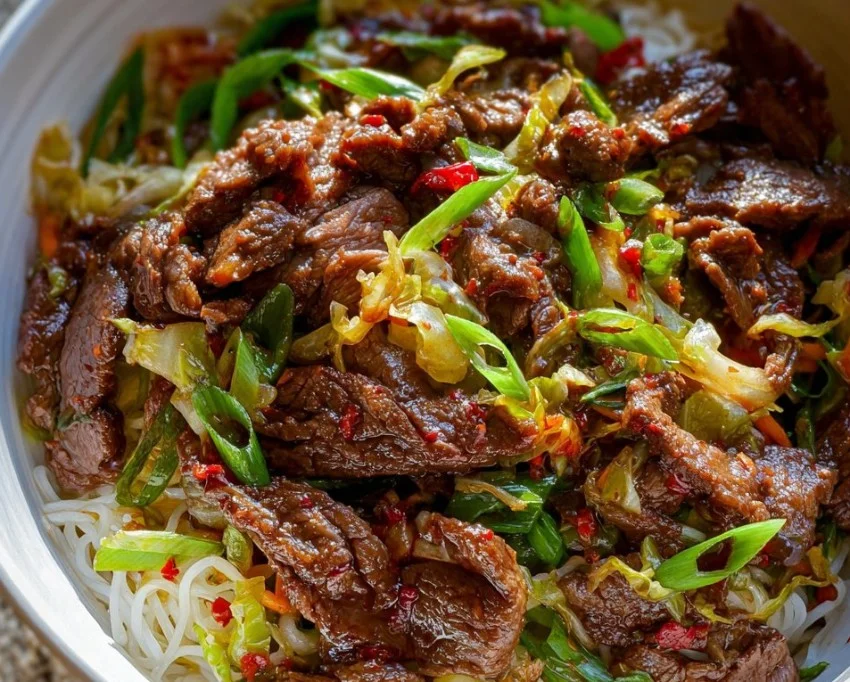
Sometimes, after a long day, you need a warm, fulfilling meal that brings the family together without too much fuss. This Mongolian Beef with Noodles doesn’t just warm the heart; it offers a delicious blend of flavors and a satisfying texture that keeps you coming back for more. Packed with tender, savory beef and crisp vegetables, it’s a dish that nourishes both body and spirit, making it a staple in my kitchen.
Print
Mongolian Beef with Noodles
- Total Time: 35 minutes
- Yield: 4 servings 1x
- Diet: Paleo
Description
A comforting dish combining tender beef, fresh vegetables, and flavorful noodles in a savory sauce, perfect for busy weeknights.
Ingredients
- 8 ounces rice noodles (or spaghetti noodles)
- 1/2 cup low-sodium soy sauce
- 1/3 cup light brown sugar
- 2 tablespoons water
- 2 tablespoons chili paste (optional)
- 1/4 teaspoon crushed red pepper flakes
- 1 pound flank steak, thinly sliced
- 1–2 tablespoons olive oil or refined coconut oil
- 1/2 teaspoon kosher salt (divided)
- 1/4 teaspoon freshly ground black pepper
- 1 tablespoon finely minced fresh ginger
- 3 large garlic cloves, minced
- 5 green onions, sliced
- 3–4 cups very thinly sliced green cabbage or coleslaw mix
Instructions
- Cook, drain, and rinse the noodles.
- Stir together the soy sauce, brown sugar, water, chili paste, and pepper flakes.
- Slice the flank steak against the grain as thinly as possible.
- Heat 1 teaspoon olive oil in a large skillet over high heat. Add half the beef, season with salt and pepper, and cook for 30 seconds to develop a crust. Stir and cook for another 30-45 seconds until browned.
- Transfer cooked beef to a plate and repeat with remaining beef.
- Add 1/2 tablespoon oil to the skillet and sauté ginger, garlic, and green onions for about 1 minute.
- Add the sauce and bring to a boil, then simmer for 2 minutes.
- Add the cabbage, toss to coat, and wilt for about 30 seconds.
- Return the beef to the skillet, add the noodles (if using), and toss everything together to combine.
- Serve hot and enjoy!
Notes
For a vegetarian option, use tofu or tempeh instead of beef and substitute soy sauce with a vegetarian alternative.
- Prep Time: 15 minutes
- Cook Time: 20 minutes
- Category: Main Course
- Method: Stir-frying
- Cuisine: Asian
Nutrition
- Serving Size: 1 serving
- Calories: 450
- Sugar: 10g
- Sodium: 600mg
- Fat: 12g
- Saturated Fat: 3g
- Unsaturated Fat: 7g
- Trans Fat: 0g
- Carbohydrates: 54g
- Fiber: 3g
- Protein: 35g
- Cholesterol: 80mg
What Makes Mongolian Beef with Noodles So Reliable
This recipe is a keeper because it balances simplicity and flavor impeccably. The combination of flank steak, fresh veggies, and a quick heat in the skillet creates a comforting dish in under 30 minutes. You won’t need a laundry list of exotic spices—just a few pantry staples to bring everything together. Knowing you can whip this up on a busy weeknight makes all the difference.
What You’ll Need
- 8 ounces rice noodles (or spaghetti noodles, cooked, drained, and rinsed)
- These noodles are the perfect vehicle to soak up the sauce.
- 1/2 cup low-sodium soy sauce
- It provides the dish with essential umami without overpowering the other flavors.
- 1/3 cup light brown sugar
- This adds a hint of sweetness to balance the savory beef.
- 2 tablespoons water
- To help dissolve the sugar and blend the sauce ingredients.
- Optional: 2 tablespoons chili paste
- For those who like a little heat.
- 1/4 teaspoon crushed red pepper flakes
- Adds another layer of spice for those who enjoy a kick.
- 1 pound flank steak (sliced as thinly as possible)
- The star of the dish—tender and flavorful when sliced against the grain.
- 1-2 tablespoons olive oil or refined coconut oil
- It helps to sear the beef perfectly.
- 1/2 teaspoon kosher salt (divided)
- To season the beef and enhance the flavors.
- 1/4 teaspoon freshly ground black pepper
- For extra seasoning.
- 1 tablespoon finely minced fresh ginger (about a 1-inch section)
- Adds warmth and aroma to the dish.
- 3 large garlic cloves (minced)
- For its robust flavor and aroma.
- 5 green onions (green parts sliced into 1-inch pieces, white parts sliced very thin)
- Adds crunch and a subtle onion flavor.
- 3-4 cups very thinly sliced green cabbage or coleslaw mix
- A little crunch and color, making the dish nutritious and vibrant.
How It Comes Together
- Cook, drain, and rinse the noodles if you’re including them. (This ensures they remain separate and don’t clump together when added later.)
- Stir together the soy sauce, sugar, water, chili paste, and pepper flakes. Set the sauce mixture next to the stove. (This way, everything will be at your fingertips when you’re ready.)
- Slice the steak as thinly as possible, being careful to slice against the grain. (This cuts through the muscle fibers for a more tender bite.)
- Heat 1 teaspoon olive oil in a large nonstick skillet over high heat. Add half of the beef to the skillet, toss in the oil, and spread across the pan. (This ensures that the meat sears instead of steaming.)
- Season the meat lightly with salt and pepper. Let the meat cook for 30 seconds without touching it to develop a nice crust, stir, and spread across the pan again. (You want those delicious brown bits for flavor!)
- Let the meat cook for an additional 30-45 seconds, then remove it to a plate. (It should be browned and nearly cooked through.)
- Add the remaining oil to the pan and repeat the above steps with the remaining meat, adding the cooked meat to the plate. (Cooking in batches helps maintain high heat for proper searing.)
- Add 1/2 tablespoon oil to the hot skillet over medium-high heat, then add the ginger, garlic, and green onions. Sauté for about 1 minute until fragrant. (The aroma will fill your kitchen—it’s fantastic!)
- Add the sauce and bring to a boil. Simmer for about 2 minutes until just barely reduced. (You want the sauce flavorful but not too thick.)
- Add the cabbage, toss to coat, and slightly wilt for about 30 seconds. (Cabbage adds a nice crunch and color!)
- Add the beef back to the skillet and toss to coat everything. If you’re including noodles, add them now and toss once more. Enjoy! (Everything integrates beautifully at this point, creating that enticing one-dish meal.)
The Nutrition Behind the Comfort
This dish serves about 4 and provides approximately 450 calories per serving. You’ll also find around 35 grams of protein, 54 grams of carbs, 12 grams of fat, and 3 grams of fiber. While that spicy soy sauce is delicious, it’s worth noting that recipe portioning helps manage sodium levels—keeping you in control of your meal’s health profile. Packed with protein and fiber, this meal can sustain you through a busy afternoon.
How I Like to Serve It
The best way to enjoy this Mongolian Beef with Noodles is to serve it hot, right out of the skillet, paired with a side of your favorite steamed veggies like broccoli or snap peas for some extra crunch. A simple salad dressed with sesame oil also complements this dish beautifully. If you have a family-style gathering, consider setting out bowls for everyone to customize their servings with extra chili flakes or a squeeze of lime.
Keeping It Fresh for Another Day
For storing, allow the leftovers to cool completely before transferring them to an airtight container. They’ll last in the fridge for 3-4 days. If you want to keep them longer, you can freeze portions for up to 2 months. When you’re ready to enjoy them again, just reheat in a skillet over low heat, adding a splash of water to loosen any sauce that has thickened. To keep flavors fresh, be mindful of how long you store ingredients before using.
Tips I’ve Learned the Hard Way
- Cut Against the Grain: Always slice your flank steak against the grain for a tender texture in each bite.
- Don’t Overcrowd the Skillet: Cook the beef in batches to ensure proper searing. If the pan is too crowded, they’ll steam instead.
- Adjust Sugar to Taste: Feel free to modify the quantity of brown sugar based on your sweetness preference—the balance between savory and sweet is key.
- Watch the Garlic: Sauté garlic until just fragrant to avoid bitterness. If it browns too much, it can change the dish’s flavor profile.
- Fresh Veggies Matter: Using fresh, crispy veggies, like cabbage from a head, can make a significant difference in taste and texture.
How to Adapt This Recipe
- Seasonal Twist: In summer, try swapping in fresh zucchini noodles instead of rice noodles for a lighter, vegetable-forward approach.
- Comfort Focused: Add some extra warmth and heartiness by including mushrooms, which not only taste great but also add umami richness.
- Elevated Style: For a more upscale option, incorporate a splash of sesame oil and garnish with toasted sesame seeds and chopped cilantro for a fresh finish.
Common Slip-Ups to Avoid
- Overcooking the Beef: Cooking beef too long can result in tough meat; aim for a nice sear while keeping it pink inside.
- Ignoring Timing: Each step in the cooking process has a purpose. Rushing through can lead to burnt garlic or overcooked veggies.
- Using Regular Soy Sauce: Opt for low-sodium soy sauce; regular can overpower the dish, masking the balance of flavors.
- Skipping the Rinsing: Be sure to rinse the noodles after cooking. This prevents them from becoming gummy and sticking together.
- Over-seasoning Too Early: Hold back on seasoning until the end; you can always adjust, but you can’t take it out once it’s in!
Making Leftovers Worth Looking Forward To
- Mongolian Beef Wraps: Create wraps using large lettuce leaves—perfect for a low-carb option.
- Fried Rice: Stir-fry your leftovers with some cooked rice to transform it into a new dish, adding a couple of eggs for extra protein.
- Soup Base: Add broth to the leftover beef and noodles for a hearty soup. Toss in some extra greens, and you have a cozy meal for another day.
Questions Readers Often Ask
Can I make this dish vegetarian?
Absolutely! Swap the beef for tofu or tempeh, and substitute the soy sauce for a vegetarian alternative to maintain that umami flavor.
What kind of noodles work best?
Rice noodles or whole wheat spaghetti are great choices! Both work well in this dish, so use what you have on hand.
Is it possible to prep this in advance?
Yes! You can slice the meat and chop the vegetables a day ahead. Just cook it all together when you’re ready to eat; it’ll save you time on busy nights.
What can I serve with this?
Simple steamed vegetables or a fresh salad offset the rich flavors perfectly, keeping the meal well-rounded.
This Mongolian Beef with Noodles is not just a recipe; it’s comfort in a bowl, a way to bring the family together, and an easy option for busy evenings. Once you try it, I’m sure it’ll become a staple in your home too.