Introduction
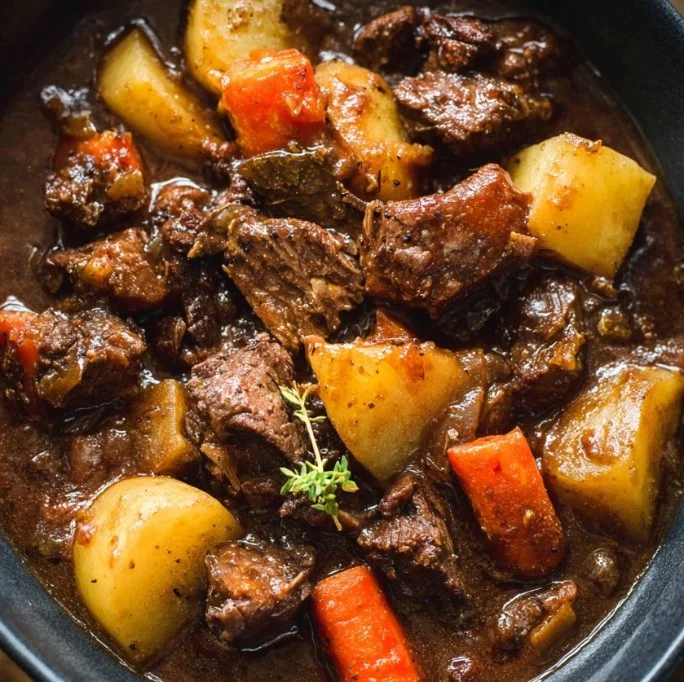
On weeknights when time is tight and everyone wants something warm and familiar, this comforting crockpot beef stew is the kind of recipe I reach for without thinking. It gives you hearty protein and root vegetables in a pot that develops rich, slow-cooked flavor, and the broth finishes silky and satisfying. I make it often because it’s forgiving, feeds a crowd, and reheats beautifully after practice or a long day. If you want a reliable baseline for slow-cooking beef, my favorite crockpot beef stew guide shows how simple swaps change the game.
Print
Crockpot Beef Stew
- Total Time: 375 minutes
- Yield: 6 servings 1x
- Diet: None
Description
A comforting and hearty crockpot beef stew, perfect for weeknights and easy to customize.
Ingredients
- 2 pounds cubed beef stew meat
- 1/3 cup all-purpose flour
- 1/2 teaspoon salt
- 1/2 teaspoon black pepper
- 3 cups beef broth
- 5 large potatoes, diced
- 4 carrots, peeled and chopped
- 1 small onion, chopped
- 1 stalk celery, chopped
- 2 teaspoons Worcestershire sauce
- 1 teaspoon ground paprika
- 1 clove garlic, minced
- 1 bay leaf
Instructions
- Brown the beef in a skillet over medium-high heat in batches for 6 to 8 minutes until browned on all sides.
- Sprinkle the flour, salt, and pepper over the browned meat and toss to coat evenly.
- Transfer the beef to the slow cooker and add the beef broth, stirring to deglaze browned bits from the skillet.
- Add the potatoes, carrots, onion, celery, Worcestershire sauce, paprika, garlic, and bay leaf to the slow cooker and stir to combine.
- Cover and cook on HIGH for 5 to 6 hours or LOW for 8 to 12 hours, until beef is fork-tender.
- Taste and adjust seasoning, remove the bay leaf, and skim excess fat if desired.
- If a thicker sauce is preferred, stir a slurry of 1 tablespoon cornstarch and 2 tablespoons cold water and cook on HIGH uncovered for 15 to 20 minutes to thicken.
- Serve hot with fresh parsley if desired.
Notes
Brown the meat in batches for better flavor and use low-sodium broth to control salt levels.
- Prep Time: 15 minutes
- Cook Time: 360 minutes
- Category: Main Course
- Method: Slow Cooking
- Cuisine: American
Nutrition
- Serving Size: 1 serving
- Calories: 680
- Sugar: 5g
- Sodium: 850mg
- Fat: 25g
- Saturated Fat: 10g
- Unsaturated Fat: 10g
- Trans Fat: 0g
- Carbohydrates: 58g
- Fiber: 6g
- Protein: 39g
- Cholesterol: 100mg
Why This Is a Go-To in My Kitchen
This stew works as a weeknight savior and a weekend slow-cook project because it’s straightforward and predictable: brown the meat, dump in the veggies and broth, and let low heat turn tough cuts tender. Expect deep savory aroma and fork-tender beef with melting potatoes that soak up the jus. You can trust the timing and the flavor balance even when you tweak seasonings, which is why it lives on my meal rotation.
What You’ll Need
- 2 pounds cubed beef stew meat — Choose chuck or shoulder for connective tissue that becomes tender with long cooking; trim large fat pieces if you prefer less richness.
- 1/3 cup all purpose flour — Light coating to thicken the cooking liquid and give the sauce a silky body.
- 1/2 teaspoon salt — Start modest; you can adjust at the end.
- 1/2 teaspoon black pepper — Freshly ground if possible for brighter heat.
- 3 cups beef broth — Low-sodium is best so you can control final seasoning.
- 5 large potatoes diced (peeling is optional) — Russets or Yukon Golds both work; dice evenly so they cook through at the same time as the meat.
- 4 carrots peeled and chopped — Sweetness and color; slice thick enough to hold shape.
- 1 small onion chopped — Adds savory base and natural sweetness.
- 1 stalk celery chopped — For aromatic depth and slight crunch if you like some textural contrast.
- 2 teaspoons Worcestershire sauce — Umami booster that deepens the stew’s flavor.
- 1 teaspoon ground paprika — Adds warmth and a subtle smoky note if you use smoked paprika.
- 1 clove garlic minced — Fresh garlic brightens the broth—add toward the end of prep to preserve aroma.
- 1 bay leaf — Adds subtle herbal background; remove before serving.
How It Comes Together
- Brown the beef in a skillet over medium-high heat in batches to avoid crowding, about 6 to 8 minutes per batch until well-browned on all sides (texture: crusty exterior locks in flavor).
- Sprinkle the flour, salt, and pepper over the browned meat and toss to coat evenly, 1 minute (texture: flour should feel dry and powdery, not pasty).
- Transfer the coated beef to the slow cooker and add the beef broth, stirring to deglaze any browned bits from the skillet into the pot (aroma: the fond will lift rich beef notes into the broth).
- Add the diced potatoes, carrots, onion, celery, Worcestershire, paprika, minced garlic, and bay leaf to the slow cooker and stir to combine (timing: even pieces ensure uniform cooking).
- Cover and cook on HIGH for 5 to 6 hours or LOW for 8 to 12 hours, until beef is fork-tender and potatoes break apart slightly (texture: meat should shred gently with a fork).
- Taste and adjust seasoning with more salt and pepper as needed, remove the bay leaf, and skim excess fat with a spoon if desired (timing: season at the end to avoid over-salting).
- If you want a thicker sauce, stir a slurry of 1 tablespoon cornstarch and 2 tablespoons cold water, then cook on HIGH uncovered for 15 to 20 minutes to thicken (texture: glossy, clingy gravy).
- Serve hot with fresh parsley if you like a bright finish (aroma: fresh herbs lift the stew’s richness).
A Look at the Nourishing Side
Per serving (about 1 1/2 cups), this stew provides roughly 680 calories, about 39 grams of protein, 58 grams of carbohydrates, 25 grams of fat, 6 grams of fiber, and approximately 850 milligrams of sodium depending on broth choice. It’s a satisfying, protein-forward meal with hearty carbs for energy and fiber from the vegetables, so it’s easy to balance by trimming portion size if you want fewer calories or pairing with a green salad to boost vegetables.
How This Recipe Shows Up at Mealtime
This stew is flexible with timing and presentation—great for dinner, meal prep, or a cozy weekend lunch.
- Weeknight: Serve one bowl per adult with crusty bread to mop the gravy and a quick green salad.
- Weekend: Plate it over buttered egg noodles or creamy mashed potatoes for an extra comforting plate. If you want a lighter weeknight option, try pairing this stew with a simple buttered egg noodle and compare to my comforting beef stroganoff for another cozy dinner.
- For guests: Keep the stew warm in the slow cooker and offer toppings like chopped parsley, a squeeze of lemon, or a dollop of sour cream for personalization.
The Right Way to Store and Reheat
- Refrigerator: Cool leftovers to room temperature for no more than two hours, then store in an airtight container for up to 4 days.
- Freezer: Freeze in portioned containers for up to 3 months; leave some headspace since the liquid expands slightly.
- Reheating: Thaw overnight in the fridge if frozen, then reheat gently on the stovetop over low heat, stirring occasionally to avoid scorching; or microwave in covered portions, stirring halfway through.
- Freshness tip: Add a splash of beef broth or water when reheating if the sauce has tightened; fresh herbs or a squeeze of lemon brighten flavors after storage.
Small Details That Make a Big Difference
- Brown meat in batches — Crowding the pan steams meat instead of browning it; good sear equals deeper flavor.
- Use low-sodium broth — It lets you control final salt without overshooting, especially after reduction.
- Cut vegetables uniformly — Even-sized pieces mean everything finishes at the same time without mushy carrots or raw potato centers.
- Add garlic late in the prep — Garlic can get bitter if cooked too long; add it with the other vegetables so it keeps aromatic brightness.
- Thicken at the end if needed — Resist over-thickening early on; the sauce concentrates as it cooks.
Ways to Change It Without Breaking It
- Seasonal (spring/summer): Swap potatoes for halved new potatoes and add a handful of green beans in the last hour for freshness.
- Comfort-focused: Stir in a tablespoon of tomato paste and a splash of red wine with the broth for a richer, deeper stew reminiscent of bistro-style braises.
- Slightly elevated: Finish with a knob of butter and a handful of chopped fresh parsley and thyme just before serving for glossy sauce and herbal lift.
What Can Go Wrong and How to Fix It
- Problem: Meat is tough after the full cooking time. Fix: Continue cooking on low and check every 30 minutes; tougher cuts simply need more time to break down.
- Problem: Stew is too salty. Fix: Add peeled, halved raw potatoes to the pot and simmer 15 minutes to absorb some salt, or dilute with unsalted broth and adjust seasonings.
- Problem: Vegetables are mushy while meat is perfect. Fix: Next time, add potatoes and carrots later in the cooking cycle or cut them larger so they hold shape.
- Problem: Sauce is too thin. Fix: Make a cornstarch slurry and stir it in, then simmer uncovered for 10–15 minutes to thicken and concentrate flavor.
- Problem: Sauce is too thick after refrigeration. Fix: Reheat with a splash of beef broth or water, stirring until it loosens to a silky consistency.
Turning Leftovers Into Something New
- Hearty pie: Spoon leftover stew into a baking dish, top with puff pastry or mashed potato, and bake until golden for an easy shepherd’s pie-style dinner.
- Stew-stuffed baked potatoes: Reheat stew slightly, split baked potatoes, and spoon stew over the open potatoes with a sprinkle of cheese for a handheld comfort meal.
- Stew risotto-ish bowl: Stir warm stew into creamy rice or polenta for a quicker, rustic risotto alternative—add a little cream or butter to finish.
Questions Readers Often Ask
How long can I leave beef stew in a slow cooker on warm?
It’s generally safe to keep stew on the slow cooker’s warm setting for up to 2 to 4 hours. Longer than that risks drying out or overcooking the meat and softening vegetables too much. If you need longer holding time, cool and refrigerate, then reheat when ready.
Can I use a different cut of beef for this recipe?
Yes. Chuck or shoulder are ideal because they’re well-marbled and become tender with slow cooking, but bottom round or brisket can work too if you allow more cooking time. Lean cuts finish firmer and may dry if overcooked.
Is it okay to skip browning the meat?
Skipping browning saves time, and the stew will still be edible, but you lose the caramelized fond that builds depth. If short on time, at least brown a portion of the meat or sauté the onions until golden to add extra flavor.
How do I thicken the stew without flour?
Use a cornstarch slurry (equal parts cornstarch and cold water) stirred in at the end and simmered a few minutes, or mash a few potato chunks into the broth for natural thickening and extra body.