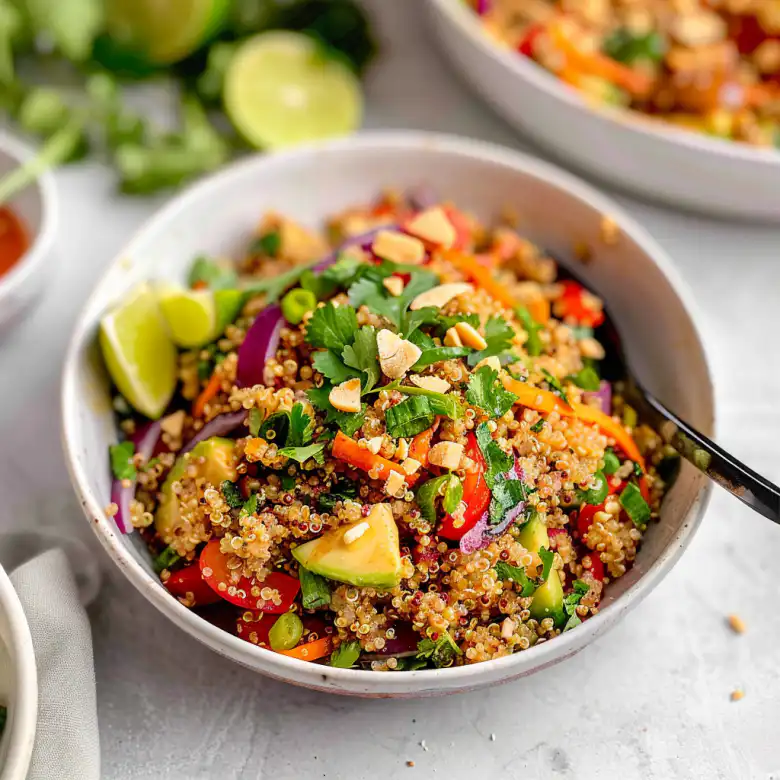
This Vegan Thai Quinoa Salad is a vibrant and satisfying dish that brings together the freshness of vegetables with the nutty texture of quinoa and a zesty, authentic Thai-inspired dressing. It’s a recipe I return to again and again for a healthy and flavorful meal that’s as good for lunch as it is for a light dinner.
Why This Vegan Thai Quinoa Salad Works
This salad is a champion of balanced flavors and textures. The protein-rich quinoa provides a hearty base, while the crisp vegetables offer a delightful crunch. The dressing is where the magic truly happens, delivering that signature sweet, sour, and savory Thai profile without any animal products. It’s a complete meal that feels nourishing and exciting. The combination of clean flavors and substantial nutrition makes it a well-rounded choice for almost any meal occasion, appealing to those seeking both health and taste in their food.
Ingredients
- For the Quinoa:
- 1 cup quinoa, rinsed well
- 2 cups vegetable broth or water
- Pinch of salt
- For the Salad:
- 1 red bell pepper, thinly sliced
- 1 yellow bell pepper, thinly sliced
- 1/2 cup shredded carrots
- 1/2 cup edamame, shelled (frozen, thawed, or fresh)
- 1/4 cup thinly sliced red onion
- 1/4 cup chopped fresh cilantro
- 1/4 cup chopped fresh mint
- 1/4 cup chopped roasted peanuts or cashews (optional, for crunch)
- For the Dressing:
- 3 tablespoons lime juice (from about 2-3 limes)
- 2 tablespoons soy sauce or tamari (for gluten-free)
- 1 tablespoon rice vinegar
- 1 tablespoon maple syrup or agave nectar
- 1-2 teaspoons sriracha or other hot sauce (adjust to your spice preference)
- 1 clove garlic, minced
- 1/2 teaspoon grated fresh ginger
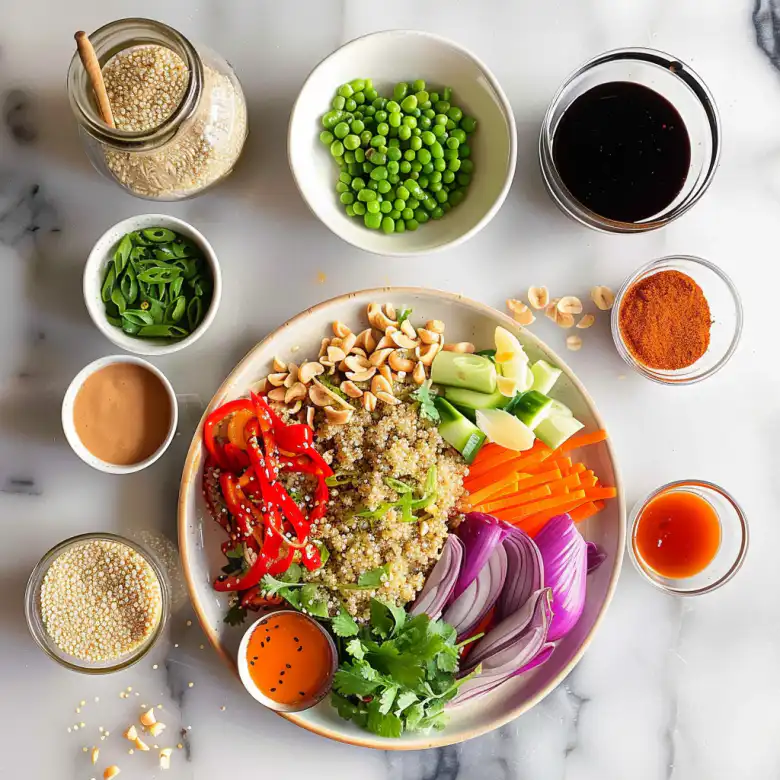
Gathering all your ingredients before you begin will make the preparation process much smoother and more enjoyable. Precision in measuring, especially for the dressing, will help ensure the flavors meld together harmoniously. The quality of your ingredients will directly impact the final taste, so selecting fresh produce and good quality pantry staples is always a good starting point for any recipe. Consider the ripeness of your limes for the freshest juice, and ensure your ginger and garlic are pungent for maximum flavor impact. Even the type of soy sauce or tamari can make a difference, with some offering deeper or lighter notes.
A recipe worth trying: Apple Quinoa Salad – Fresh & Healthy
How to Make It
- Cook the Quinoa: In a medium saucepan, combine the rinsed quinoa, vegetable broth (or water), and a pinch of salt. Bring to a boil over medium-high heat. Once boiling, reduce the heat to low, cover, and simmer for 15 minutes, or until all the liquid has been absorbed. Remove from heat and let stand, covered, for 5 minutes. Fluff with a fork and set aside to cool slightly. This resting period is essential to allow the quinoa to fully absorb the steam and become tender.
- Prepare the Vegetables: While the quinoa is cooking and cooling, prepare all your salad vegetables. Thinly slice the bell peppers, shred the carrots if not using pre-shredded, and thinly slice the red onion. Chop the cilantro and mint. If using frozen edamame, ensure it’s thawed according to package directions, typically by soaking in warm water or letting it sit at room temperature. For fresh edamame, you may need to blanch it briefly.
- Make the Dressing: In a small bowl or jar, whisk together the lime juice, soy sauce (or tamari), rice vinegar, maple syrup (or agave), sriracha, minced garlic, and grated ginger. Taste and adjust seasonings as needed – you might want more sweetness, acidity, or spice. This is your chance to personalize the core flavors of the salad. Consider a tiny pinch of salt if the soy sauce/tamari isn’t sufficient for your taste.
- Assemble the Salad: In a large mixing bowl, combine the cooled quinoa, sliced red and yellow bell peppers, shredded carrots, edamame, and sliced red onion. Ensure the quinoa is not hot, as this can wilt the fresh vegetables prematurely. Cold or room-temperature quinoa is ideal.
- Dress and Toss: Pour the prepared dressing over the quinoa and vegetable mixture. Gently toss to ensure everything is evenly coated. Use a large spoon and fork or your clean hands to mix, ensuring the dressing reaches all the nooks and crannies. Avoid vigorous stirring that could break down the ingredients.
- Add Fresh Herbs and Nuts: Add the chopped cilantro and mint to the bowl. If using, add the chopped peanuts or cashews. Toss again lightly. Fresh herbs lose their vibrancy when overmixed or dressed too early, so adding them at this stage preserves their bright flavor and aroma.
- Serve: Your Vegan Thai Quinoa Salad is ready to be served. It’s best enjoyed fresh, but can also be chilled for later. If packing for lunch, consider keeping the nuts separate until serving to prevent them from becoming soggy.
This simple process yields a complex and satisfying salad that highlights fresh ingredients and a balanced dressing. The visual appeal alone is a testament to the care taken in preparation. Each step plays a role in building the final flavor profile and textural experience.
Nutrition at a Glance
This salad offers a wealth of beneficial nutrients. Quinoa provides complete protein, essential for muscle repair and satiety. The colorful array of vegetables contributes vitamins, minerals, and dietary fiber, supporting digestion and overall well-being. Healthy fats from optional nuts add to the nutritional profile. It’s a meal that aims to nourish your body from the inside out, offering a good balance of macronutrients and micronutrients. This makes it an excellent choice for those looking for a meal that is both filling and health-promoting, without feeling heavy.
- Protein: Quinoa is a complete protein source, making this salad filling and great for muscle support and long-term energy.
- Fiber: Rich in fiber from quinoa and vegetables, promoting digestive health, aiding in blood sugar regulation, and helping you feel full longer, which can be beneficial for weight management.
- Vitamins and Minerals: Packed with vitamin C from bell peppers for immune support and skin health, vitamin A from carrots for vision and immune function, and various other micronutrients like potassium and magnesium from the diverse ingredients.
- Antioxidants: The vibrant colors of the vegetables indicate a good presence of antioxidants, such as carotenoids and flavonoids, which help protect cells from damage caused by free radicals, potentially reducing the risk of chronic diseases.
- Healthy Fats: Optional nuts contribute beneficial monounsaturated and polyunsaturated fats, which are important for heart health, reducing inflammation, and aiding in the absorption of fat-soluble vitamins. About 1-2 tablespoons of nuts typically add around 5-8 grams of healthy fats.
How to Serve It
This Vegan Thai Quinoa Salad is incredibly versatile and can be served in a variety of ways to suit any occasion or preference. Its adaptable nature means it can be a standalone meal or a complementary component to a larger spread. Experimenting with these serving suggestions can offer new ways to enjoy this already delightful dish.
- As a Main Course: Serve a generous portion in bowls for a complete and satisfying lunch or light dinner. It’s hearty enough on its own to be the star of your meal, offering a full spectrum of nutrients.
- As a Side Dish: It makes an excellent accompaniment to grilled tofu, tempeh, or even plant-based burgers. Its fresh, zesty profile cuts through richer flavors and adds a vibrant contrast to grilled or roasted items. It can also pair well with lentil loaves or vegetable steaks.
- In Lettuce Wraps: Spoon the salad into large crisp lettuce cups (like butter or romaine lettuce) for a lighter, more interactive eating experience. A little extra dressing can be served on the side, or you can drizzle it directly over before serving. This method is particularly refreshing on warm days.
- In Bento Boxes: It packs beautifully for lunches or picnics. Portion it into bento boxes with other small sides like fruit, veggie sticks (cucumber, snap peas), or a small container of hummus. Keep the nuts separate until serving to maintain their crunch and prevent them from making other components soggy.
- Topped with Avocado: Add sliced fresh avocado for an extra layer of creaminess and healthy fats. It complements the Thai flavors wonderfully and adds a luxurious texture. A sprinkle of toasted sesame seeds can also be a nice finishing touch.
This salad is designed to be as adaptable as your mealtime needs, making it a practical and enjoyable addition to your culinary rotation.
Common Mistakes
Even with straightforward recipes, a few common missteps can slightly alter the outcome. Being aware of these can help you achieve the best results every time and ensure your salad is always a success. These are small details that often make a big difference in the final texture and taste.
- Not Rinsing Quinoa: This is crucial. Quinoa has a natural coating called saponin, which can impart a bitter or soapy taste if not rinsed thoroughly. Always give it a good rinse under cold water until the water runs clear, or use a fine-mesh sieve. This step is non-negotiable for a pleasant flavor.
- Overcooking or Undercooking Quinoa: Aim for fluffy, tender grains. Overcooked quinoa can become mushy and clump together, losing its distinct texture, while undercooked quinoa will remain hard and chalky, detracting from the salad’s enjoyment. Following the cooking times and letting it rest, covered, are key to achieving the ideal consistency.
- Dressing the Salad Too Early: While it’s a salad, adding the dressing too far in advance to certain ingredients can lead to them becoming soggy. For the best texture, toss the salad with the dressing just before serving, or at most, an hour beforehand if you want the flavors to meld a bit. If storing for longer periods, it is highly recommended to keep the dressing separate until ready to serve to maintain the crispness of the vegetables and the integrity of the quinoa.
- Not Tasting and Adjusting the Dressing: The beauty of homemade dressing is its customizability. Don’t be afraid to taste it before adding it to the salad and adjust the sweetness, acidity, or spice to your preference. Everyone’s palate is different, and what tastes good to one person might need a tweak for another. Small adjustments can make a significant difference.
- Using Stale or Undesirable Produce: While this recipe relies heavily on fresh ingredients, the quality of your produce matters. Using wilted herbs, old garlic, or sad-looking bell peppers will negatively impact the final dish. Opt for the freshest ingredients available for the most vibrant flavor.
- Cutting Vegetables Inconsistently: Aim for similar bite-sized pieces for all your salad components. Inconsistent cuts can lead to some vegetables being overcooked or undercooked relative to others, and it can also affect the overall eating experience, making it harder to get a good mix of flavors in each forkful.
Avoiding these minor pitfalls ensures your Vegan Thai Quinoa Salad will always turn out wonderfully, delivering fresh flavors and appealing textures.
Storage and Reheating
Proper storage is key to enjoying leftovers of this vibrant salad. It’s a dish that holds up well, making it ideal for meal prep and ensuring you have healthy options readily available throughout the week. Understanding how to store it correctly can significantly extend its freshness and maintain its quality.
- Refrigeration: Store any leftover salad in an airtight container in the refrigerator. It will typically keep well for 3 to 4 days. Ensure the container is truly airtight to prevent the salad from drying out or absorbing other odors from the refrigerator.
- Dressing Separation: If you plan to store it for more than a day, you might consider storing the dressing separately. This helps keep the vegetables and quinoa from becoming too soft, especially if you prefer a crunchier texture. Combine the salad and dressing just before serving. This is particularly important if you are packing it for lunch the next day, as the travel time and temperature fluctuations can affect texture.
- Keeping Nuts Crisp: If you add nuts or seeds for crunch, store them separately. Add them just before serving to prevent them from becoming soggy and losing their satisfying texture. This small step makes a big difference to the overall eating experience of leftovers.
- Reheating: This salad is designed to be eaten cold or at room temperature. Reheating is generally not recommended, as it can make the vegetables limp and alter the texture of the quinoa, making it mushy. The freshness of the ingredients is best preserved when served chilled.
By following these simple storage guidelines, you can prolong the freshness and enjoyment of your salad, making it a convenient and delicious option for days to come.
Leftover Ideas
Don’t let any of this delicious salad go to waste! Leftovers can be creatively transformed into new and exciting meals, breathing new life into the flavors and textures of the original dish. These ideas offer ways to repurpose the salad, making it a versatile ingredient beyond just being a side dish.
- Stuffed Sweet Potatoes: Warm up some baked sweet potatoes (or microwave them for a quicker option) and stuff them generously with the leftover quinoa salad. The natural sweetness of the potato pairs exceptionally well with the savory, tangy salad, creating a comforting and wholesome meal. A dollop of vegan sour cream or a drizzle of tahini can enhance this dish.
- Quinoa Cakes or Patties: Mix the leftover salad with a binder like a flax egg (1 tablespoon flaxseed meal mixed with 3 tablespoons water, let sit for 5-10 minutes until gelled) or a bit of mashed sweet potato or lentil. Form into patties. Pan-fry them in a little oil until golden brown on both sides. Serve them on lettuce buns, as a side, or with a dipping sauce.
- Added to Wraps or Pitas: Use the leftover salad as a flavorful and filling component for whole wheat wraps, pitas, or even spring roll wrappers. Add some fresh greens like spinach or arugula, or a smear of hummus or vegan sriracha mayo for extra flavor. It’s a quick way to assemble a portable lunch.
- Topped with a Fried Egg (if not strictly vegan): If you occasionally consume eggs, topping a slightly warmed bowl of this salad with a perfectly fried or poached egg can be a delightful brunch or light supper option. Ensure the yolk is runny to create a rich sauce that coats the salad. This adds another dimension of flavor and protein.
- Grain Bowl Base: Use it as a base for another grain bowl. Add some steamed greens like kale or spinach, roasted chickpeas for extra crunch and protein, or any other favorite toppings you have on hand. A complementary drizzle of tahini-lemon dressing or a spicy peanut sauce can elevate this bowl.
- Filling for Veggie Burgers: Mix the leftover salad with a binder and perhaps some breadcrumbs or oats, form into patties, and use them as the filling for your favorite veggie burgers. It adds a fresh, zesty element that complements many burger flavors.
Giving leftovers a second life ensures you get the most out of your cooking efforts and savor the delicious flavors for longer, reducing food waste and maximizing your culinary creations.
PrintVegan Thai Quinoa Salad
- Total Time: 40 minutes
- Yield: 4 servings 1x
Description
A vibrant and flavorful Vegan Thai Quinoa Salad with crisp vegetables, protein-rich quinoa, and a zesty, authentic Thai dressing. Perfect for lunch or a light dinner.
Ingredients
- 1 cup quinoa, rinsed well
- 2 cups vegetable broth or water
- Pinch of salt
- 1 red bell pepper, thinly sliced
- 1 yellow bell pepper, thinly sliced
- 1/2 cup shredded carrots
- 1/2 cup edamame, shelled
- 1/4 cup thinly sliced red onion
- 1/4 cup chopped fresh cilantro
- 1/4 cup chopped fresh mint
- 1/4 cup chopped roasted peanuts or cashews (optional)
- 3 tablespoons lime juice
- 2 tablespoons soy sauce or tamari
- 1 tablespoon rice vinegar
- 1 tablespoon maple syrup or agave nectar
- 1–2 teaspoons sriracha or other hot sauce
- 1 clove garlic, minced
- 1/2 teaspoon grated fresh ginger
Instructions
- 1. Cook Quinoa: In a saucepan, combine rinsed quinoa, vegetable broth (or water), and salt. Bring to a boil, then reduce heat, cover, and simmer for 15 minutes. Let stand, covered, for 5 minutes. Fluff and cool.
- 2. Prepare Vegetables: Slice bell peppers and red onion thinly. Shred carrots if needed. Thaw edamame. Chop cilantro and mint.
- 3. Make Dressing: In a bowl, whisk together lime juice, soy sauce/tamari, rice vinegar, maple syrup/agave, sriracha, minced garlic, and grated ginger. Taste and adjust seasonings.
- 4. Assemble Salad: In a large bowl, combine cooled quinoa, sliced bell peppers, shredded carrots, edamame, and red onion.
- 5. Dress and Toss: Pour dressing over the mixture and toss gently to coat evenly.
- 6. Add Herbs and Nuts: Add chopped cilantro and mint, and optional peanuts/cashews. Toss lightly.
- 7. Serve: Serve immediately or chill.
Notes
Store leftovers in an airtight container in the refrigerator for up to 3-4 days. For best texture, store dressing and nuts separately and combine just before serving. Reheating is not recommended.
- Prep Time: 20 minutes
- Cook Time: 20 minutes
- Category: Salad
- Method: Mixed
- Cuisine: Thai-inspired
Nutrition
- Serving Size: 1 serving
- Calories: 350
- Sugar: 12g
- Sodium: 500mg
- Fat: 10g
- Carbohydrates: 55g
- Fiber: 8g
- Protein: 12g