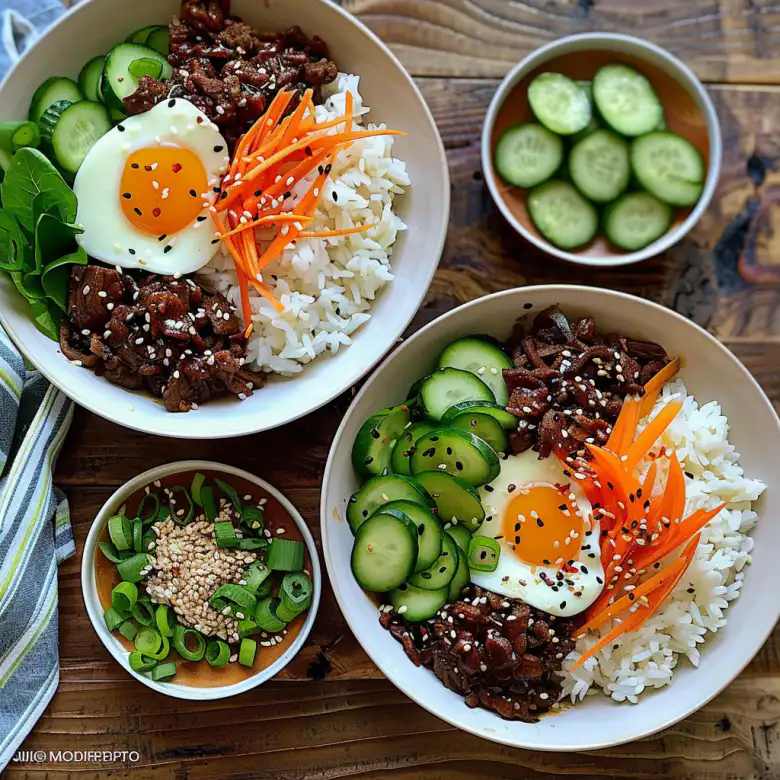
Korean beef bowls bring together the vibrant flavors and textures that make bibimbap such a beloved comfort food. I’ve been making this simplified version for years, and it delivers all the satisfaction of traditional bibimbap while being completely manageable for weeknight cooking. The combination of seasoned beef, fresh vegetables, and that crucial fried egg creates a meal that feels both nourishing and indulgent.
Why This Korean Beef Bowl Works
This recipe succeeds because it balances authentic Korean flavors with practical home cooking. The marinated beef develops deep umami notes while the variety of vegetables provides different textures and colors. Most importantly, you can prepare many components ahead of time, making assembly quick when you’re ready to eat.
Ingredients
For the beef marinade:
- 1 pound thinly sliced ribeye or sirloin, cut against the grain
- 3 tablespoons soy sauce
- 2 tablespoons brown sugar
- 1 tablespoon sesame oil
- 2 cloves garlic, minced
- 1 teaspoon fresh ginger, grated
- 1 tablespoon vegetable oil for cooking
For the vegetables:
- 2 cups fresh spinach
- 1 large carrot, julienned
- 1 small zucchini, julienned
- 4 shiitake mushrooms, sliced
- 1 cup bean sprouts
- 1 cucumber, thinly sliced
- 2 tablespoons rice vinegar
- 1 teaspoon salt
- 2 tablespoons sesame oil, divided
For assembly:
- 4 cups cooked short-grain rice
- 4 large eggs
- 2 green onions, sliced
- 1 tablespoon sesame seeds
- Gochujang or sriracha for serving
These ingredients create layers of flavor and texture that make each bite interesting and satisfying.
How to Make It
1. Start by marinating the beef. In a bowl, combine soy sauce, brown sugar, sesame oil, minced garlic, and grated ginger. Add the sliced beef and toss to coat evenly. Let this marinate for at least 30 minutes, though I often prepare it in the morning for dinner that evening. The longer marination develops more complex flavors.
2. Prepare the vegetables while the beef marinates. Begin with the spinach by bringing a pot of salted water to boil. Blanch the spinach for 30 seconds, then immediately transfer to ice water. Squeeze out excess water and season with a pinch of salt and 1 teaspoon sesame oil. Set aside.
3. For the carrots and zucchini, toss the julienned vegetables with 1 teaspoon salt and let them sit for 10 minutes. This draws out moisture and helps them maintain their crunch. Rinse briefly and squeeze gently to remove excess water. Toss with 1 teaspoon sesame oil each.
4. Prepare the cucumber by tossing the sliced pieces with rice vinegar and a pinch of salt. This creates a quick pickle that adds brightness to the bowl.
5. Heat a large skillet over medium-high heat and add a small amount of oil. Sauté the mushrooms until they’re golden and have released their moisture, about 4-5 minutes. Season with a pinch of salt and set aside.
6. In the same skillet, quickly sauté the bean sprouts for 1-2 minutes until they’re just heated through but still crunchy. Season lightly with salt.
7. Now cook the marinated beef. Heat 1 tablespoon vegetable oil in the skillet over medium-high heat. Add the beef in a single layer, working in batches if necessary to avoid overcrowding. Cook for 2-3 minutes per side until the beef is caramelized and cooked through. The sugars in the marinade will create beautiful browning.
8. Fry the eggs sunny-side up or over-easy, keeping the yolks runny. The creamy yolk acts as a sauce when mixed into the bowl.
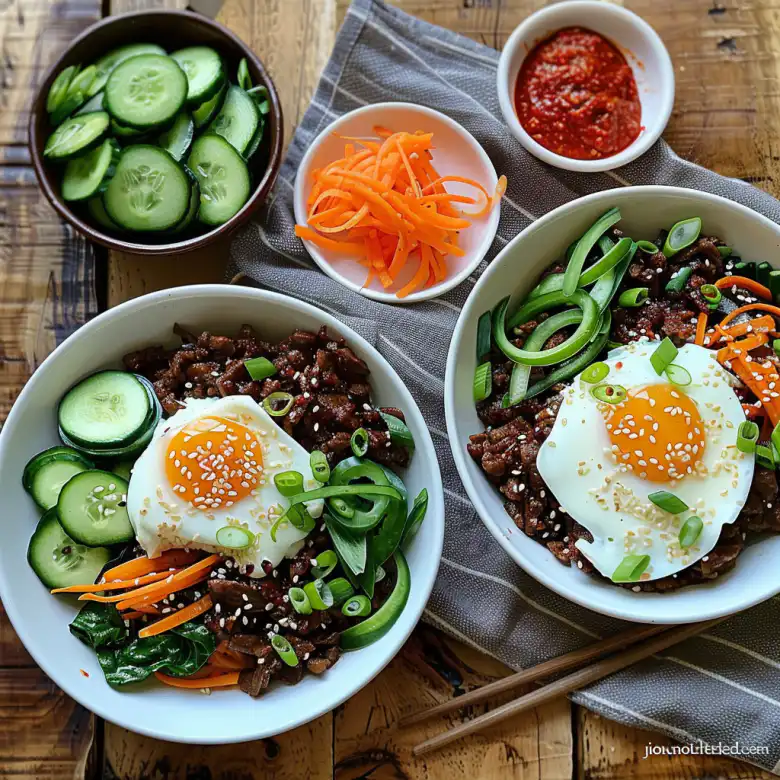
9. Warm your serving bowls and add a portion of rice to each. Arrange the vegetables and beef in separate sections around the rice, creating a colorful wheel pattern. Top each bowl with a fried egg.
10. Garnish with sliced green onions and sesame seeds. Serve immediately with gochujang or sriracha on the side.
This methodical approach ensures each component maintains its distinct character while contributing to the overall harmony of the dish.
Nutrition at a Glance
- High in protein from beef and eggs, supporting muscle maintenance and satiety
- Rich in vitamins A and C from the variety of colorful vegetables
- Provides complex carbohydrates from rice for sustained energy
- Contains beneficial probiotics if you use fermented gochujang
- Good source of iron from the beef and spinach
- Healthy fats from sesame oil and egg yolks
- Fiber from vegetables aids digestion and promotes fullness
- Naturally gluten-free when using tamari instead of soy sauce
How to Serve It
- Present each bowl with vegetables arranged in colorful sections for visual appeal
- Provide small dishes of gochujang, soy sauce, and extra sesame oil for customization
- Serve with chopsticks and spoons for easy mixing and eating
- Offer kimchi or other Korean pickles as traditional accompaniments
- Include small cups of miso soup or clear broth to complete the meal
- Consider serving banchan (small Korean side dishes) for a more authentic experience
The key is encouraging diners to mix everything together, creating their own perfect bite with each spoonful.
Common Mistakes
- Overcooking the vegetables, which makes them mushy and less appealing
- Skipping the marination time for the beef, resulting in less flavorful meat
- Using cold rice instead of warm, which doesn’t absorb flavors as well
- Overcrowding the pan when cooking beef, causing steaming instead of browning
- Not seasoning each vegetable component individually
- Making the egg yolks too firm, missing the creamy sauce element
- Preparing vegetables too far in advance, causing them to lose texture
- Using the wrong cut of beef or not slicing against the grain
Avoiding these pitfalls ensures each element contributes its best qualities to the finished dish.
Storage and Reheating
- Store cooked components separately in the refrigerator for up to 3 days
- Keep marinated raw beef for up to 2 days before cooking
- Reheat beef gently in a skillet to avoid overcooking
- Warm rice in the microwave with a splash of water to restore moisture
- Refresh vegetables with a brief rinse and new seasoning if needed
- Always prepare fresh eggs when serving, as reheated eggs don’t work well
- Store gochujang and other sauces in the refrigerator for several months
- Freeze cooked beef for up to 3 months, though texture may change slightly
Proper storage techniques help maintain the distinct textures and flavors that make this dish special.
Leftover Ideas
- Transform into fried rice by stir-frying everything together with extra vegetables
- Use the seasoned beef in Korean-style tacos with kimchi slaw
- Create lettuce wraps using butter lettuce leaves and the prepared components
- Make Korean beef and vegetable soup by adding broth to the leftovers
- Stuff everything into a tortilla for a Korean-Mexican fusion burrito
- Top a green salad with the beef and vegetables for a lighter meal
- Use as filling for Korean-style pancakes (pajeon) with a simple batter
- Create grain bowls with quinoa or brown rice as a healthier base
These creative applications ensure nothing goes to waste while providing variety throughout the week.
PrintKorean Beef Bowls (Bibimbap)
- Total Time: 65 minutes
- Yield: 4 servings 1x
Description
Simplified Korean beef bowls with marinated beef, seasoned vegetables, rice, and a fried egg. All the flavors of traditional bibimbap in an approachable weeknight format.
Ingredients
- 1 pound thinly sliced ribeye or sirloin
- 3 tablespoons soy sauce
- 2 tablespoons brown sugar
- 1 tablespoon sesame oil
- 2 cloves garlic, minced
- 1 teaspoon fresh ginger, grated
- 2 cups fresh spinach
- 1 large carrot, julienned
- 1 small zucchini, julienned
- 4 shiitake mushrooms, sliced
- 1 cup bean sprouts
- 1 cucumber, thinly sliced
- 4 cups cooked short-grain rice
- 4 large eggs
- 2 green onions, sliced
- 1 tablespoon sesame seeds
- Gochujang for serving
Instructions
- 1. Marinate beef in soy sauce, brown sugar, sesame oil, garlic, and ginger for 30 minutes.
- 2. Blanch spinach for 30 seconds, drain, and season with salt and sesame oil.
- 3. Salt julienned carrots and zucchini, let sit 10 minutes, rinse, and toss with sesame oil.
- 4. Quick-pickle cucumber slices with rice vinegar and salt.
- 5. Sauté mushrooms until golden, then quickly cook bean sprouts.
- 6. Cook marinated beef in hot oil until caramelized, 2-3 minutes per side.
- 7. Fry eggs sunny-side up with runny yolks.
- 8. Serve over warm rice with vegetables arranged in sections, topped with fried egg.
- 9. Garnish with green onions and sesame seeds.
- 10. Serve with gochujang on the side.
Notes
Store components separately for up to 3 days. Always prepare fresh eggs when serving.
- Prep Time: 45 minutes
- Cook Time: 20 minutes
- Category: Main Course
- Method: Stir-frying
- Cuisine: Korean
Nutrition
- Serving Size: 1 bowl
- Calories: 485
- Sugar: 12g
- Sodium: 890mg
- Fat: 18g
- Carbohydrates: 52g
- Fiber: 4g
- Protein: 28g