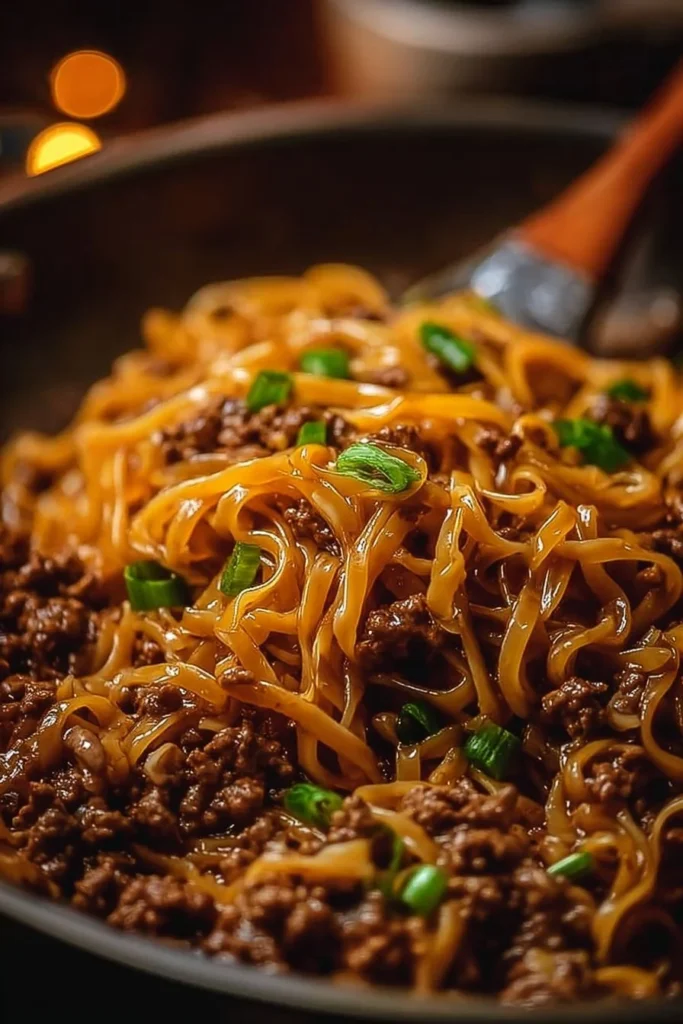
Mongolian Ground Beef Noodles is what I cook on nights when I need something fast but still filling. The beef browns quickly while the sauce reduces into a glossy coating that clings to the noodles, creating depth without extra steps. It comes together in one pan and reheats well, which makes it practical for weeknight dinners and leftovers.
Print
Mongolian Ground Beef Noodles
- Total Time: 30 minutes
- Yield: 4 servings 1x
- Diet: Regular
Description
A quick and filling one-pan dish featuring ground beef and linguine coated in a glossy sauce of soy, hoisin, and brown sugar.
Ingredients
- 1 lb ground beef
- 5 cloves garlic, minced
- 1/3 cup brown sugar
- 1/4 cup beef broth
- 1/3 cup soy sauce
- 3 tablespoons hoisin sauce
- 1/2 teaspoon ground ginger
- 1/2 teaspoon ground black pepper
- Pinch of red pepper flakes (optional)
- 10 oz linguine
- 1 tablespoon cornstarch
- 2 tablespoons water
- 4 green onions, sliced for garnish
Instructions
- Cook the linguine according to the package instructions in a large pot of boiling, salted water, then drain and set aside.
- Brown the ground beef in a large skillet over medium-high heat until no longer pink, breaking it up into small pieces, then drain excess fat if desired.
- Add the minced garlic to the browned beef and cook until fragrant, about 1 minute, stirring constantly to prevent burning.
- Pour in the soy sauce, beef broth, brown sugar, hoisin sauce, ground ginger, black pepper, and red pepper flakes if using; stir well and bring to a gentle simmer.
- Whisk the cornstarch with cold water in a small bowl until smooth, then stir this mixture into the skillet and simmer until the sauce thickens, about 1 to 2 minutes.
- Combine the cooked and drained linguine with the beef and sauce, tossing thoroughly until the noodles are fully coated, and simmer together for 2 to 3 minutes.
- Finish by tasting and adjusting seasoning if needed, sprinkle the sliced green onions over the noodles, and serve hot.
Notes
For a spicier kick, add red pepper flakes. Adjust the seasoning with low-sodium soy sauce if watching salt intake.
- Prep Time: 10 minutes
- Cook Time: 20 minutes
- Category: Main Course
- Method: Stovetop
- Cuisine: Asian
Nutrition
- Serving Size: 1 serving
- Calories: 520
- Sugar: 12g
- Sodium: 1000mg
- Fat: 16g
- Saturated Fat: 6g
- Unsaturated Fat: 8g
- Trans Fat: 0g
- Carbohydrates: 58g
- Fiber: 2g
- Protein: 32g
- Cholesterol: 80mg
Why This Is a Go-To in My Kitchen
This recipe hits three marks I always chase: speed, flavor, and family-friendly texture. Expect bold umami from soy and hoisin, a balanced sweetness from brown sugar, and tender noodles that soak up the sauce, which is why it’s easy to trust this as a weeknight staple. It scales well, freezes acceptably when sauced without pasta, and lends itself to simple swaps, so you can use what’s on hand and still end up with something everyone will ask for again.
Ingredient Lineup
- 1 lb ground beef
- 5 cloves garlic, minced
- 1/3 cup brown sugar
- 1/4 cup beef broth
- 1/3 cup soy sauce
- 3 tablespoons hoisin sauce
- 1/2 teaspoon ground ginger
- 1/2 teaspoon ground black pepper
- Pinch of red pepper flakes (optional for a spicy kick)
- 10 oz linguine
- 1 tablespoon cornstarch
- 2 tablespoons water
- 4 green onions, sliced for garnish
Simple Cooking Flow
- Cook the linguine according to the package instructions in a large pot of boiling, salted water, then drain and set aside.
- In a large skillet over medium-high heat, brown the ground beef until it is no longer pink, breaking it up into small pieces with a spatula, then drain excess fat if desired.
- Add the minced garlic to the browned beef and cook until fragrant, about 1 minute, stirring constantly so the garlic does not burn.
- Pour in the soy sauce, beef broth, brown sugar, hoisin sauce, ground ginger, black pepper, and red pepper flakes if using, stir well to combine, and bring the mixture to a gentle simmer.
- In a small bowl, whisk the cornstarch with cold water until smooth, then stir this mixture into the skillet and simmer until the sauce thickens, about 1 to 2 minutes, stirring to prevent clumps.
- Add the cooked and drained linguine to the skillet with the beef and sauce, toss thoroughly until the noodles are fully coated, and allow everything to simmer together for 2 to 3 minutes so the flavors meld.
- To finish, taste and adjust seasoning if needed, sprinkle the sliced green onions over the noodles, and serve hot.
How This Dish Fuels the Day
- Serving size: about 1 1/4 to 1 1/2 cups per person, Calories: approximately 520 per serving, Protein: around 32 grams, Carbs: about 58 grams, Fat: around 16 grams, Fiber: 2 to 3 grams, Sodium: roughly 900 to 1,100 mg depending on soy sauce used.
The Best Way to Enjoy This Dish
- Serve this warm as a main course for weeknight dinners, paired with simple steamed vegetables like broccoli or snow peas, and offer pickled cucumbers or a green salad on the side to cut through the richness and add freshness.
How to Save What’s Left
- Fridge: Store leftovers in an airtight container for up to 3 to 4 days, making sure the noodles are fully cooled before sealing. Freezer: Freeze the sauce and beef separately for up to 3 months, but avoid freezing the pasta, it gets gummy; reheat frozen sauce in a skillet with a splash of broth and toss with freshly cooked pasta. Freshness tip: Stir in a squeeze of lime or a splash of soy when reheating to brighten the flavors and wake up the sauce.
Small Details That Make a Big Difference
- Brown the beef well so the fond, the browned bits on the pan, add depth to the sauce.
- Make the cornstarch slurry with cold water, then whisk it in slowly while simmering so the sauce thickens evenly without lumps.
- Keep the sauce slightly looser than you think you need, it will cling to the pasta as it simmers and thicken a touch more.
- Use low-sodium soy sauce if you watch salt, then finish with a pinch of salt only if needed.
- If you prefer a cleaner texture, quick-blanch the green onions or finish with a few toasted sesame seeds for nuttiness.
How to Adapt This Recipe
- Seasonal: Toss in thinly sliced bok choy or snap peas in the last 2 minutes of cooking for a bright, seasonal crunch.
- Comfort-focused: Swap linguine for wide egg noodles or chow mein noodles and finish with a pat of butter stirred in for a richer mouthfeel.
- Slightly elevated: Stir in a tablespoon of toasted sesame oil and top with thinly sliced shiitake mushrooms sautéed separately in a bit of soy for an umami lift, or for a different dinner, try a casserole twist inspired by a high-protein ground beef casserole if you want this in a baked format.
What Can Go Wrong and How to Fix It
- Mistake: Sauce too thin, Fix: Mix another teaspoon of cornstarch with a little cold water and stir it in gradually while simmering until it reaches the desired thickness.
- Mistake: Noodles are gummy, Fix: Don’t overcook pasta, drain well, and toss immediately with sauce so it does not sit in water; if already gummy, rinse briefly under warm water and reheat in a skillet with fresh sauce.
- Mistake: Dish is too salty, Fix: Add a splash of water or low-sodium broth, a pinch of sugar, or a squeeze of lime to balance the salt.
- Mistake: Beef is dry or tough, Fix: Brown on medium-high without overcrowding, remove early if lean beef, and add the beef back into the sauce to rehydrate slightly while simmering.
- Mistake: Sauce clumps when adding cornstarch, Fix: Always dissolve cornstarch in cold water before adding and stir the sauce constantly while pouring the slurry in.
Turning Leftovers Into Something New
- Make fried noodle cups by pan-frying leftover sauced noodles in a nonstick skillet until caramelized edges appear, add an egg on top for a quick lunch.
- Use the saucy beef as a filling for lettuce wraps, topping with fresh herbs, shredded carrot, and a squeeze of lime for a light, handheld meal.
- Stir leftover sauced beef into scrambled eggs or an omelet for a savory breakfast integration that feels like a whole new dish.
Things People Want to Know
Can I use ground turkey instead of ground beef?
Yes, ground turkey works fine and keeps the dish lighter, but turkey is leaner and can dry out faster, so brown it gently and add a tablespoon of oil or a splash more beef broth to keep the texture moist and the sauce glossy.
How can I reduce sodium without losing flavor?
Use low-sodium soy sauce and increase aromatics like garlic and a little fresh ginger, add a touch of rice vinegar or lime juice to brighten flavors, and taste as you go so you only add salt at the end if needed.
Will this freeze well with the pasta included?
Freezing with pasta is not recommended because noodles become mushy when thawed, instead freeze the beef and sauce separate from the pasta for up to three months, then reheat sauce and toss with freshly cooked pasta for best texture.
Can I make this gluten-free?
Yes, swap regular soy sauce for tamari or a gluten-free soy alternative and use gluten-free pasta; cornstarch is naturally gluten-free, so the thickening method stays the same while flavors remain authentic.
1 thought on “Quick and Easy Mongolian Ground Beef Noodles Recipe”