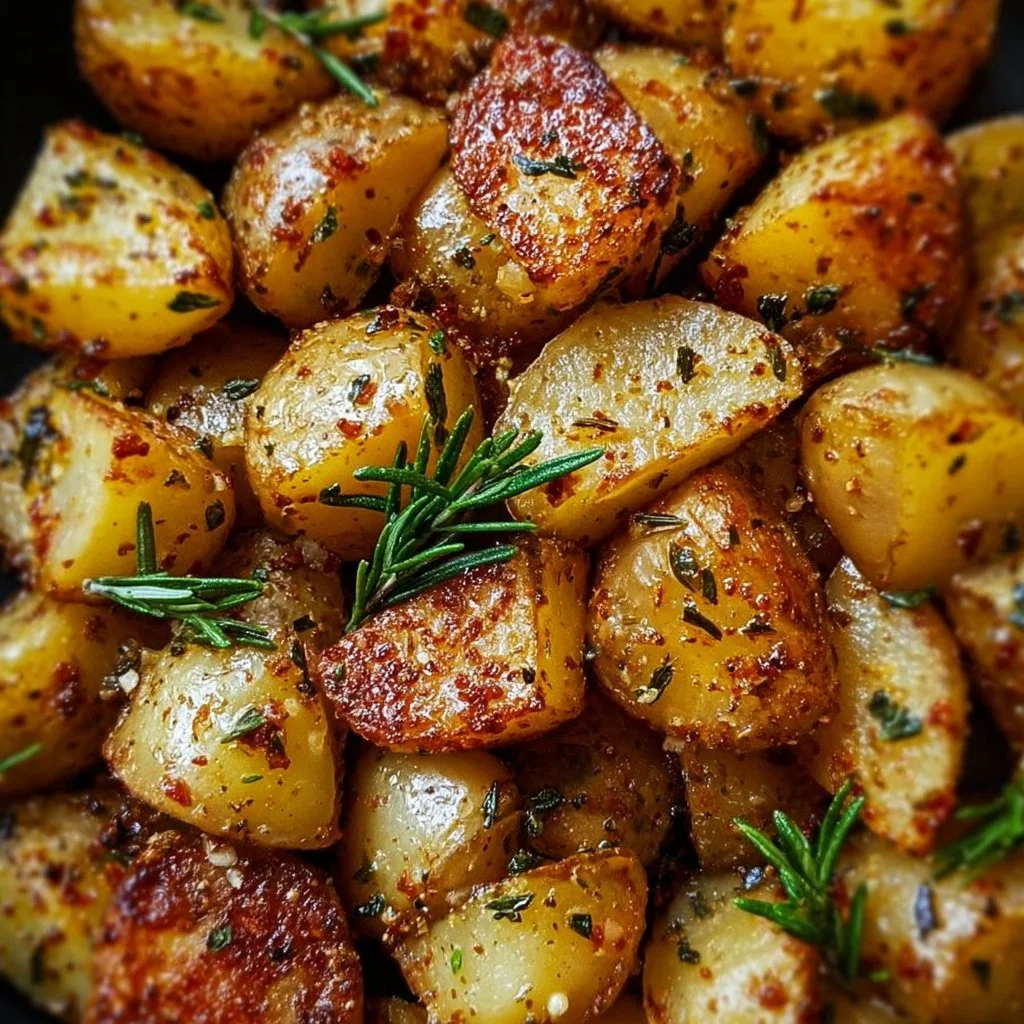
Oven-roasted potatoes develop a browned, lightly crisp surface while the inside stays tender and airy, especially when spread in a single hot pan. I rely on this method because it uses basic ingredients and consistently delivers the texture I want without extra effort.
Print
Oven-Roasted Potatoes
- Total Time: 45 minutes
- Yield: 4 servings 1x
- Diet: Vegetarian
Description
Crispy, tender oven-roasted potatoes that are easy to make and full of flavor.
Ingredients
- 2 pounds Potatoes, Yukon Gold or Russet, scrubbed and cut into 1 to 1 1/2-inch pieces
- 1/4 cup Olive oil
- 1 teaspoon Garlic powder
- 1 teaspoon Onion powder
- 1 teaspoon Paprika
- 1 1/2 teaspoons Kosher salt (or to taste)
- 1/2 teaspoon Black pepper (or to taste)
- Fresh herbs, like rosemary or thyme, for garnish (optional)
Instructions
- Preheat the oven to 425°F (220°C).
- Wash and cut the potatoes into evenly sized 1 to 1 1/2-inch chunks.
- In a large bowl, toss the potatoes with olive oil, garlic powder, onion powder, paprika, salt, and black pepper until well coated.
- Spread the potatoes out in a single layer on a baking sheet, leaving space between pieces.
- Roast in the preheated oven for 25-30 minutes, flipping halfway through until golden brown and crispy.
- Remove from the oven, garnish with fresh herbs if desired, and serve hot.
Notes
For best results, do not crowd the pan and ensure even cutting of potatoes for uniform cooking.
- Prep Time: 15 minutes
- Cook Time: 30 minutes
- Category: Side Dish
- Method: Roasting
- Cuisine: American
Nutrition
- Serving Size: 1 serving
- Calories: 240
- Sugar: 2g
- Sodium: 300mg
- Fat: 10g
- Saturated Fat: 1g
- Unsaturated Fat: 8g
- Trans Fat: 0g
- Carbohydrates: 36g
- Fiber: 3g
- Protein: 4g
- Cholesterol: 0mg
Why This Is a Go-To in My Kitchen
Oven roasted potatoes are the kind of recipe I make when I want low-fuss, high-return food, they are forgiving, quick enough for weeknights, and versatile enough for weekend gatherings. Expect crispy edges, tender centers, and a seasoning base you can riff on to suit any meal. This is the version that reliably delivers, and once you learn the few small techniques that matter, it becomes one of those dishes you cook without thinking.
What You’ll Need
- 2 pounds Potatoes, Yukon Gold or Russet, scrubbed and cut into 1 to 1 1/2-inch pieces
- 1/4 cup Olive oil
- 1 teaspoon Garlic powder
- 1 teaspoon Onion powder
- 1 teaspoon Paprika, regular or smoked depending on preference
- Salt, to taste, start with 1 1/2 teaspoons kosher salt
- Black pepper, to taste, about 1/2 teaspoon freshly ground
- Fresh herbs, like rosemary or thyme, for garnish, optional
How It Comes Together
- Preheat the oven to 425°F (220°C), give the oven time to fully come up so the potatoes start crisping the moment they hit the pan.
- Wash and cut the potatoes into evenly sized pieces, about 1 to 1 1/2-inch chunks so they cook at the same rate.
- In a large bowl, toss the potatoes with olive oil, garlic powder, onion powder, paprika, salt, and black pepper until well coated, make sure each piece has a thin, even film of oil.
- Spread the potatoes out in a single layer on a baking sheet, use parchment or a lightly oiled sheet and leave a little space between pieces to help them brown.
- Roast in the preheated oven for 25-30 minutes, or until golden brown and crispy, flipping halfway through, check at 20 minutes if your pieces are small.
- Remove from the oven and garnish with fresh herbs, if desired, serve hot right off the pan.
How I think about the technique is simple, oil is the conductor, heat is the musician, and the sugar and starch in the potato are what play the tune when they brown. Don’t crowd the pan or you’ll steam instead of roast, and flipping once keeps the crispness balanced.
How This Dish Fuels the Day
- Serving size, about 1 cup or roughly 200 grams per person, is a satisfying side that works for most appetites.
- Calories and macronutrients, one cup of roasted potatoes prepared with 1/4 cup olive oil distributed across four servings is approximately 220 to 260 calories per serving, with about 4 to 6 grams protein, 24 to 30 grams carbohydrates, and 10 to 12 grams fat depending on exact oil absorption.
- Fiber, sodium and other details, expect about 2 to 3 grams fiber per serving and sodium will vary with how much salt you add, roughly 300 to 450 mg per serving if you use the suggested seasoning.
These are estimates because potatoes and oil amounts shift results, but the plan is simple: starch for energy, a touch of healthy fat from olive oil, and room on the plate for protein and vegetables.
When This Fits Best on the Table
- Weeknight dinners, weekend roasts, and casual gatherings are all great fits, these potatoes work with grilled proteins, roast chicken, tacos, and bowl meals alike.
- Simple pairings, serve them with a roasted chicken, a seared steak, or a bright green salad for contrast, and if you want a heartier plate try pairing with a skillet-style main like the beef and potatoes skillet for an easy one-pan pairing that leans into comfort.
- Timing, serve immediately for best texture, if you need to hold them, keep them in a warm oven at about 200°F for up to 20 minutes to maintain crispness.
These potatoes are forgiving at the table, they sit well with acidic sauces, garlicky dips, and bright herb finishes that cut through the richness.
How to Save What’s Left?
- Refrigerator storage, cool the potatoes completely, transfer to an airtight container, and refrigerate for up to 3 to 4 days, label if you like.
- Freezer option, you can freeze roasted potatoes, spread on a tray to flash freeze, then transfer to a freezer bag for up to 2 months, though texture softens a bit after freezing.
- Reheating tip, reheat in a 400°F oven on a sheet pan for 10 to 12 minutes to re-crisp, avoid microwaving unless you plan to finish in a hot pan for crispness.
A freshness tip is to cool them on a rack before storing, that prevents trapped steam from making them soggy in the container.
Small Details That Make a Big Difference
- Don’t crowd the pan, give each potato piece room, steam is the enemy of crispness so use two pans if needed.
- Size consistency matters, cut pieces as uniformly as possible so the whole batch finishes at the same time, uneven pieces lead to some undercooked centers or burnt edges.
- Use high heat, 425°F gives the Maillard reaction the push it needs, lower temps will cook through but won’t brown as well.
- Toss with oil first, then seasoning, and taste a small piece after 20 minutes to adjust salt and pepper before the final roast if you like.
- Choose your potato for texture, Yukon Golds give creamier centers and slightly thinner skins, Russets crisp up wonderfully with a drier, flakier interior.
These are the little things that separate good roasted potatoes from the kind you make over and over.
Ways to Change It Without Breaking It
- Seasonal, fall version: toss with a little ground sage, a splash of maple, and finish with toasted pecans for cozy flavors.
- Comfort-focused, cheesy finish: sprinkle grated Parmesan over the potatoes in the last 5 minutes of roasting, or stir in a handful of shredded sharp cheddar after baking for melty goodness.
- Slightly elevated, add whole roasted garlic cloves and a squeeze of lemon, finish with thinly sliced chives and a dusting of smoked paprika for a restaurant-style touch.
Each variation keeps the foundation intact, you still roast at high heat with oil, but the toppings and small additions shift the dish’s mood.
Mistakes I’ve Made So You Don’t Have To
- Mistake, crowding the pan, Fix, use two sheet pans or roast in batches so pieces brown rather than steam.
- Mistake, unevenly cut potatoes, Fix, cut to consistent sizes and check the biggest pieces for doneness before you call the pan finished.
- Mistake, too little oil, Fix, don’t skimp, a thin even coat is needed to transfer heat and create crispness, it’s the difference between soggy and golden.
- Mistake, seasoning only at the end, Fix, season early so flavors mingle with the oil and heat, then adjust a bit after roasting if needed.
- Mistake, storing while hot, Fix, cool on a rack before packing away to avoid trapped moisture that makes leftovers limp.
Learning these kept my roast batches predictable and prevented many disappointed family members.
Turning Leftovers Into Something New
- Breakfast hash, chop up leftover roasted potatoes, pan-fry with onions, bell peppers, and a little smoked paprika, top with a fried egg for a quick morning meal.
- Potato salad upgrade, cube roasted potatoes while still warm, toss with a mustard-yogurt dressing, chopped celery, and dill for a warm or room-temperature salad with depth.
- Crispy pan-toast, press leftover pieces into a hot skillet with a little olive oil or butter, mash slightly as they brown, and finish with shredded cheese and scallions for a crunchy, melty snack.
Leftovers are where creativity shines, and roasted potatoes adapt well to both breakfast and lunch reinventions.
Questions Readers Often Ask
How long will roasted potatoes stay crisp after cooking?
They are crispiest right out of the oven, you can keep them warm in a low oven for about 20 minutes without significant loss of texture, after that they gradually soften as steam redistributes.
Can I roast smaller potatoes whole instead of cutting them?
Yes, baby potatoes or fingerlings can be roasted whole, reduce the oven time or start them at 400°F, and prick larger ones so they cook through evenly.
Is there a healthier oil option than olive oil that still crisps well?
Olive oil is a balanced choice for flavor and health, but avocado oil and light vegetable oils have higher smoke points and can work well if you prefer, the crisping effect is mostly about amount and heat.
How do I get the inside fluffy while the outside crisps perfectly?
The trick is texture control, choose a potato with the right starch level for your preference, parboiling briefly can help with very starchy potatoes, but with good size and high oven heat you usually get a fluffy interior without added steps.