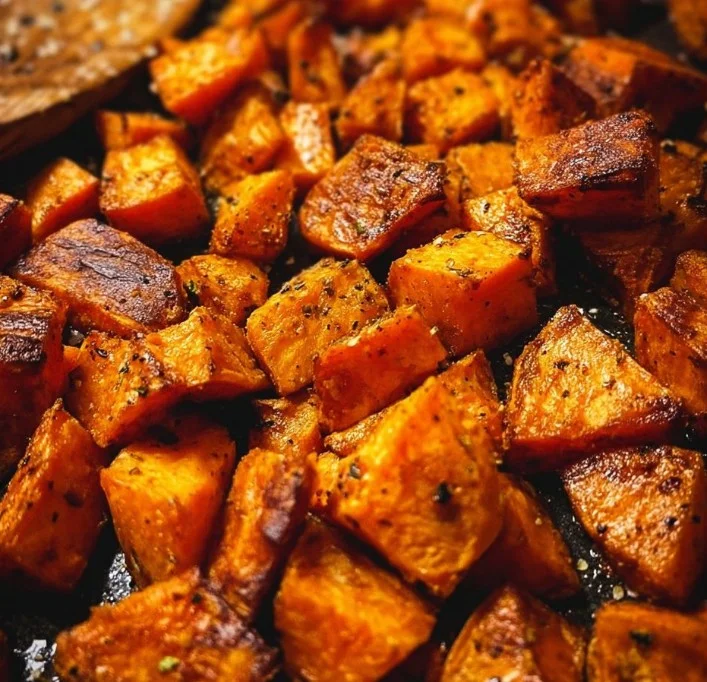
Roasted Sweet Potatoes cook with caramelized edges and a soft, tender center as their natural sugars deepen in the oven. I make them when dinner needs a dependable side that pairs easily with simple proteins. They work especially well alongside my garlic herb roasted salmon, helping build a balanced meal without extra effort.
Print
Roasted Sweet Potatoes
- Total Time: 40 minutes
- Yield: 4 servings 1x
- Diet: Vegan
Description
Deliciously roasted sweet potatoes with caramelized edges and a tender center, perfect as a side dish or for grain bowls.
Ingredients
- 2 to 3 medium sweet potatoes (about 1.5 to 2 pounds), peeled or scrubbed
- 2 tablespoons olive oil (extra virgin for flavor)
- 1 teaspoon fine sea salt (or to taste)
- 1/2 teaspoon freshly cracked black pepper
- 1/2 teaspoon paprika (smoked or sweet)
- 1/2 teaspoon garlic powder
- Optional: 1/4 teaspoon ground cumin or chili powder
- Optional finishing: fresh parsley, chopped scallions, lemon juice, maple syrup, or tahini
Instructions
- Preheat the oven to 425°F (220°C).
- Peel and chop the sweet potatoes into bite-sized cubes, about 3/4-inch to 1-inch.
- In a large bowl, toss the sweet potato cubes with olive oil, salt, pepper, and spices until evenly coated.
- Spread the sweet potatoes in a single layer on a baking sheet.
- Roast in the preheated oven for about 25-30 minutes, stirring halfway through.
- Remove from the oven and serve hot.
Notes
For extra crispiness, switch on the broiler for 1 to 2 minutes at the end, watching closely to avoid burning. You can also use cornstarch for a lighter crust.
- Prep Time: 10 minutes
- Cook Time: 30 minutes
- Category: Side Dish
- Method: Roasting
- Cuisine: American
Nutrition
- Serving Size: 1 cup
- Calories: 200
- Sugar: 5g
- Sodium: 350mg
- Fat: 8g
- Saturated Fat: 1g
- Unsaturated Fat: 7g
- Trans Fat: 0g
- Carbohydrates: 34g
- Fiber: 4g
- Protein: 3g
- Cholesterol: 0mg
Why This Is a Go-To in My Kitchen
Roasted sweet potatoes are forgiving, fast, and endlessly adaptable, which makes them a go-to when I need a side or a base for a bowl. Expect browned edges, a soft center, and enough caramelized flavor to stand on their own, but also the flexibility to dress them up with herbs, citrus, or warm spices. Make a sheet pan, and you have a component that plays well with proteins, salads, and grain bowls.
What You’ll Need
- 2 to 3 medium sweet potatoes, about 1.5 to 2 pounds total, peeled or scrubbed and left unpeeled if you prefer extra texture
- 2 tablespoons olive oil, extra virgin for flavor, light olive for roasting if you prefer
- 1 teaspoon fine sea salt, or to taste
- 1/2 teaspoon freshly cracked black pepper
- 1/2 teaspoon paprika, smoked or sweet, depending on preference
- 1/2 teaspoon garlic powder, for balanced savory depth
- Optional: 1/4 teaspoon ground cumin or chili powder for warmth
- Optional finishing: fresh parsley, chopped scallions, a squeeze of lemon, or a drizzle of maple syrup or tahini
How It Comes Together
- Preheat the oven to 425°F (220°C).
- Peel and chop the sweet potatoes into bite-sized cubes.
- In a large bowl, toss the sweet potato cubes with olive oil, salt, pepper, and your choice of spices until evenly coated.
- Spread the sweet potatoes in a single layer on a baking sheet.
- Roast in the preheated oven for about 25-30 minutes, or until crispy and tender, stirring halfway through.
- Remove from the oven and serve hot.
How I usually approach these six steps is practical, not rigid. Use a rimmed baking sheet so the cubes have breathing room, and give them a generous toss with oil so they brown instead of steam. Stirring once at the halfway point helps all sides caramelize. If you want extra crispness, switch on the broiler for 1 to 2 minutes at the end, watching closely so nothing burns.
How This Dish Fuels the Day
- Serving size: about 1 cup roasted sweet potatoes per person, roughly 180 to 200 grams, providing approximately 190 to 230 calories, 2 to 3 grams protein, 26 to 34 grams carbohydrates, 8 to 10 grams fat, 4 to 6 grams fiber, and about 220 to 350 milligrams sodium depending on salt added, these numbers are approximate and vary with oil and portion size.
This is a satisfying side for a family meal, a filling base for vegetarian bowls, and a smart swap when you want a nutrient-rich starch. The fiber and beta carotene are small but meaningful wins when you pair these with a protein and some greens.
How I Like to Serve It
- Roasted sweet potatoes work as a weeknight side beside roasted chicken or grilled fish, tossed into grain bowls with quinoa, black beans, avocado, and a yogurt drizzle, or piled on toast with ricotta and a little honey; for a heartier meal combine them with an anti-inflammatory lentil sweet potato stew for a cozy, protein-forward dinner.
When serving, I like to finish with something bright, like lemon or apple-cider vinegar, and a fresh herb for contrast. A spoonful of tahini or a dusting of feta changes the whole mood from cozy to Mediterranean, and a few toasted pepitas add crunch.
Keeping It Fresh for Another Day
- Fridge: Store cooled roasted sweet potatoes in an airtight container for up to 4 days. Freezer: Lay cubes flat on a baking sheet to flash-freeze for an hour, then transfer to a freezer bag for up to 3 months. Reheating: Warm in a 400°F oven for 8 to 10 minutes to regain crispness, or reheat in a skillet over medium heat with a splash of oil. Freshness tip: add a squeeze of lemon or a sprinkle of flaky salt right before serving to revive flavor.
Cooling them completely before sealing the container prevents sogginess, and reheating in the oven or skillet brings back that roasted texture much better than the microwave.
Small Details That Make a Big Difference
- Cut cubes as uniformly as possible, about 3/4-inch to 1-inch, so everything cooks evenly and you do not end up with charred edges and raw centers.
- Use enough oil to coat, but not drown, the potatoes; about 1 tablespoon of oil per pound helps browning without making them greasy.
- Give the sheet pan breathing room, spread the cubes in a single layer with space between them to avoid steaming.
- Season in two stages: a light sprinkle before roasting, and a final seasoning finish after roasting with flaky salt, fresh herbs, or citrus to lift the dish.
- For crispier edges, try tossing the sweet potatoes with a tablespoon of cornstarch or arrowroot before roasting, it creates a light crust when combined with oil.
These are small adjustments I make when I want the pan to look and taste deliberately roasted, not merely softened.
Ways to Change It Without Breaking It
- Seasonal: Fall-forward with a sprinkle of pumpkin pie spice and a drizzle of pure maple syrup after roasting, then top with toasted pecans for crunch.
- Comfort-focused: Toss roasted sweet potatoes with a little butter and brown sugar, then serve with roasted sausage or a fried egg for a cozy dinner.
- Slightly elevated: Finish with a labneh or whipped feta dollop, pomegranate seeds, and a pinch of zaatar for a restaurant-worthy plate.
These variations keep the same reliable base method while offering different flavor directions so you can adapt to what you have on hand or what the family wants.
What Can Go Wrong and How to Fix It
- Mistake: Crowding the pan, which leads to steamed, soft potatoes. Fix: Use two pans or roast in batches so each cube has space to brown.
- Mistake: Overcutting or uneven pieces causing some to burn while others are underdone. Fix: Aim for uniform 3/4-inch to 1-inch cubes and check for doneness at 20 minutes.
- Mistake: Not enough oil, resulting in dry, dull potatoes. Fix: Add a touch more oil and toss midway through roasting, or finish with a knob of butter after roasting for richness.
- Mistake: Using very high sugar finishes too early, which can burn. Fix: Wait to add maple syrup, honey, or brown sugar until after roasting or in the last 3 to 5 minutes under watchful eyes.
- Mistake: Forgetting the finishing touch, leaving the dish flat. Fix: Brighten with citrus, acid, fresh herbs, or texture with seeds and nuts right before serving.
Addressing these common slips keeps the method forgiving and the results predictable.
Turning Leftovers Into Something New
- Sweet potato hash: Chop leftover cubes into smaller pieces, pan-fry with onions and bell peppers, then top with a fried egg for a breakfast-for-dinner finish.
- Grain bowl booster: Warm the potatoes and toss with cooked farro or rice, a scoop of beans, greens, and a tangy vinaigrette for a quick lunch bowl.
- Mashed sweet potato spread: Mash leftover roasted sweet potatoes with a little yogurt or butter, add cinnamon or smoked paprika, and use as a spread for toast or a filling for tacos.
Leftovers are rarely boring here because the roasted flavor is strong enough to carry into new formats, and small additions completely shift their role.
Questions Readers Often Ask
How long do roasted sweet potatoes take to cook, and how do I test for doneness?
Roasted sweet potatoes usually take 25 to 30 minutes at 425°F for 3/4-inch to 1-inch cubes. Test by piercing a piece with a fork; it should slide in easily and feel tender, with the outside showing golden caramelization. Adjust time if pieces are larger.
Can I roast sweet potatoes without oil, and what changes if I do?
You can roast sweet potatoes without oil by using a nonstick sheet or parchment, but they will brown less and be less crisp. A light brushing or spray of oil concentrates browning, so for caramelized edges use a tablespoon of oil per pound for best texture.
Are sweet potatoes healthy enough to eat every day?
Sweet potatoes are nutrient-dense, offering fiber, vitamins A and C, and potassium, making them a healthy regular choice when balanced with protein and vegetables. Vary your starches for a wider nutrient range, but daily servings are fine as part of a balanced diet.
Can I use this method for other root vegetables, and what should I change?
Yes, this roasting approach works for carrots, turnips, parsnips, and beets. Adjust roasting time by root density, for example beets take longer, and consider cutting denser vegetables smaller so everything finishes at the same time. Use similar seasoning and oil ratios.