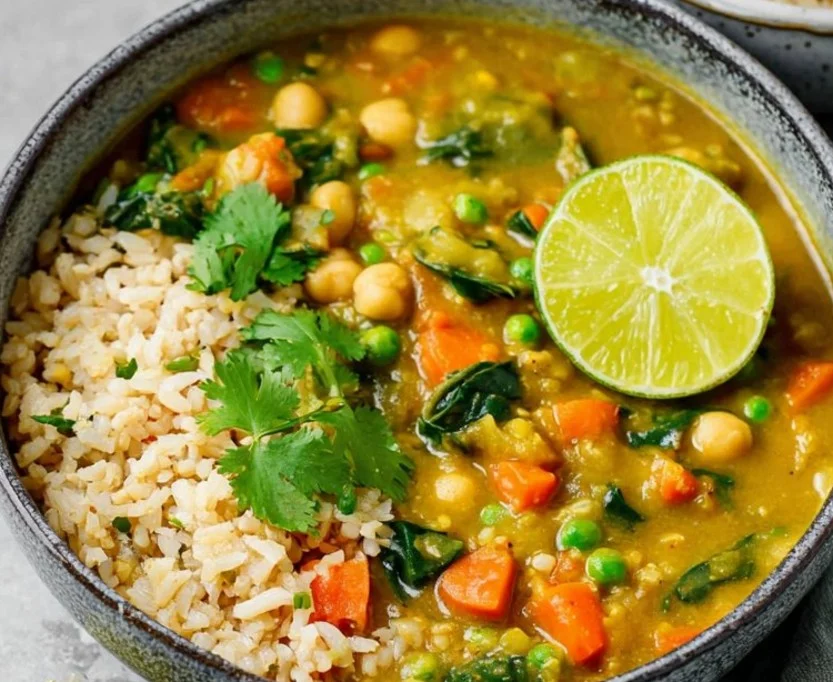
There are nights when the week has worn thin and I want something warm, fast, and nourishing that still feels like home. This mixed vegetable curry is that answer, a bowl packed with fiber, plant protein, and bright coconut-scented spice, with tender lentils and vegetables that keep the texture lively. It’s one of those recipes I turn to when I need a low-fuss family dinner that still delivers on flavor and comfort. If you like hands-off slow cooker meals, you might also enjoy my crockpot vegetable beef soup for another satisfying dinner option.
Print
Mixed Vegetable Curry
- Total Time: 45 minutes
- Yield: 4 servings 1x
- Diet: Vegetarian
Description
A warm, quick, and nourishing mixed vegetable curry packed with fiber and plant protein.
Ingredients
- 2 cups dry brown rice
- 1 tablespoon olive oil
- 1/2 cup diced yellow onion
- 1/2 cup chopped carrots
- 4–5 cloves minced garlic
- 1 tablespoon fresh grated ginger
- 1 tablespoon curry powder
- 2 teaspoons garam masala
- 1 teaspoon ground cumin
- 1/2 teaspoon salt
- 1 cup frozen green peas
- 13.5 ounce can chickpeas, drained and rinsed
- 2 cups dry red lentils
- 13.5 ounce can coconut milk
- 3 cups vegetable broth
- 3 loosely packed cups spinach or kale
- Lime wedges and chopped cilantro for serving
Instructions
- Prepare brown rice according to package instructions.
- Heat olive oil in a Dutch oven over medium heat; add onion and salt, cooking until softened (6-8 minutes).
- Add carrots, garlic, and ginger; sauté for 2-3 minutes until garlic is golden.
- Stir in curry powder and cumin, cooking for 30 seconds to bloom the spices.
- Add lentils, chickpeas, peas, coconut milk, and vegetable broth; bring to a boil, then simmer covered for 12-15 minutes.
- Check lentils for doneness; add water if too thick.
- Stir in spinach and garam masala, cooking for another 2 minutes.
- Adjust salt and finish with lime juice and cilantro.
- Serve over warm brown rice with lime wedges and cilantro.
Notes
Feel free to swap in other mixed vegetables like diced potatoes or bell peppers. For a richer flavor, use full-fat coconut milk.
- Prep Time: 15 minutes
- Cook Time: 30 minutes
- Category: Main Course
- Method: Cooking
- Cuisine: Indian
Nutrition
- Serving Size: 1 serving
- Calories: 520
- Sugar: 5g
- Sodium: 700mg
- Fat: 16g
- Saturated Fat: 14g
- Unsaturated Fat: 2g
- Trans Fat: 0g
- Carbohydrates: 75g
- Fiber: 14g
- Protein: 18g
- Cholesterol: 0mg
Why This Is a Go-To in My Kitchen
This curry is forgiving, quick, and scales easily, which makes it useful on busy evenings or when feeding a crowd. Expect comforting depth from toasted spices and coconut milk, plus a bright finish from lime and cilantro. It’s the sort of recipe that works with what you have and still tastes like it took more effort than it did.
What You’ll Need
- 2 cups dry brown rice — cooks into nutty, chewy grains to serve under the curry.
- 1 tablespoon olive oil — for sautéing the aromatics.
- 1/2 cup diced yellow onion — sweet base flavor when softened.
- 1/2 cup chopped carrots — add mild sweetness and color.
- 4-5 cloves minced garlic — for savory depth.
- 1 tablespoon fresh grated ginger — bright aroma and a little heat.
- 1 tablespoon curry powder — the backbone spice blend.
- 2 teaspoons garam masala — adds warm, toasty notes at the end.
- 1 teaspoon ground cumin — earthy, to round the curry.
- 1/2 teaspoon salt — start here, adjust to taste.
- 1 cup frozen green peas — quick, sweet pops of green.
- 13.5 ounce can chickpeas, drained and rinsed — plant protein and texture.
- 2 cups dry red lentils — they break down slightly to thicken the curry.
- 13.5 ounce can coconut milk — creamy body and mellow sweetness.
- 3 cups vegetable broth — to braise the lentils and vegetables.
- 3 loosely packed cups spinach or kale — folded in at the end for freshness.
- Lime wedges and chopped cilantro for serving — brighten and freshen each bowl.
Feel free to swap in other mixed vegetables like diced potatoes, cauliflower florets, or bell peppers if you need to stretch the vegetable count.
How It Comes Together
- If serving with brown rice, prepare according to package instructions, timing it to finish when the curry is ready. (Timing cue: rice and curry should finish within 10 minutes of each other.)
- Heat olive oil in a 6-quart Dutch oven or medium stockpot over medium heat until shimmering, then add diced onion and a pinch of salt. (Texture cue: onions should soften and become translucent, about 6 to 8 minutes.)
- Add chopped carrots, minced garlic, and grated ginger; sauté for 2 to 3 minutes until garlic is golden and fragrant. (Aroma cue: you should smell a warm, gingery fragrance.)
- Stir in curry powder, cumin, and cook for 30 seconds to bloom the spices, stirring constantly to avoid burning. (Aroma cue: spices will smell toasted and brighter.)
- Add the dry red lentils, drained chickpeas, frozen peas, coconut milk, and vegetable broth; stir to combine and scrape up any browned bits from the pot bottom. (Texture cue: mixture should look soupy but slightly thick as lentils hydrate.)
- Bring the pot to a boil over high heat, then reduce to a simmer and cover with a lid. (Timing cue: simmer gently to cook lentils without scorching, about 12 to 15 minutes.)
- Check the lentils at 12 minutes; they should be tender and the curry should have thickened — if too thick, add up to 1/2 cup water or broth. (Texture cue: lentils should be soft but not mushy.)
- Stir in the spinach or kale and garam masala, cook uncovered for another 2 minutes until greens have wilted and flavors have brightened. (Aroma cue: the garam masala will lift the curry with warm notes.)
- Taste and adjust salt; finish with a squeeze of lime juice and a scatter of chopped cilantro. (Flavor cue: lime should cut through richness and make the curry pop.)
- Serve over warm brown rice with extra lime wedges and cilantro on the side. (Serving cue: a squeeze of lime at the table brightens each serving.)
How This Dish Fuels the Day
A typical serving (about 1.5 cups curry over 1 cup cooked brown rice) provides roughly 520 calories, 18 grams protein, 75 grams carbohydrates, 16 grams fat, 14 grams fiber, and about 700 mg sodium depending on broth choice. The combination of whole grains, legumes, and vegetables yields steady energy and fiber to keep you satisfied. Real-life health insight: the red lentils and chickpeas give plant-based protein and fiber that support stable blood sugar and lasting fullness, so this makes a strong weeknight meal for adults and kids alike.
When This Fits Best on the Table
This mixed vegetable curry is flexible and fits multiple mealtime moments.
- Weeknight family dinner: pairs with steamed brown rice or naan for a comforting, kid-friendly plate.
- Meal-prep lunch: portion into bowls for grab-and-go reheats during the week.
- Casual weekend dinner: serve with roasted vegetables and extra chutney for a fuller spread.
Simple pairings: plain yogurt or raita to cool the spice, a side salad for crunch, or warm naan to sop up sauce.
Keeping It Fresh for Another Day
- Fridge: Cool to room temperature and store covered in airtight containers for up to 4 days.
- Freezer: Freeze in meal-sized portions in freezer bags or airtight containers for up to 3 months; thaw overnight in fridge before reheating.
- Reheating tip: Gently reheat on the stove over medium-low, adding a splash of water or broth to loosen the sauce and revive creaminess; microwave in 1-minute bursts, stirring in between.
- Freshness tip: Add fresh cilantro and a squeeze of lime just before serving to revive flavor after storage.
Small Details That Make a Big Difference
- Bloom your spices: Toasting curry powder and cumin briefly in the pot before adding liquids brings forward deeper flavor.
- Choose red lentils for texture: They break down enough to thicken the sauce without becoming gummy like some yellow lentils can.
- Finish with bright elements: Lime juice and cilantro at the end lift the whole dish and prevent it from tasting flat after cooking.
- Use full-fat coconut milk when possible: It yields a richer mouthfeel and balances the acidity from lime.
- If you want more texture contrast, reserve some peas or chickpeas and stir them in at the end.
Ways to Change It Without Breaking It
- Seasonal: Add diced butternut squash or pumpkin in fall, roasting first for a caramelized edge, then simmering with the curry.
- Comfort-focused: Swap brown rice for buttery basmati rice or serve with garlic naan and a dollop of plain yogurt for extra richness.
- Slightly elevated: Finish with toasted coconut flakes and thinly sliced green chilies, and serve with a side of pickled red onions for bright contrast.
Mistakes I’ve Made So You Don’t Have To
- Mistake: Adding spices to cold oil so they never bloom. Fix: Heat the oil until shimmering, then add spices and toast 20 to 30 seconds before adding liquids.
- Mistake: Overcooking lentils until totally mushy. Fix: Check at 12 minutes and stop cooking when lentils are tender but still hold some shape.
- Mistake: Skipping the acid at the end and ending up with flat flavor. Fix: Always finish with lime or lemon juice and taste for balance.
- Mistake: Using low-fat coconut milk that curdles. Fix: Use full-fat coconut milk or add a small splash of cream or coconut cream at the end.
- Mistake: Crowding the pot with raw root vegetables that take longer to cook. Fix: Par-cook or chop root veg smaller, or add them earlier in the simmer stage.
Turning Leftovers Into Something New
- Curry-stuffed baked potatoes: Reheat leftover curry, spoon over split baked potatoes, top with yogurt and cilantro.
- Curry grain bowls: Reheat and serve over farro, quinoa, or barley with a crisp cucumber salad on the side for texture contrast.
- Spiced soup: Thin leftover curry with vegetable broth, simmer briefly, and blend partially for a smooth soup; finish with a drizzle of coconut milk.
Questions Readers Often Ask
How long will the curry keep in the fridge, and is it safe for kids?
This curry keeps well for up to 4 days in the refrigerator in an airtight container. It’s kid-friendly if you moderate the spices; reduce curry powder by half for young eaters and add more at the table so adults can have extra heat.
Can I make this in a slow cooker or Instant Pot?
Yes. For slow cooker: brown the aromatics and spices on the stove, then transfer and cook on low 3 to 4 hours. For Instant Pot: sauté first on the saute setting, then pressure cook for 6 minutes with a quick release; adjust liquid slightly if needed.
What can I substitute for coconut milk if someone is allergic?
Use full-fat plain yogurt stirred in off heat for creaminess, or use a cashew cream if tree nuts are safe. If avoiding dairy and nuts, try a soy-based creamer or increase broth and finish with a small pat of butter for richness.
Will this curry freeze well and how do I reheat it?
Yes, freeze in meal-sized portions for up to 3 months. Thaw overnight in the fridge and reheat gently on the stovetop, adding a splash of broth to restore silky texture, and finish with fresh lime and cilantro.