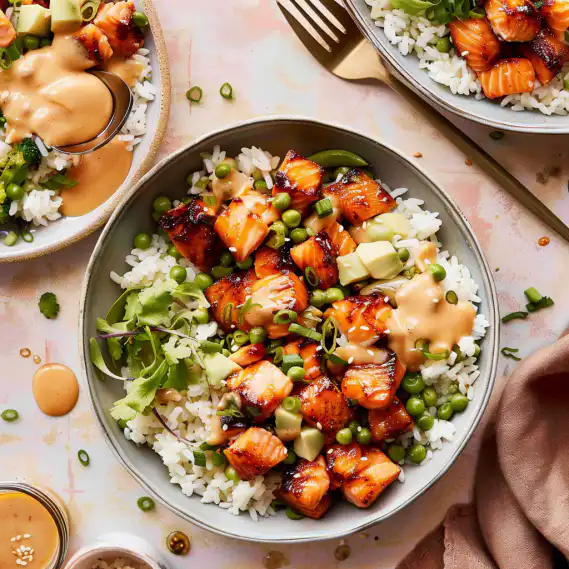
Honey Glazed Salmon Rice Bowl is a weeknight lifesaver. It’s packed with flavor, color, and nutrients, making it a satisfying and healthy meal that comes together surprisingly quickly. Plus, it’s incredibly adaptable to whatever vegetables you have on hand.
Why This Honey Glazed Salmon Rice Bowl Works
This recipe hits all the right notes for a balanced and delicious meal. The tender, flaky salmon coated in a sweet and savory glaze pairs beautifully with fluffy rice and crisp-tender vegetables.
Ingredients
- 1.5 pounds salmon fillets, skin on or off
- 1 tablespoon olive oil (or other neutral cooking oil like avocado or grapeseed)
- Salt, to taste
- Black pepper, to taste
- 2 cups cooked rice (brown, white, jasmine, or basmati all work well)
- 1 small head of broccoli, cut into florets
- 1 red bell pepper, seeded and thinly sliced
- 1 carrot, peeled and thinly sliced into matchsticks or ribbons
- 1/2 cup snap peas, trimmed
- 2 tablespoons soy sauce (or tamari for gluten-free)
- 2 tablespoons honey
- 1 tablespoon rice vinegar
- 1 teaspoon grated fresh ginger
- 1 clove garlic, minced
- 1 teaspoon sesame oil (optional, for added depth of flavor)
- Sesame seeds, for garnish (optional)
- Chopped green onions, for garnish (optional)
Gathering these ingredients is the first step to a flavorful meal. Most are pantry staples, and the fresh produce can be swapped based on your preferences or what’s in season.
How to Make It
- Prepare the Glaze: In a small bowl, whisk together the soy sauce (or tamari), honey, rice vinegar, grated ginger, minced garlic, and sesame oil (if using). Set aside. This will be the delicious coating for your salmon.
- Cook the Rice: If you don’t have pre-cooked rice, prepare your rice according to package directions. You’ll want about 2 cups of cooked rice for four servings. This can be done during the prep of other ingredients to save time.
- Prepare the Salmon: Pat the salmon fillets dry with paper towels. This helps create a better sear. Season them generously with salt and pepper on both sides.
- Sear the Salmon: Heat the olive oil in a large skillet or cast-iron pan over medium-high heat. Once the oil is shimmering, carefully place the salmon fillets into the hot skillet, skin-side down if using skin-on. Cook for 4-5 minutes, or until the skin is golden brown and crispy.
- Flip and Glaze the Salmon: Flip the salmon fillets. Reduce the heat to medium. Pour or brush about half of the prepared glaze over the top of the salmon.
- Cook the Salmon Through: Continue to cook for another 4-6 minutes, depending on the thickness of your fillets, basting occasionally with the remaining glaze from the pan and the reserved glaze from the bowl.
- Sauté the Vegetables: In the same skillet used for the salmon (no need to wipe it out – those bits are flavor!), add a splash more olive oil if needed. Add the broccoli florets, sliced red bell pepper, sliced carrot, and snap peas.
- Stir-fry the Vegetables: Stir-fry the vegetables for about 5-7 minutes, or until they are crisp-tender. You want them to have a slight bite. You can add a tablespoon or two of water to the pan and cover it for a minute or two to help steam the broccoli and carrots.
- Assemble the Bowls: Divide the cooked rice among four bowls.
- Add Salmon and Vegetables: Place a salmon fillet (or cut it into chunks if preferred) on top of the rice in each bowl. Arrange the sautéed vegetables alongside the salmon.
- Drizzle and Garnish: Drizzle any remaining glaze from the skillet over the salmon and vegetables. Garnish with sesame seeds and chopped green onions, if desired.
Following these steps will lead you to a delicious and satisfying meal ready to be enjoyed.
Nutrition at a Glance
- Salmon: An excellent source of lean protein, omega-3 fatty acids (beneficial for heart and brain health), and vitamin D.
- Vegetables (Broccoli, Bell Pepper, Carrot, Snap Peas): Rich in vitamins (like Vitamin C, Vitamin A, and Vitamin K), minerals, and dietary fiber, contributing to digestive health and overall well-being.
- Brown Rice: A good source of complex carbohydrates for sustained energy, as well as fiber and B vitamins.
- Soy Sauce/Tamari: Provides sodium and a savory umami flavor. Opt for low-sodium versions to manage sodium intake.
- Honey: A natural sweetener that also contains trace amounts of antioxidants.
This recipe offers a good balance of macronutrients and micronutrients, making it a well-rounded meal choice. The specific nutritional values will vary based on portion sizes and exact ingredients used.
How to Serve It
- Traditional Bowl Presentation: As described in the recipe, an even layer of rice topped with the glazed salmon and a colorful medley of vegetables is visually appealing and practical.
- Soy Sauce/Tamari and Sriracha on the Side: For those who like extra seasoning, offer small dishes of soy sauce/tamari and a spicy element like Sriracha or chili garlic sauce.
- Add Avocado Slices: Creamy avocado adds a healthy fat and a luxurious texture that complements the other components.
- Toasted Nori Strips: Thin strips of toasted seaweed (nori) bring an extra layer of oceanic flavor and a satisfying crispness.
- Pickled Ginger: A small dollop of pickled ginger can cleanse the palate between bites and add a bright, zesty counterpoint to the richness of the salmon.
Serving these bowls thoughtfully enhances the dining experience and allows for personal customization.
Common Mistakes
- Overcooking the Salmon: This is the most frequent pitfall. Salmon cooks quickly. Aim for a flaky texture, not dry or rubbery. Using an instant-read thermometer is helpful; 135-140°F (57-60°C) is a good target for medium-cooked salmon.
- Undercooking the Vegetables: Mushy vegetables aren’t appetizing. Aim for “crisp-tender” – they should have a slight bite and vibrant color.
- Skipping the Pat-Dry Step for Salmon: Wet salmon steams in the pan rather than searing, preventing that desirable golden-brown crust.
- Using a Pan That’s Too Small: Overcrowding the pan for both the salmon and vegetables can lead to steaming instead of searing or stir-frying, affecting texture and browning. Cook in batches if necessary.
- Not Tasting and Adjusting the Glaze: Before it goes on the salmon, taste the glaze. Does it need a pinch more salt? A touch more sweetness? A splash more acidity? Adjust to your preference.
Avoiding these common errors will lead to a more successful and enjoyable cooking outcome.
Storage and Reheating
- Store Separately if Possible: For the best texture upon reheating, store the cooked rice, salmon, and vegetables in separate airtight containers. This prevents the rice from becoming mushy and the salmon from drying out.
- Refrigerate Promptly: Once cooled to room temperature, refrigerate all components within 2 hours.
- Best by Date: Aim to consume leftovers within 2-3 days for optimal quality and safety.
- Reheating Rice: Reheat rice gently on the stovetop with a tablespoon of water or broth, or in the microwave with a damp paper towel over it until heated through.
- Reheating Salmon: The best way to reheat salmon is at a low oven temperature (around 275°F / 135°C) for about 5-10 minutes, or until just warmed through. You can also gently reheat it in a skillet over low heat with a little broth or water. Avoid high heat in the microwave, which can make it tough.
- Reheating Vegetables: These can be gently reheated in a skillet with a little oil or water, or added directly to the salmon and rice during their reheating process.
Proper storage and reheating will ensure your leftovers are still delicious and safe to eat.
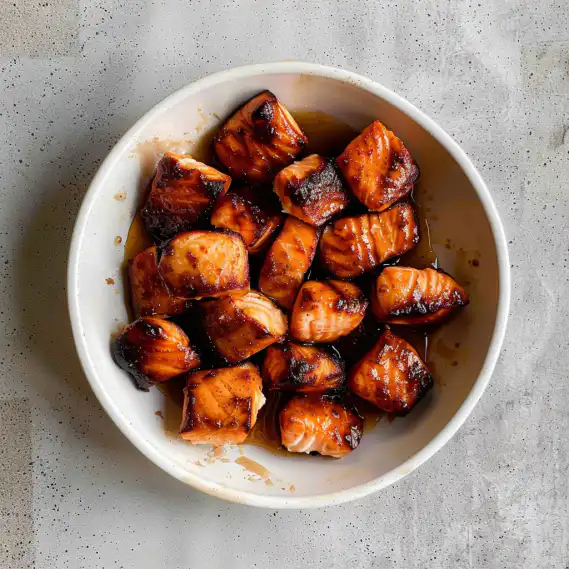
Try this recipe too: Crispy Bang Bang Salmon Bites Recipe
Leftover Ideas
- Salmon Salad: Flake cold leftover salmon and mix it with a little mayonnaise, Dijon mustard, chopped celery, and red onion. Serve on lettuce wraps or as a sandwich filling.
- Salmon Fried Rice: Chop the leftover salmon and vegetables. Stir-fry them with cooked rice, a beaten egg, and a splash of soy sauce or teriyaki sauce.
- Salmon and Veggie Quesadillas: Flake the salmon and finely chop the vegetables. Layer them with shredded cheese between two tortillas and cook in a skillet until golden and melted.
- Salmon Omelette or Scramble: Dice the salmon and vegetables and fold them into an omelette or scramble them into breakfast eggs.
- Salmon Lettuce Wraps: Serve the cold or slightly warmed salmon and vegetables in crisp lettuce cups with a drizzle of your favorite sauce.
Giving your leftovers a new life can be just as exciting as making the original meal!
PrintHoney Glazed Salmon Rice Bowls: Easy Salmon Rice Bowl Recipe with Veggies & Teriyaki Flavor
- Total Time: 35 minutes
- Yield: 4 servings 1x
Description
Whip up a delicious and healthy Honey Glazed Salmon Rice Bowl! This easy recipe features tender salmon with a sweet teriyaki glaze, piled high with crisp-tender veggies and fluffy rice. A simple weeknight meal that’s packed with flavor and goodness. Perfect for a quick lunch or dinner.
Ingredients
- 1.5 pounds salmon fillets, skin on or off
- 1 tablespoon olive oil (or other neutral cooking oil)
- Salt, to taste
- Black pepper, to taste
- 2 cups cooked rice (brown, white, jasmine, or basmati)
- 1 small head of broccoli, cut into florets
- 1 red bell pepper, seeded and thinly sliced
- 1 carrot, peeled and thinly sliced into matchsticks or ribbons
- 1/2 cup snap peas, trimmed
- 2 tablespoons soy sauce (or tamari for gluten-free)
- 2 tablespoons honey
- 1 tablespoon rice vinegar
- 1 teaspoon grated fresh ginger
- 1 clove garlic, minced
- 1 teaspoon sesame oil (optional)
- Sesame seeds, for garnish (optional)
- Chopped green onions, for garnish (optional)
Instructions
- 1. Prepare the Glaze: In a small bowl, whisk together soy sauce, honey, rice vinegar, ginger, garlic, and sesame oil (if using). Set aside.
- 2. Cook the Rice: Prepare rice according to package directions if not already cooked.
- 3. Prepare the Salmon: Pat salmon dry and season with salt and pepper.
- 4. Sear the Salmon: Heat olive oil in a skillet over medium-high heat. Sear salmon skin-side down (if applicable) for 4-5 minutes until golden.
- 5. Flip and Glaze: Flip salmon, reduce heat to medium. Brush with half the glaze. Cook 4-6 minutes more, basting with remaining glaze. Remove salmon from pan.
- 6. Sauté Vegetables: Add broccoli, bell pepper, carrot, and snap peas to the same skillet (add more oil if needed). Stir-fry for 5-7 minutes until crisp-tender.
- 7. Assemble Bowls: Divide rice among four bowls. Top with salmon and vegetables.
- 8. Garnish: Drizzle with any remaining glaze and sprinkle with sesame seeds and green onions, if desired.
Notes
Store components separately in airtight containers in the refrigerator for up to 2-3 days. Reheat rice gently on the stovetop or microwave. Reheat salmon in a low oven (275°F for 5-10 mins) or gently in a skillet. Reheat vegetables alongside salmon or in a skillet.
- Prep Time: 15 minutes
- Cook Time: 20 minutes
- Category: Main Course
- Method: Pan-Seared, Stir-fried
- Cuisine: American
Nutrition
- Serving Size: 1 serving
- Calories: Approximately 450-550 calories per serving (will vary based on exact ingredients and portion sizes)
- Sugar: Approximately 10-15g
- Sodium: Approximately 600-800mg (will vary based on soy sauce used)
- Fat: Approximately 15-20g
- Carbohydrates: Approximately 40-50g
- Fiber: Approximately 4-6g
- Protein: Approximately 30-35g