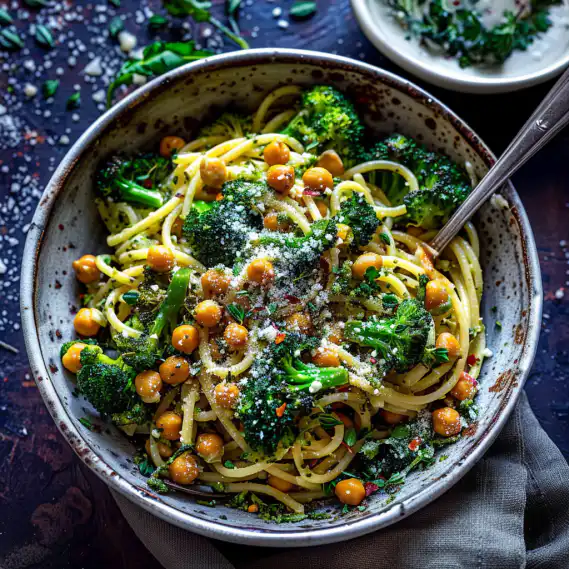
This Broccoli Chickpea Pasta is a weeknight savior. It’s packed with flavor, fiber, and protein, making it a satisfying and nutritious meal that comes together quickly. It’s the kind of dish I find myself making again and again when I want something wholesome without a lot of fuss.
Why This Pasta Works
This Broccoli Chickpea Pasta is a winner because it’s surprisingly flavorful, incredibly versatile, and uses pantry staples. The chickpeas add a hearty protein punch, while the broccoli brings freshness and nutrients. It’s a balanced meal that feels both comforting and healthy, perfect for busy evenings.
Ingredients
- 1 pound pasta (such as penne, rotini, or farfalle)
- 2 tablespoons olive oil
- 1 large onion, chopped
- 4 cloves garlic, minced
- 1 pound broccoli florets (about 4 cups)
- 1 (15-ounce) can chickpeas, rinsed and drained
- 1/2 teaspoon red pepper flakes (optional, for a touch of heat)
- 1/2 cup vegetable broth
- 1/4 cup nutritional yeast (for a cheesy flavor, optional)
- Salt and freshly ground black pepper to taste
- Fresh lemon juice, to taste (optional, for brightness)
- Fresh parsley, chopped, for garnish (optional)
Gathering these simple ingredients is the first step towards a delicious meal.
How to Make It
- Bring a large pot of salted water to a boil. Add the pasta and cook according to package directions until al dente. Reserve about 1 cup of the pasta water before draining.
- While the pasta is cooking, heat the olive oil in a large skillet or Dutch oven over medium heat. Add the chopped onion and sauté until softened and translucent, about 5-7 minutes.
- Add the minced garlic and red pepper flakes (if using) to the skillet and cook for another minute until fragrant, being careful not to burn the garlic.
- Add the broccoli florets and chickpeas to the skillet. Stir well to combine with the onions and garlic.
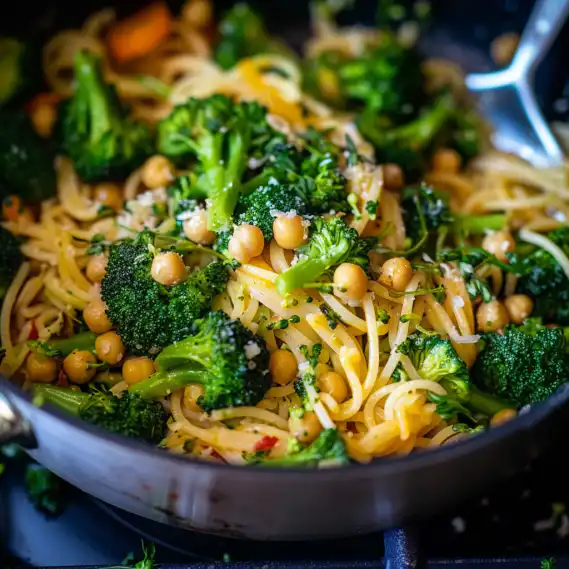
- Pour in the vegetable broth and bring the mixture to a simmer. Cover the skillet and let it cook for 5-7 minutes, or until the broccoli is tender but still bright green. You can adjust this time based on how tender you like your broccoli. If you prefer it very tender, you can steam it a minute or two longer.
- Once the broccoli is cooked to your liking, uncover the skillet. If using nutritional yeast, stir it in now. The nutritional yeast will begin to dissolve and create a slightly creamy, cheesy-like sauce.
- Add the drained pasta to the skillet with the broccoli and chickpeas. Toss everything together to coat the pasta with the sautéed vegetables and the nascent sauce.
- If the pasta seems a bit dry, add some of the reserved pasta water, a few tablespoons at a time, until a light sauce forms and coats the pasta beautifully. The starch in the pasta water helps to emulsify any oils and broth, creating a more cohesive and appealing dish.
- Season generously with salt and freshly ground black pepper. Taste and adjust seasonings as needed. A good seasoning is crucial for bringing all the flavors together. Don’t be shy with the salt and pepper; they amplify the other tastes.
- If desired, squeeze in some fresh lemon juice for a burst of brightness. This really elevates the dish, cutting through the richness and adding a lovely zing.
- Serve hot, garnished with fresh chopped parsley if you like.
This step-by-step process guides you to a delicious and satisfying meal.
Nutrition at a Glance
- High in Fiber: Both broccoli and chickpeas are excellent sources of dietary fiber, promoting digestive health and keeping you feeling full.
- Good Source of Protein: Chickpeas provide plant-based protein, making this a satisfying vegetarian entree.
- Rich in Vitamins and Minerals: Broccoli contributes vitamins C and K, as well as folate and potassium.
- Healthy Fats: Olive oil provides monounsaturated fats, which are beneficial for heart health.
- Lower in Calories: Compared to many meat-based pasta dishes, this vegetarian version is often lower in calories while still being filling.
- Lower in Sodium (with control): While canned chickpeas can have sodium, rinsing them and controlling added salt allows for a lower sodium meal.
- Versatile Carbohydrate Source: Pasta provides energy, and choosing whole wheat varieties can increase fiber content further.
- Cholesterol-Free: As a plant-based meal, it naturally contains no dietary cholesterol.
- Antioxidant Rich: Broccoli contains various antioxidants that can help protect your cells from damage.
- Supports a Balanced Diet: This dish fits well into various healthy eating patterns, including vegetarian and Mediterranean diets.
This dish offers a robust nutritional profile.
How to Serve It
- As a Main Course: This pasta is hearty enough to stand on its own as a complete vegetarian entree.
- With a Side Salad: A simple green salad with a light vinaigrette complements the richness of the pasta beautifully. Think mixed greens, cherry tomatoes, and a squeeze of lemon.
- With Crusty Bread: Serve with a side of warm, crusty bread for soaking up any extra sauce, although typically there isn’t much excess sauce with this recipe, so it’s not strictly necessary. Good quality sourdough or a simple baguette would work well.
- With a dollop of Pesto: For an extra layer of flavor, a small spoonful of pesto stirred in at the end can add a wonderful herbaceous note. Make sure to use a vegetarian pesto if that’s a concern.
- With a drizzle of Balsamic Glaze: A light drizzle of balsamic glaze can add a touch of sweetness and acidity that enhances the overall taste.
- Topped with Toasted Nuts or Seeds: A sprinkle of toasted pine nuts, slivered almonds, or pumpkin seeds can add a nice crunch and nutty flavor. Toast them lightly in a dry pan until fragrant.
- With a side of Roasted Vegetables: While the pasta already has broccoli, you could pair it with other roasted vegetables like zucchini, bell peppers, or asparagus for an even more veggie-packed meal.
- With a Sprinkle of Parmesan Cheese (Optional, if not strictly vegan): If you are not strictly vegan, a sprinkle of grated Parmesan cheese adds a familiar savory and salty element. Use a vegetarian Parmesan if needed.
- With Fresh Herbs: Beyond parsley, a sprinkle of fresh basil or chives can add a different aromatic dimension.
- As a “lighter” meal: If you want something less substantial, you can reduce the pasta portion and increase the broccoli and chickpea ratio.
Here are some enjoyable ways to present this dish.
Common Mistakes
- Overcooking the Broccoli: Steaming the broccoli for too long can result in a mushy, unappealing texture. Aim for tender-crisp to maintain its vibrant color and good bite. Keep an eye on it during the steaming process.
- Not Salting the Pasta Water: Pasta water should be seasoned with salt as if it were the ocean. This is the one chance to season the pasta itself from the inside out. Undersalted pasta will lead to a bland dish.
- Burning the Garlic: Garlic burns very quickly when sautéed. Add it in the last minute or so of cooking the onions and cook until fragrant, not brown. Burnt garlic turns bitter.
- Using Too Much or Too Little Pasta Water: Too much pasta water can make the dish watery. Too little can leave it dry. Start with a small amount and add gradually, tossing to coat. The reserved pasta water is key to creating a light sauce.
- Not Tasting and Seasoning Adequately: This is crucial for any dish. Taste the pasta before serving and adjust salt, pepper, and any other seasonings as needed. A well-seasoned dish is the hallmark of good cooking.
- Skipping the Lemon Juice (if used): If you decide to add lemon juice, don’t skip it. It adds a vital layer of brightness that cuts through the savory flavors and elevates the dish. Just a squeeze can make a big difference.
- Assuming Red Pepper Flakes are Too Spicy: If you’re hesitant about heat, start with a pinch of red pepper flakes. They add a subtle warmth that enhances the savory flavors without making the dish overtly spicy for most palates. You can always add more, but you can’t take it away.
- Not Rinsing Canned Chickpeas: Canned chickpeas can have a briny or metallic taste from the canning liquid. Rinsing them thoroughly under cold water removes this liquid and makes them taste much fresher and more pleasant in the dish.
- Overcrowding the Skillet: If your skillet is too crowded, the vegetables will steam rather than sauté, which can lead to a less flavorful result. If necessary, cook the vegetables in batches.
- Using Stale Spices: While this recipe doesn’t rely heavily on dried spices beyond optional red pepper flakes, ensuring any spices you use are relatively fresh will always yield better flavor.
Avoiding these common pitfalls will enhance your cooking experience and the final dish.
Storage and Reheating
- Refrigeration is Key: Store any leftover Broccoli Chickpea Pasta in an airtight container in the refrigerator for up to 3-4 days. Ensure it has cooled down to room temperature before sealing it to prevent condensation.
- Gentle Reheating: The best way to reheat is on the stovetop over low to medium heat. Add a splash of water or vegetable broth to loosen the pasta and prevent it from drying out. Stir occasionally until heated through. This helps to revive the sauce and prevent the pasta from becoming gummy.
- Microwave Option: If using a microwave, transfer the pasta to a microwave-safe dish. Cover it loosely with a damp paper towel to help retain moisture. Heat in 30-60 second intervals, stirring in between, until evenly heated. Be cautious not to overheat, as pasta can become tough.
- Avoid Overheating: Regardless of the reheating method, avoid overheating, which can lead to dry or rubbery pasta. It’s better to reheat gently and for a slightly longer time.
- Leftover Pasta Texture: Keep in mind that pasta texture can change slightly after refrigeration and reheating. It might be a bit softer than when freshly made, but the flavor should remain delicious.
- Add Fresh Elements if Possible: If you have them, a little sprinkle of fresh parsley or a squeeze of lemon juice upon reheating can revitalize the dish.
- Cool Completely Before Storing: Always ensure the food has cooled adequately before placing it in an airtight container for storage to prevent bacterial growth and maintain quality.
Proper storage and reheating will ensure your leftovers are just as enjoyable.
Try this recipe too: Easy High Protein BBQ Chicken Pasta Salad Recipe
Leftover Ideas
- Pasta Salad: Let the leftover pasta cool completely, then toss with a vinaigrette, some chopped bell peppers, celery, or cucumber for a refreshing pasta salad. The flavors meld beautifully when chilled.
- In a Wrap or Pita: Stuff the cooled pasta into whole wheat wraps or pita pockets with some fresh spinach or lettuce for a quick and portable lunch.
- As a Side Dish: Reheat a smaller portion and serve it as a side dish alongside grilled or baked tofu, tempeh, or your favorite vegetarian protein source.
- Added to Soups: Stir a spoonful or two of leftover pasta into a vegetable or lentil soup during the last few minutes of cooking. This adds extra texture and heartiness.
- Baked Pasta Bake: If you have a significant amount leftover, you can create a quick pasta bake. Place the leftovers in a baking dish, top with a little extra marinara sauce and some shredded cheese (vegan or dairy), and bake at 375°F (190°C) until bubbly and heated through.
- Topped with an Egg: Reheat the pasta and then top it with a fried or poached egg. The runny yolk can act as a sauce, adding richness to the dish. This is a fantastic breakfast-for-dinner idea.
- Stir-Fry Addition: While not a traditional stir-fry, you can add cold leftover pasta to a vegetable stir-fry for added substance and texture. Toss it in during the last minute of cooking.
- Cold Snack: Sometimes, a simple cold portion of pasta straight from the fridge can be a satisfying and convenient snack when you need a quick bite.
- Incorporated into a Frittata (Vegan Option): For a creative twist, chop the leftover pasta and vegetables finely and incorporate them into a vegan frittata batter (using chickpea flour and silken tofu) for a unique brunch or light meal.
These ideas will help you make the most of every last bite.
PrintBroccoli Chickpea Pasta: Easy Healthy Vegetarian Entree Recipe
- Total Time: 35 minutes
- Yield: 4–6 servings 1x
- Diet: Vegetarian
Description
A simple and healthy vegetarian pasta dish featuring broccoli and chickpeas. Easy to make for a weeknight dinner, packed with flavor and nutrients.
Ingredients
- 1 pound pasta (such as penne, rotini, or farfalle)
- 2 tablespoons olive oil
- 1 large onion, chopped
- 4 cloves garlic, minced
- 1 pound broccoli florets (about 4 cups)
- 1 (15-ounce) can chickpeas, rinsed and drained
- 1/2 teaspoon red pepper flakes (optional)
- 1/2 cup vegetable broth
- 1/4 cup nutritional yeast (optional)
- Salt and freshly ground black pepper to taste
- Fresh lemon juice, to taste (optional)
- Fresh parsley, chopped, for garnish (optional)
Instructions
- Bring a large pot of salted water to a boil. Add pasta and cook according to package directions until al dente. Reserve about 1 cup of pasta water, then drain.
- While pasta cooks, heat olive oil in a large skillet over medium heat. Add onion and sauté until softened, 5-7 minutes.
- Add garlic and red pepper flakes (if using); cook 1 minute until fragrant.
- Add broccoli florets and chickpeas to skillet. Stir to combine.
- Pour in vegetable broth; bring to a simmer. Cover and cook 5-7 minutes, until broccoli is tender-crisp.
- Uncover. Stir in nutritional yeast (if using).
- Add drained pasta to skillet. Toss to coat. Add reserved pasta water, a few tablespoons at a time, until a light sauce forms.
- Season generously with salt and pepper. Taste and adjust.
- Add lemon juice (if desired).
- Serve hot, garnished with parsley (if desired).
Notes
Store leftovers in an airtight container in the refrigerator for 3-4 days. Reheat gently on the stovetop with a splash of water or broth, or in the microwave with a damp paper towel.
- Prep Time: 15 minutes
- Cook Time: 20 minutes
- Category: Main Course
- Method: Stovetop
- Cuisine: American
Nutrition
- Serving Size: 1 serving
- Calories: Approx. 450-550 (depending on pasta type and portion size)
- Sugar: Approx. 5-8g
- Sodium: Varies based on added salt and broth
- Fat: Approx. 10-15g
- Carbohydrates: Approx. 70-90g
- Fiber: Approx. 10-15g
- Protein: Approx. 15-20g