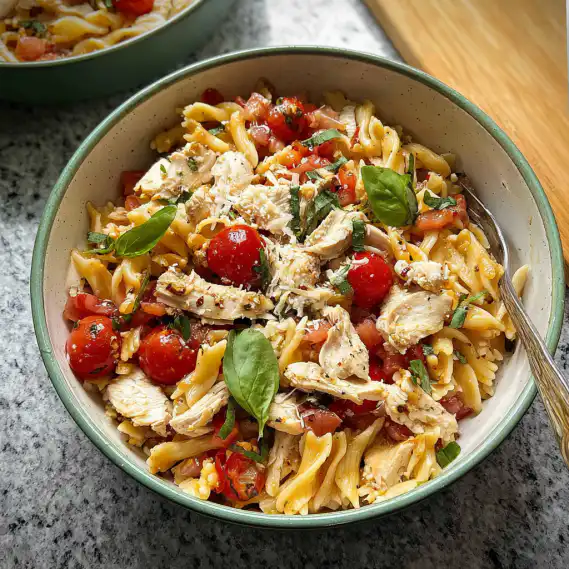
Bruschetta Chicken Pasta is one of those recipes. It takes the essence of toasted bread topped with fresh tomatoes and basil and transforms it into a hearty, satisfying pasta meal.
Why This Bruschetta Chicken Pasta Works
This Bruschetta Chicken Pasta captures the vibrant, fresh essence of classic bruschetta while creating a satisfying and complete meal.
Ingredients
- 1 pound boneless, skinless chicken breasts or thighs
- 1 pound of your favorite pasta (penne, rotini, or farfalle work wonderfully)
- 2 tablespoons olive oil
- 1 medium onion, finely chopped
- 3 cloves garlic, minced
- 1 (14.5 ounce) can diced tomatoes, undrained
- 1 pint cherry tomatoes, halved
- 1/2 cup fresh basil leaves, chopped
- 1/4 cup balsamic glaze (store-bought or homemade)
- 1/4 cup grated Parmesan cheese, plus more for serving
- Salt and freshly ground black pepper to taste
- Optional: pinch of red pepper flakes for a little heat
- Optional: 1 tablespoon unsalted butter for richness
- Optional: a squeeze of lemon juice for brightness
How to Make It
- Prepare the Chicken: If using chicken breasts, you can pound them to an even thickness to ensure they cook uniformly. Cut the chicken into bite-sized pieces. Season generously with salt and pepper.
- Cook the Pasta: Bring a large pot of salted water to a rolling boil. Add your pasta and cook according to package directions until al dente. Reserve about 1 cup of the starchy pasta water before draining. Drain the pasta and set aside.
- Sauté Aromatics: While the pasta cooks, heat 2 tablespoons of olive oil in a large skillet or Dutch oven over medium heat. Add the chopped onion and sauté until softened and translucent, about 5-7 minutes. Add the minced garlic and cook for another minute until fragrant, being careful not to burn it. If you’re adding red pepper flakes, now is the time to stir them in for about 30 seconds.
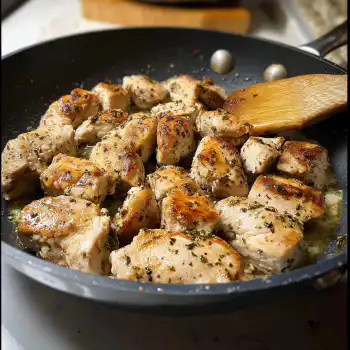
- Cook the Chicken: Add the seasoned chicken pieces to the skillet with the onions and garlic. Cook, stirring occasionally, until the chicken is browned and cooked through. This should take about 5-8 minutes, depending on the size of your pieces.
- Add Tomatoes: Pour in the can of diced tomatoes (with their juice) and add the halved cherry tomatoes. Stir everything together. Bring the mixture to a simmer and let it cook for about 5 minutes, allowing the flavors to meld and the fresh tomatoes to soften slightly.
- Incorporate Balsamic and Basil: Stir in the balsamic glaze and chopped fresh basil. If you’re using unsalted butter for extra richness, add it now and stir until melted. The balsamic glaze adds a lovely depth and a touch of sweetness that complements the tomatoes beautifully.
- Combine with Pasta: Add the drained pasta to the skillet with the chicken and tomato mixture. Toss everything together to coat the pasta evenly. If the sauce seems a little dry, add a splash or two of the reserved pasta water, stirring until it reaches your desired consistency. The starch in the pasta water will help the sauce cling to the pasta.
- Finish and Season: Stir in the grated Parmesan cheese. Taste and adjust seasoning with salt and pepper as needed. If you desire a brighter flavor, add a small squeeze of fresh lemon juice.
- Serve: Ladle the Bruschetta Chicken Pasta into bowls. Garnish with extra fresh basil and additional grated Parmesan cheese.
This straightforward process yields a deeply flavored and visually appealing pasta dish that’s ready to be enjoyed.
Nutrition at a Glance
- This dish provides a good source of lean protein from the chicken.
- It offers carbohydrates for energy from the pasta.
- Tomatoes and basil contribute vitamins, minerals, and antioxidants.
- Olive oil adds healthy monounsaturated fats.
- Portion control and the amount of cheese and oil used will significantly impact the final nutritional profile.
- It’s a balanced meal, offering a mix of macronutrients when prepared as directed.
- The inclusion of fresh vegetables like tomatoes and onions adds dietary fiber.
- Sodium content can be managed by choosing low-sodium canned tomatoes and being mindful of added salt.
- This pasta dish offers a foundational meal that can be adapted to fit various dietary considerations with minor adjustments.
- The natural sugars from the tomatoes and balsamic glaze are present but balanced by other components.
- Overall, it’s a satisfying meal that doesn’t necessarily need to be heavy.
How to Serve It
- Serve immediately for the best texture and flavor.
- Garnish generously with fresh basil leaves and extra grated Parmesan cheese.
- A simple side salad with a light vinaigrette makes a refreshing accompaniment.
- Crusty bread is excellent for soaking up any extra sauce, if you choose to omit it from the ingredients, consider adding a good quality sourdough or ciabatta.
- This pasta is hearty enough to be a standalone main course.
- For a more complete meal, consider adding other sautéed vegetables like zucchini or bell peppers to the mix.
- A glass of crisp white wine or a light-bodied red wine pairs nicely.
- Consider a sprinkle of toasted pine nuts for added texture and flavor, especially if you enjoy a bit of crunch in your pasta dishes.
- The visual appeal of the dish is enhanced by the vibrant colors of the tomatoes and basil, so present it attractively in your serving bowls.
- Don’t be afraid to offer a small dish of extra olive oil and balsamic glaze on the side for those who like to add a little more personalized flavor to their plate.
This dish is versatile and can be tailored to suit your preferences and the occasion.
Common Mistakes
- Overcooking the Pasta: Mushy pasta can ruin the texture of the entire dish. Aim for al dente, where the pasta has a slight bite.
- Burning the Garlic: Garlic burns quickly, turning bitter. Add it towards the end of sautéing the onions and cook just until fragrant.
- Not Seasoning Enough: Chicken and pasta can be bland if not seasoned properly. Don’t be shy with salt and pepper throughout the cooking process, especially on the chicken.
- Using Dried Basil Instead of Fresh: While dried herbs have their place, fresh basil is key to the bright, authentic bruschetta flavor. Add it at the end to preserve its vibrant taste and aroma. If you absolutely must use dried, add it with the tomatoes and use significantly less (about 1 teaspoon).
- Skipping the Pasta Water: The starchy pasta water is liquid gold. It helps emulsify the sauce, making it silkier and ensuring it clings beautifully to the pasta. Always reserve some before draining.
- Using Too Much Oil: While olive oil is essential, an excessive amount can make the dish greasy. Use just enough to sauté your ingredients.
- Not Letting Tomatoes Soften: Whether canned or fresh, allowing the tomatoes some time to break down in the skillet helps create a cohesive sauce. Rushing this step can result in chunks of raw tomato.
- Adding Balsamic Glaze Too Early: The balsamic glaze can sometimes burn if added at the very beginning. Stirring it in towards the end allows its flavor to shine without becoming bitter.
- Not Tasting and Adjusting: Every ingredient and stove can vary. Always taste your dish before serving and adjust salt, pepper, or even add a touch more balsamic or a squeeze of lemon if it needs it.
- Overcrowding the Pan: When cooking the chicken, ensure the pieces have enough space in the skillet. Overcrowding will steam the chicken instead of searing it, resulting in a less appealing texture and color. Cook in batches if necessary.
Avoiding these common pitfalls will ensure your Bruschetta Chicken Pasta is a success every time.
Check this out: Delicious BBQ Chicken Chopped Salad Recipe
Storage and Reheating
- Refrigeration: Allow the pasta to cool completely before storing it in an airtight container. It will keep well in the refrigerator for up to 3-4 days.
- Reheating on Stovetop: This is often the best method. Gently reheat the pasta in a skillet over medium-low heat. Add a tablespoon or two of water, broth, or even a splash of olive oil to help rehydrate the pasta and create a sauce. Stir frequently until heated through.
- Reheating in Microwave: Place the pasta in a microwave-safe dish. Cover loosely with a damp paper towel or microwave-safe lid. Heat on medium power for 1-2 minutes, stirring halfway through, until heated through. Be careful not to overheat, as this can make the pasta rubbery.
- Reheating in Oven: For larger batches, you can reheat in a covered oven-safe dish at 350°F (175°C) for 15-20 minutes, or until heated through. You might want to add a bit of liquid to prevent drying out.
- Maintaining Texture: The texture of pasta can change after refrigeration. Reheating gently, as described above, is key to preserving its quality. Avoid over-reheating.
- Separating Ingredients: If you know you’ll have leftovers, consider storing the pasta and the chicken/tomato mixture separately if you tend to eat the components in distinct sizes. This can sometimes help prevent the pasta from becoming too soft. However, for this particular recipe, the components meld well.
- Freezing: While possible, freezing cooked pasta dishes can sometimes result in a slightly softer texture upon thawing. If you choose to freeze, ensure it’s cooled, in an airtight container, and preferably within 2-3 days of making. Thaw overnight in the refrigerator before reheating.
Proper storage and reheating will ensure your leftovers are just as enjoyable as the fresh dish.
Leftover Ideas
- Pasta Bake: Transfer cooled leftovers to a baking dish, top with extra cheese (mozzarella or Parmesan), and bake at 350°F (175°C) until bubbly and golden brown. This transforms it into a comforting casserole.
- Frittata/Stratta Base: Chop up the leftover pasta and chicken. Mix with beaten eggs, a splash of milk or cream, and any extra vegetables you have (peppers, onions, spinach). Pour into a pie dish or oven-safe skillet and bake until set.
- Stuffed Bell Peppers: If you have larger bell peppers, halve them, remove seeds, and stuff with the leftover pasta mixture. Top with a bit more cheese and bake until the peppers are tender.
- Sandwich Filling: Chop the pasta and chicken into smaller pieces. Mix with a little extra mayonnaise or a creamy dressing, and serve in toasted buns or on crusty bread for a hearty sandwich.
- Add More Veggies: Toss the cold pasta into a fresh salad with additional greens, cucumber, and a light dressing for a quick lunch with added texture.
- Quick Stir-fry Addition: While not traditional, you could dice the chicken and roughly chop the pasta, then toss it into a quick vegetable stir-fry towards the end of cooking for an added carb element.
- Savory Pancakes/Fritters: Mix the leftover pasta and chicken with a binding agent like flour and egg, and pan-fry into savory pancakes or fritters. Serve with a dollop of sour cream or a side salad.
These ideas offer creative ways to give your Bruschetta Chicken Pasta a second life, minimizing waste and maximizing flavor.
PrintHow to Cook Perfect Bruschetta Chicken Pasta – Naomi’s Recipes
- Total Time: 50 minutes
- Yield: 4–6 servings 1x
Description
A delicious and straightforward Bruschetta Chicken Pasta recipe that brings the fresh, vibrant flavors of classic bruschetta to your dinner table in a satisfying pasta dish. Easy to make, perfect for weeknights or entertaining.
Ingredients
- 1 pound boneless, skinless chicken breasts or thighs
- 1 pound of your favorite pasta (penne, rotini, or farfalle work wonderfully)
- 2 tablespoons olive oil
- 1 medium onion, finely chopped
- 3 cloves garlic, minced
- 1 (14.5 ounce) can diced tomatoes, undrained
- 1 pint cherry tomatoes, halved
- 1/2 cup fresh basil leaves, chopped
- 1/4 cup balsamic glaze (store-bought or homemade)
- 1/4 cup grated Parmesan cheese, plus more for serving
- Salt and freshly ground black pepper to taste
- Optional: pinch of red pepper flakes for a little heat
- Optional: 1 tablespoon unsalted butter for richness
- Optional: a squeeze of lemon juice for brightness
Instructions
- 1. Prepare the Chicken: Cut chicken into bite-sized pieces and season generously with salt and pepper.
- 2. Cook the Pasta: Bring a large pot of salted water to a boil. Cook pasta al dente according to package directions. Reserve about 1 cup of pasta water before draining.
- 3. Sauté Aromatics: Heat olive oil in a large skillet over medium heat. Sauté onion until softened, then add garlic and cook until fragrant. Stir in red pepper flakes if using.
- 4. Cook the Chicken: Add chicken to the skillet and cook until browned and cooked through.
- 5. Add Tomatoes: Pour in undrained diced tomatoes and add halved cherry tomatoes. Simmer for about 5 minutes.
- 6. Incorporate Balsamic and Basil: Stir in balsamic glaze and chopped fresh basil. Add butter if using.
- 7. Combine with Pasta: Add drained pasta to the skillet. Toss to coat. Add reserved pasta water as needed to reach desired sauce consistency.
- 8. Finish and Season: Stir in Parmesan cheese. Taste and adjust seasoning with salt and pepper. Add lemon juice if desired.
- 9. Serve: Ladle into bowls and garnish with fresh basil and extra Parmesan.
Notes
Allow pasta to cool completely before storing in an airtight container in the refrigerator for 3-4 days. Reheat gently on the stovetop with a little added liquid, or in the microwave or oven. Avoid over-reheating to maintain texture.
- Prep Time: 20 minutes
- Cook Time: 30 minutes
- Category: Main Course
- Method: Stovetop
- Cuisine: American
Nutrition
- Serving Size: 1 serving
- Calories: approx. 450-600 (depending on portion and ingredients)
- Sugar: approx. 8-15g
- Sodium: approx. 300-600mg (can vary greatly)
- Fat: approx. 15-25g
- Carbohydrates: approx. 45-60g
- Fiber: approx. 4-7g
- Protein: approx. 30-40g
1 thought on “How to Cook Perfect Bruschetta Chicken Pasta – Naomi’s Recipes for a Delicious Meal”