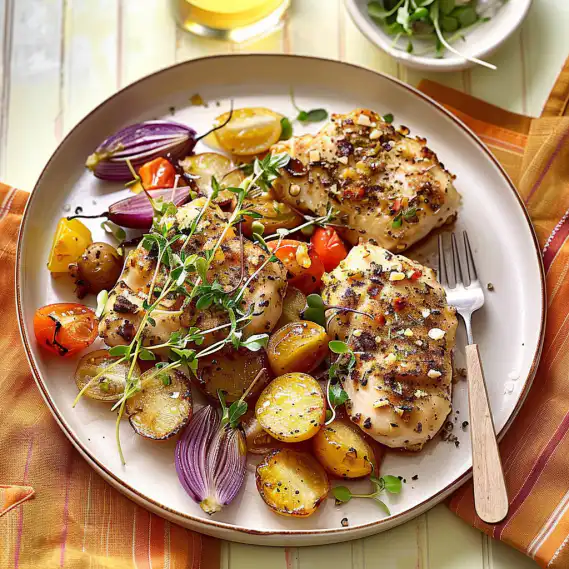
high-protein, low-calorie meals are designed to get delicious, satisfying food on your table without a fuss, proving that healthy eating can be quick and easy for everyone.
Why This Approach Works for Busy Nights
Focusing on protein and keeping calories in check provides sustained energy and satiety, meaning you’ll feel fuller for longer. This translates to less snacking and more consistent energy levels throughout your evening, which is crucial when you’re juggling multiple demands.
Ingredients
- For the Lemon Herb Baked Chicken and Veggies:
- 2 boneless, skinless chicken breasts (about 6-8 oz each)
- 1 large broccoli head, cut into florets
- 2 bell peppers (any color), seeded and chopped into bite-sized pieces
- 1 red onion, cut into wedges
- 2 tablespoons olive oil
- 1 lemon, juiced and zested
- 1 teaspoon dried oregano
- 1 teaspoon dried thyme
- 1/2 teaspoon garlic powder
- Salt and freshly ground black pepper to taste
- For the Speedy Salmon with Asparagus and Quinoa:
- 2 salmon fillets (about 5-6 oz each)
- 1 bunch asparagus, trimmed
- 1 cup cooked quinoa (can be pre-cooked or instant)
- 1 tablespoon olive oil
- 1 clove garlic, minced
- 1/4 teaspoon red pepper flakes (optional)
- Salt and freshly ground black pepper to taste
- Lemon wedges for serving
- For the Black Bean and Corn Stuffed Bell Peppers:
- 2 large bell peppers, halved lengthwise and seeds removed
- 1 (15-oz) can black beans, rinsed and drained
- 1 cup frozen corn, thawed
- 1/2 cup cooked brown rice (or cauliflower rice for fewer carbs)
- 1/4 cup salsa
- 1/4 teaspoon cumin
- 1/4 teaspoon chili powder
- Pinch of cayenne pepper (optional)
- 2 tablespoons chopped fresh cilantro
- Optional: 1/4 cup shredded low-fat cheese
These recipes are designed with efficiency in mind, using straightforward ingredients that are readily available in most grocery stores.
You might love this: High-Protein, Spicy, Sweet and Sticky Chicken
How to Make It
The beauty of these recipes lies in their simplicity. Most of the cooking involves minimal hands-on time, allowing you to attend to other tasks while your meal prepares itself. The steps are clear and concise, ensuring that even novice cooks can achieve delicious results. This approach is about making healthy eating a sustainable part of your routine, not a chore.
Recipe 1: Lemon Herb Baked Chicken and Veggies
- Preheat your oven to 400°F (200°C). Line a large baking sheet with parchment paper for easier cleanup. Lining the sheet is a small step that makes a big difference after cooking.
- In a large bowl, combine the broccoli florets, chopped bell peppers, and red onion wedges. Season with salt and pepper. Ensure the vegetables are cut into roughly uniform sizes for even cooking.
- In a small bowl, whisk together 2 tablespoons of olive oil, the juice and zest of one lemon, dried oregano, dried thyme, and garlic powder. This creates a fragrant and flavorful marinade.
- Pour about half of the lemon herb mixture over the vegetables and toss to coat evenly. Spread the seasoned vegetables in a single layer on one side of the prepared baking sheet. Give them space to roast, not steam.
- Pat the chicken breasts dry with paper towels. Season them with salt and pepper. Placing them on the other side of the baking sheet allows them to cook alongside the vegetables, absorbing their aromas.
- Brush or pour the remaining lemon herb mixture over the chicken breasts. Ensure they are well coated for maximum flavor.
- Bake for 25-30 minutes, or until the chicken is cooked through (internal temperature reaches 165°F or 74°C) and the vegetables are tender and slightly caramelized. The exact time will depend on the thickness of the chicken breasts.
- Let the chicken rest for a few minutes before slicing. This crucial step allows the juices to redistribute, resulting in more tender chicken.
This one-pan meal minimizes cleanup and maximizes flavor, bringing together tender chicken and perfectly roasted vegetables in under an hour from start to finish. It’s a complete meal ready to be enjoyed with minimal fuss.
Recipe 2: Speedy Salmon with Asparagus and Quinoa
- If you don’t have pre-cooked quinoa, prepare it according to package directions. For a quicker option, instant quinoa is excellent, reducing cook time considerably.
- While the quinoa cooks (or if it’s already cooked), prepare the salmon and asparagus. Trim the tough woody ends from the asparagus spears. This ensures they are tender and palatable.
- Heat 1 tablespoon of olive oil in a non-stick skillet over medium-high heat. Add the minced garlic and red pepper flakes (if using) and sauté for about 30 seconds until fragrant, being careful not to burn the garlic. Burnt garlic can turn bitter.
- Add the trimmed asparagus to the skillet. Season with salt and pepper. Sauté for 5-7 minutes, stirring occasionally, until the asparagus is tender-crisp. You want it to have a slight bite.
- Push the asparagus to one side of the skillet or remove them to a plate temporarily. Add the salmon fillets to the hot skillet, skin-side down if they have skin. Season the salmon with salt and pepper.
- Cook the salmon for 3-5 minutes per side, depending on thickness, until it flakes easily with a fork. The precise timing will depend on how well-done you prefer your salmon and the thickness of the fillet.
- Serve the salmon and asparagus immediately alongside a portion of the cooked quinoa. Garnish with fresh lemon wedges for an extra touch of brightness.
This dish is a testament to how quickly a nutritious and elegant meal can be prepared, featuring healthy fats from the salmon and complex carbohydrates from the quinoa. It’s a complete, balanced meal that can be on your plate in about 20-25 minutes.
Recipe 3: Black Bean and Corn Stuffed Bell Peppers
- Preheat your oven to 375°F (190°C).
- Carefully cut the bell peppers in half lengthwise and scoop out the seeds and membranes. You can also trim a thin slice off the bottom of each half to help them stand upright, though this isn’t strictly necessary if they’re placed on a baking sheet and leaning against each other.
- In a medium bowl, combine the rinsed black beans, thawed corn, cooked brown rice (or cauliflower rice), salsa, cumin, chili powder, and cayenne pepper (if using). Stir well to combine. Ensure the beans are well-rinsed to reduce sodium.
- If using cheese, stir most of it into the bean and corn mixture, reserving a little for topping. Stir in the chopped fresh cilantro for a burst of herbaceous flavor.
- Spoon the bean and corn mixture generously into each bell pepper half, packing it in slightly. Don’t be afraid to mound it up slightly for a more substantial filling.
- Place the stuffed pepper halves in a baking dish. You can add about 1/4 inch of water to the bottom of the dish to help create steam and keep the peppers moist if desired. This also aids in preventing the bottom from drying out.
- Cover the baking dish with foil and bake for 30-35 minutes, or until the peppers have softened to your desired tenderness. The foil traps steam, which is essential for tenderizing the peppers.
- Remove the foil and bake for an additional 5-10 minutes, or until the filling is heated through and any reserved cheese on top is melted and lightly browned. This final stage adds a bit of delightful crispness to the topping.
These stuffed peppers offer a flavorful and filling vegetarian option, packed with fiber and plant-based protein, making a hearty meal without feeling heavy. They are a great example of how simple vegetables can form the base of a satisfying main course.
These recipes are designed to be adaptable, allowing you to swap ingredients based on what you have on hand or what’s in season.
Nutrition at a Glance
- High Protein Content: All recipes prioritize lean protein sources such as chicken, salmon, and black beans. Protein helps you feel full and satisfied, reducing the likelihood of overeating later. It’s also vital for muscle maintenance and growth, contributing to overall body composition.
- Moderate Calories: By emphasizing vegetables and lean proteins, these meals are generally lower in calories compared to meals high in refined carbohydrates or fatty meats. This makes them suitable for consistent healthy eating without feeling deprived. The inclusion of fiber from vegetables also aids in feeling satiated with fewer calories.
- Rich in Fiber: The abundance of vegetables and the inclusion of ingredients like quinoa and beans contribute significantly to the fiber content. Fiber aids digestion, helps regulate blood sugar, and further enhances feelings of fullness, making these meals more satisfying and beneficial for digestive health.
- Healthy Fats: Ingredients like salmon and olive oil provide beneficial omega-3 fatty acids and monounsaturated fats, which are important for heart health and overall well-being. These are included in sensible portions, providing flavor and nutritional benefits without excessive fat intake.
- Nutrient-Dense: Beyond macronutrients, these dishes are packed with vitamins, minerals, and antioxidants from the diverse range of vegetables and proteins used. This ensures you’re fueling your body with essential micronutrients that support various bodily functions.
It’s important to remember that exact nutritional values can vary based on portion sizes, specific ingredient brands, and any additional items you might add to your meal.
How to Serve It
- For the Lemon Herb Baked Chicken: Serve the sliced chicken breast alongside the roasted vegetables. A squeeze of fresh lemon juice just before eating can brighten the flavors. A small dollop of plain Greek yogurt mixed with fresh herbs like chives or parsley can act as a light, protein-rich sauce, adding creaminess without excess fat.
- For the Speedy Salmon: Place the salmon fillet on top of a bed of quinoa, with the sautéed asparagus arranged alongside. A final spritz of lemon adds freshness and cuts through the richness of the salmon. A sprinkle of fresh dill or finely chopped chives can add a vibrant pop of color and aroma, appealing to the senses.
- For the Stuffed Bell Peppers: Serve each stuffed pepper half on a plate, ensuring it’s well-supported. A small side salad dressed with a light vinaigrette, perhaps featuring a touch of Dijon mustard for tang, can complement the savory flavors. A spoonful of plain Greek yogurt or a dollop of your favorite low-sodium salsa can also be a nice, cooling addition if you didn’t incorporate much into the stuffing.
These serving suggestions are about adding simple enhancements that complement the existing flavors and textures without adding significant time or complexity to your meal preparation.
Common Mistakes
- Overcrowding the Pan/Baking Sheet: When roasting vegetables or searing meat, giving ingredients enough space allows them to brown and caramelize properly. Overcrowding leads to steaming rather than roasting, resulting in soggy vegetables and less flavorful protein. Ensure adequate air circulation around each piece of food.
- Not Preheating the Oven/Pan: Starting cooking before the oven or pan has reached the correct temperature can lead to uneven cooking and a less desirable texture. Allow your oven to fully preheat, and ensure your skillet is hot before adding oil and ingredients for optimal searing and roasting.
- Under-seasoning: Bland food is unappealing and can make healthy eating feel like a chore. Don’t be shy with salt, pepper, and herbs. Taste your food as you go, especially with vegetables and sauces. Lemon juice and zest are also excellent for adding brightness and depth of flavor without adding calories.
- Overcooking Lean Proteins: Chicken breast and fish, in particular, can quickly become dry and tough if cooked for too long. Developing a feel for cooking times based on thickness, or using a meat thermometer to ensure proteins reach the correct internal temperature (165°F/74°C for chicken, or desired doneness for fish), is key to tender results.
- Skipping the Rest: Letting meat rest after cooking allows the juices to redistribute throughout the meat, resulting in a more tender and flavorful final product. Cutting into meat immediately after removing it from heat causes those precious juices to escape onto the plate, leaving the meat drier.
Avoiding these common errors will help you consistently produce delicious and well-executed meals that are both healthy and satisfying, even on your busiest evenings. Attention to these details elevates simple cooking into something truly enjoyable.
Storage and Reheating
- Storage: Allow cooked meals to cool completely before storing them in airtight containers in the refrigerator. This helps prevent condensation and maintains food quality. Most cooked meals will keep well for 3-4 days. It’s helpful to portion them into individual servings for easier grab-and-go access later in the week.
- Reheating: For best results, reheat individual portions.
- Oven: Reheating in a moderate oven (around 325-350°F or 160-175°C) is often best for dishes with roasted components, as it helps preserve their texture. Cover with foil to prevent drying out and ensure even heating. This is particularly good for the chicken and vegetable dish.
- Stovetop: Reheat gently in a skillet over medium-low heat, perhaps with a tablespoon of water or broth to prevent sticking and add moisture. This works well for grains like quinoa and can be used for reheating the salmon and asparagus, being careful not to overcook the fish.
- Microwave: This is the quickest method for reheating. Use shorter bursts of power and stir halfway through to ensure even heating, as microwaves can sometimes heat unevenly. Be aware that microwave reheating can sometimes alter the texture of certain foods, especially crispy elements, so it’s best used when speed is the priority.
- Salmon Specifics: Cooked salmon can sometimes develop a stronger odor when reheated. Reheating gently on the stovetop or in the oven at a lower temperature is often preferred to maintain its delicate flavor and aroma.
Proper storage and reheating ensure that the deliciousness and nutritional benefits of your meals are preserved, making them just as enjoyable as when they were first prepared. Planning ahead with storing leftovers can be a huge time-saver during the week.
Leftover Ideas
- Lemon Herb Chicken: Shred or dice leftover chicken and add it to salads for an extra protein boost, creating a satisfying lunch. It can also be incorporated into whole-wheat wraps or sandwiches with plenty of fresh greens, a light drizzle of an olive oil and lemon dressing, or a smear of hummus. Another option is to chop it finely and mix it into a quick stir-fry with fresh vegetables and a light sauce, or add it to pasta dishes for a complete meal.
- Salmon: Flake leftover salmon and mix it into a hearty salad, perhaps with some mixed greens, avocado, a few cherry tomatoes, and a light lemon-dill dressing. It can also be gently mixed into warm pasta dishes with a light cream sauce or used as a flavorful filling for omelets or frittatas when you want a quick brunch or light dinner.
- Stuffed Bell Peppers: Leftover stuffed peppers can be enjoyed cold as a substantial snack or part of a larger lunch, offering a readily available, nutritious option. If reheating, consider breaking them up and mixing them with a bit of extra salsa, a spoonful of Greek yogurt, or a sprinkle of cheese before warming them through in the oven or microwave. Alternatively, deconstruct them: serve the filling over a bed of greens or alongside some brown rice for a deconstructed bowl.
- Quinoa: Any leftover quinoa from the salmon dish is incredibly versatile. Use it as a base for a grain bowl with other leftover vegetables and protein, or stir it into soups and stews for added texture and nutrients, making them more filling and balanced. It can also be a healthy component in breakfast bowls with fresh fruit, nuts, and a dollop of yogurt.
Transforming leftovers into new meals not only saves time but also encourages creativity in the kitchen, proving that delicious and healthy eating can be an ongoing adventure without requiring extra cooking from scratch.
PrintEasy High Protein Low Calorie Recipes for Busy Nights
- Total Time: 50 minutes
- Yield: 4 servings 1x
Description
Discover simple, delicious recipes designed for busy weeknights. These high-protein, low-calorie meals are quick to prepare, minimize cleanup, and keep you feeling full and energized. Perfect for healthy eating on the go.
Ingredients
- For the Lemon Herb Baked Chicken and Veggies:
- 2 boneless, skinless chicken breasts (about 6–8 oz each)
- 1 large broccoli head, cut into florets
- 2 bell peppers (any color), seeded and chopped into bite-sized pieces
- 1 red onion, cut into wedges
- 2 tablespoons olive oil
- 1 lemon, juiced and zested
- 1 teaspoon dried oregano
- 1 teaspoon dried thyme
- 1/2 teaspoon garlic powder
- Salt and freshly ground black pepper to taste
- For the Speedy Salmon with Asparagus and Quinoa:
- 2 salmon fillets (about 5–6 oz each)
- 1 bunch asparagus, trimmed
- 1 cup cooked quinoa (can be pre-cooked or instant)
- 1 tablespoon olive oil
- 1 clove garlic, minced
- 1/4 teaspoon red pepper flakes (optional)
- Salt and freshly ground black pepper to taste
- Lemon wedges for serving
- For the Black Bean and Corn Stuffed Bell Peppers:
- 2 large bell peppers, halved lengthwise and seeds removed
- 1 (15-oz) can black beans, rinsed and drained
- 1 cup frozen corn, thawed
- 1/2 cup cooked brown rice (or cauliflower rice for fewer carbs)
- 1/4 cup salsa
- 1/4 teaspoon cumin
- 1/4 teaspoon chili powder
- Pinch of cayenne pepper (optional)
- 2 tablespoons chopped fresh cilantro
- Optional: 1/4 cup shredded low-fat cheese
Instructions
- Recipe 1: Lemon Herb Baked Chicken and Veggies
- 1. Preheat oven to 400°F (200°C). Line a baking sheet.
- 2. Toss broccoli, bell peppers, and onion with salt and pepper in a bowl.
- 3. Whisk olive oil, lemon juice/zest, oregano, thyme, and garlic powder.
- 4. Toss half the mixture with vegetables and spread on one side of the baking sheet.
- 5. Season chicken breasts, place on the other side of the sheet.
- 6. Brush remaining mixture over chicken.
- 7. Bake for 25-30 minutes until chicken is cooked through and veggies are tender.
- 8. Rest chicken before slicing.
- Recipe 2: Speedy Salmon with Asparagus and Quinoa
- 1. Prepare cooked quinoa.
- 2. Trim asparagus.
- 3. Heat olive oil in a skillet over medium-high heat. Add garlic and red pepper flakes, sauté briefly.
- 4. Add asparagus, season, and sauté for 5-7 minutes until tender-crisp.
- 5. Move asparagus aside. Add salmon fillets to the skillet, season.
- 6. Cook salmon for 3-5 minutes per side until it flakes.
- 7. Serve salmon and asparagus with quinoa, garnished with lemon wedges.
- Recipe 3: Black Bean and Corn Stuffed Bell Peppers
- 1. Preheat oven to 375°F (190°C).
- 2. Halve bell peppers lengthwise, remove seeds.
- 3. In a bowl, combine black beans, corn, brown rice (or cauliflower rice), salsa, cumin, chili powder, and cayenne (if using). Stir in cilantro.
- 4. If using cheese, stir most into the mixture.
- 5. Spoon filling into pepper halves.
- 6. Place peppers in a baking dish, add 1/4 inch water if desired.
- 7. Cover with foil and bake for 30-35 minutes until peppers soften.
- 8. Remove foil and bake for 5-10 more minutes until cheese is melted and golden.
Notes
Store cooked meals in airtight containers in the refrigerator for up to 3-4 days. Reheat gently in the oven, on the stovetop with a little liquid, or in the microwave in short intervals. For salmon, stovetop or oven reheating is often preferred for better texture. Allow meats to rest after cooking before serving. Avoid overcrowding pans for better roasting and searing.
- Prep Time: 20 minutes
- Cook Time: 30 minutes
- Category: Dinner/Weeknight Meals
- Method: Baking, Pan-Frying
- Cuisine: American
Nutrition
- Serving Size: 1 serving
- Calories: Varies per recipe (estimate 350-450 kcal)
- Sugar: Varies per recipe (estimate 5-15g)
- Sodium: Varies per recipe (estimate 400-800mg)
- Fat: Varies per recipe (estimate 10-20g)
- Carbohydrates: Varies per recipe (estimate 20-40g)
- Fiber: Varies per recipe (estimate 5-10g)
- Protein: Varies per recipe (estimate 30-40g)
1 thought on “Easy High Protein Low Calorie Recipes for Busy Nights”