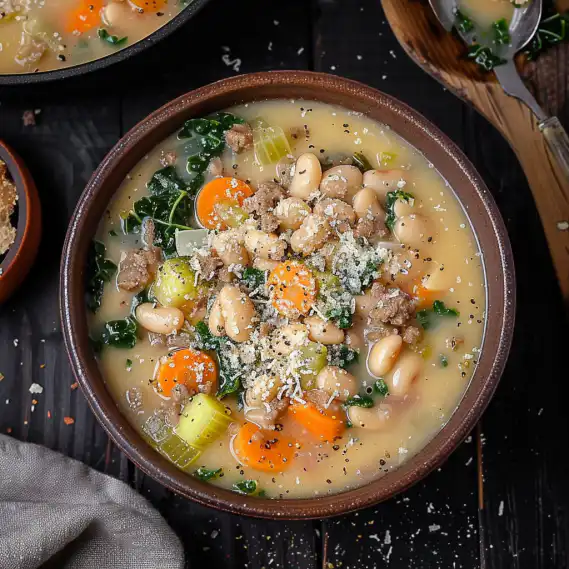
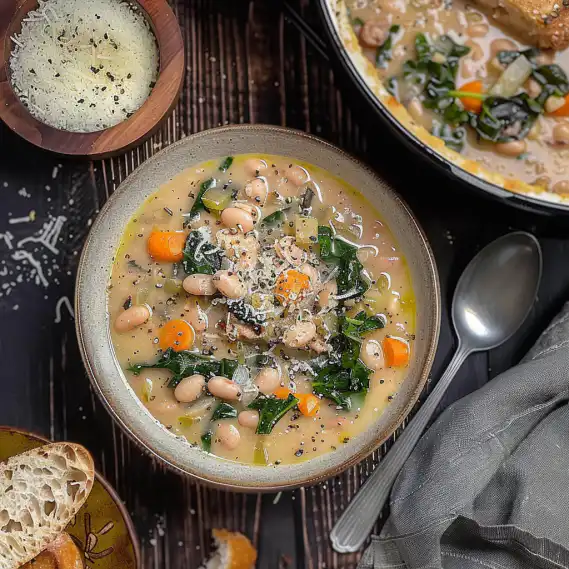
This High Protein White Bean Soup is a staple in my kitchen, especially during the cooler months. It’s hearty, satisfying, and comes together with minimal fuss, making it ideal for busy weeknights or a comforting weekend lunch.
Why This High Protein White Bean Soup Works
This soup is a champion because it’s packed with plant-based protein and fiber from the white beans, making it incredibly filling. It’s also incredibly versatile, allowing you to tailor it to your family’s preferences with different vegetables and seasonings.
Ingredients
- 2 tablespoons olive oil
- 1 large yellow onion, chopped
- 3 carrots, peeled and chopped
- 3 celery stalks, chopped
- 3 cloves garlic, minced
- 1 teaspoon dried rosemary
- 1 teaspoon dried thyme
- 1/2 teaspoon dried sage
- 1/4 teaspoon red pepper flakes (optional, for a little warmth)
- 8 cups vegetable broth
- 3 cans (15-ounce each) cannellini beans, rinsed and drained
- 1 can (15-ounce) great northern beans, rinsed and drained
- 1 bay leaf
- 1 bunch kale or spinach, stems removed and chopped
- Salt, to taste
- Freshly ground black pepper, to taste
- Optional: Crusty bread for serving
- Optional: A squeeze of lemon juice before serving
Gathering these ingredients is the first step to a wonderful meal. Having everything prepped before you start cooking streamlines the process and ensures a smooth culinary experience.
Here’s another great option: Bold & Creamy Cajun Chicken Spaghetti
How to Make It
- Heat the olive oil in a large pot or Dutch oven over medium heat. Add the chopped onion, carrots, and celery. Cook, stirring occasionally, until the vegetables have softened, about 8-10 minutes. This initial sauté builds a flavorful base for the soup. We’re not looking for caramelization here, just tenderness and a gentle melding of flavors. The aroma that starts to fill your kitchen at this stage is a good sign of what’s to come.
- Add the minced garlic, dried rosemary, thyme, sage, and red pepper flakes (if using) to the pot. Cook for another minute until fragrant, stirring constantly to prevent the garlic from burning. This step releases the essential oils from the herbs and garlic, infusing the cooking fat with their aromas. Be mindful of the heat; a minute is usually enough for the garlic to become fragrant without becoming bitter.
- Pour in the vegetable broth and add the rinsed and drained cannellini beans, great northern beans, and the bay leaf. Bring the mixture to a boil, then reduce the heat to low, cover, and simmer for at least 20-30 minutes. This simmering time allows the flavors to meld and the beans to become tender. Using a combination of different white beans adds a subtle variation in texture and flavor.
- Once the simmering time is complete, remove the bay leaf. If you want a creamier soup without adding dairy, you can carefully scoop out about 1-2 cups of beans and some broth, blend them until smooth using an immersion blender or a regular blender (be cautious with hot liquids), and then stir the blended mixture back into the pot. This technique is a simple way to thicken the soup and add a luscious texture.
- Stir in the chopped kale or spinach. Cook for another 5-10 minutes, or until the greens are wilted and tender. Kale will take a bit longer than spinach, so adjust your cooking time accordingly. Greens add a vibrant color and a boost of nutrients to the soup. Spinach wilts very quickly, so it’s best to add it towards the very end. Kale, especially tougher varieties, benefits from a bit of simmering to become tender.
- Season the soup generously with salt and freshly ground black pepper to taste. Taste and adjust seasonings as needed. This final seasoning step is crucial for bringing out all the flavors. Don’t be afraid to taste and add more salt or pepper until it’s just right. A touch of something acidic, like a squeeze of lemon juice right before serving, can brighten the flavors considerably and is highly recommended by many home cooks for this type of soup.
This process yields a delicious and wholesome High Protein White Bean Soup, ready to be enjoyed.
Nutrition at a Glance
- High in plant-based protein from white beans.
- Excellent source of dietary fiber, promoting digestive health and satiety.
- Rich in vitamins and minerals from vegetables like carrots, celery, onion, and leafy greens (e.g., Vitamin A, Vitamin K, folate).
- Lower in saturated fat compared to meat-based soups.
- Naturally gluten-free (ensure your vegetable broth is also gluten-free if necessary).
- Provides complex carbohydrates for sustained energy.
- Can be made lower in sodium by choosing low-sodium vegetable broth and rinsing beans thoroughly.
- The addition of greens boosts the soup’s antioxidant content.
- Good source of iron, especially when spinach is used.
- Folates are important for cell growth and function.
- Potassium content contributes to blood pressure regulation.
- Magnesium aids in muscle and nerve function.
- The process of simmering vegetables and beans gently extracts their nutrients into the broth, making them more bioavailable.
- When you blend a portion of the beans and broth, you increase the soup’s creaminess while retaining the nutritional benefits of the beans without adding unhealthy fats or thickeners.
- The olive oil used in sautéing contributes monounsaturated fats, which are beneficial for heart health.
- The combination of protein, fiber, and complex carbohydrates in this soup makes it a very balanced and healthy meal option.
- You can further boost the nutrient profile by adding other vegetables like zucchini, bell peppers, or sweet potatoes during the sautéing stage.
- The sheer volume of water in the soup contributes to hydration as well.
- It’s a wonderful way to consume a significant portion of your daily recommended vegetable intake in one sitting.
- The absence of processed ingredients makes this soup a clean and wholesome choice.
- The protein content specifically can help with muscle repair and growth, making it a good option post-workout.
- Fiber plays a role in blood sugar control, preventing sharp spikes and crashes.
How to Serve It
- Serve hot with a side of crusty bread for dipping. This is a classic and satisfying pairing that allows you to soak up every last drop of flavorful broth. The bread can be toasted or simply served fresh.
- A squeeze of fresh lemon juice over the top just before serving can brighten the flavors and add a refreshing tang.
- Garnish with fresh parsley or chives for a pop of color and herbaceousness.
- A dollop of plain Greek yogurt or a swirl of your favorite dairy-free alternative can add a creamy finishing touch.
- For a heartier meal, serve with a side salad featuring mixed greens and a light vinaigrette.
- This soup is hearty enough to stand alone as a complete meal, but it also pairs well with lighter accompaniments.
- Consider adding a sprinkle of grated Parmesan cheese for those who are not strictly plant-based.
- If you enjoy a bit of heat, a drizzle of chili oil can be an interesting addition.
- The simplicity of this soup allows for many delicious serving combinations.
- For a complete lunch, think about pairing it with a simple grilled cheese sandwich.
- The versatility of this soup means it can be dressed up or down depending on the occasion.
- A sprinkle of toasted pumpkin seeds or sunflower seeds can add a delightful crunch.
- If you have fresh herbs on hand, a small amount finely chopped and stirred in at the end can elevate the aroma and flavor profile.
- It’s a soup that feels both comforting and sophisticated, depending on how you choose to present it.
- Consider serving with a small portion of pasta or rice for a truly filling experience, though for most, it’s filling enough on its own.
This soup is incredibly adaptable and delicious served in a multitude of ways.
Common Mistakes
- Not Sautéing the Aromatics: Skipping the step of sautéing the onion, carrots, and celery can result in a soup that lacks depth of flavor. This initial step is crucial for building a good foundation of taste. The gentle cooking of these vegetables releases their natural sugars and creates a sweeter, more complex base than just boiling them.
- Burning the Garlic: Adding the garlic too early or cooking it over too high heat can lead to a bitter taste in the soup. It should be added towards the end of the sauté for the aromatics and cooked only until fragrant. Watch it closely; it can go from fragrant to burnt very quickly.
- Not Rinsing the Beans: Canned beans often have a starchy liquid that can make the soup cloudy and impart an undesirable flavor. Rinsing them thoroughly under cold water removes this liquid and significantly improves the final taste and appearance of the soup. This is a simple step that makes a noticeable difference.
- Using Bland Broth: The quality of your vegetable broth significantly impacts the final taste of the soup. Opt for a good-quality broth or homemade stock for the best flavor. If using a low-sodium option, be prepared to adjust salt more carefully at the end.
- Overcooking the Greens: Adding kale or spinach too early and cooking them for too long can result in mushy, unappealing greens. They should be added towards the end of the cooking process to retain their color and a slight bite. Spinach wilts in minutes, while kale needs a bit longer but shouldn’t be boiled to oblivion.
- Under-Seasoning: It’s essential to taste and adjust seasonings throughout the cooking process, especially at the end. Beans can absorb a lot of salt, so be generous with your seasoning. Freshly ground black pepper also adds a wonderful aroma and subtle heat.
- Skipping the Acidic Element: A touch of acidity, like a squeeze of lemon juice or a splash of vinegar, can really elevate the flavors of a hearty bean soup by cutting through the richness.
- Not Adjusting for Bean Texture: Different types of white beans have different cooking times and textures. If using dried beans, ensure they are properly cooked before adding them to the soup base. For canned beans, over-boiling can turn them to mush, so be mindful of the simmering time after adding them.
- Not Blending for Creaminess: If you desire a creamier texture, failure to incorporate a blending step with some of the beans and broth will result in a thinner soup. This is a simple technique that drastically changes the mouthfeel.
- Poor Quality Herbs: While dried herbs are convenient, using old, flavorless herbs won’t contribute much to the soup. Check the expiration dates and sniff them; if they don’t have a strong aroma, it’s time to replace them.
Avoiding these common pitfalls will help ensure your High Protein White Bean Soup turns out wonderfully every time.
Storage and Reheating
- Storage: Allow the soup to cool completely before transferring it to airtight containers. It can be stored in the refrigerator for up to 4-5 days. The flavors tend to meld and deepen further after a day or two, making leftovers quite delicious.
- Freezing: This soup freezes exceptionally well. Portion it into freezer-safe containers or bags, leaving a little headspace for expansion as it freezes. It can be frozen for up to 3 months. While freezing is convenient, be aware that the texture of some vegetables, particularly leafy greens, might change slightly upon thawing, though they will still be perfectly edible.
- Reheating (Stovetop): Reheat the soup gently in a pot over medium-low heat, stirring occasionally, until heated through. You may need to add a splash of broth or water if the soup has become too thick during storage. Avoid boiling, as this can break down the ingredients.
- Reheating (Microwave): Reheat individual portions in a microwave-safe bowl on medium power, stirring halfway through, until hot. Be cautious of steam.
- Thawing Frozen Soup: Thaw frozen soup overnight in the refrigerator before reheating on the stovetop or in the microwave. For a faster thaw, you can use the defrost setting on your microwave or place the sealed container in a bowl of cool water.
- Checking for Spoilage: Before reheating, always check the soup for any signs of spoilage, such as an off smell, mold, or slimy texture. If in doubt, discard it. Properly stored soup should smell fresh and pleasant.
- Maintaining Texture: If you desire a creamier texture after reheating, you can once again blend a small portion of the soup and stir it back in. This also helps to incorporate any separated liquids.
- Seasoning Adjustment: Flavors can sometimes mellow during storage. It’s a good idea to taste the soup after reheating and adjust salt, pepper, or herbs as needed.
Proper storage and reheating will keep your High Protein White Bean Soup delicious and safe to eat for an extended period.
Leftover Ideas
- Soup with a Twist: Serve the leftover soup as is, perhaps with a different garnish or a dollop of crème fraîche. Sometimes, the simplest approach is the best, and the deepened flavors of leftovers are a treat.
- Bean Puree Dip: Mash some of the leftover beans and vegetables with a fork, add a little of the broth, and a squeeze of lemon juice. This can create a rustic and flavorful dip, perfect for serving with pita chips or crudités.
- Sandwich or Wrap Filling: Mash the soup slightly to create a chunky spread. Use it as a filling for sandwiches or wraps. It’s a hearty and flavorful alternative to more common fillings. Adding a little extra seasoning might be needed to make it more spreadable.
- Base for a Grain Bowl: Spoon the leftover soup over cooked quinoa, farro, or brown rice. Top with other vegetables, a protein source like grilled chicken or tofu, and a drizzle of dressing for a complete and satisfying grain bowl.
- Topping for Baked Potatoes: Warm the soup and spoon it over a baked potato or sweet potato for a quick and hearty meal. The thick consistency is ideal for this purpose.
- Creamy Pasta Sauce: If the soup is thick enough, it can be used as a base for a pasta sauce. Toss it with your favorite pasta and perhaps some added vegetables or protein. You might want to blend it smooth for a more traditional sauce consistency.
- Layered Casserole: Combine leftover soup with cooked pasta or rice, a binder like a whisked egg or a dairy-free alternative, and perhaps some shredded cheese or nutritional yeast. Bake until bubbly and golden for a comforting casserole.
- Flavor Enhancer for Other Dishes: Add a spoonful or two of the soup to other stews, chili, or even a meatloaf mixture to add extra flavor and moisture. It can be a secret ingredient to boost the umami in various dishes.
- “Savory Oatmeal”: For a truly unconventional but delicious use, stir a warmed portion of the soup into plain cooked oatmeal. It sounds strange, but the savory flavors meld surprisingly well and create a comforting bowl.
- Stuffed Peppers: Mix the leftover soup with some cooked rice and ground meat or plant-based protein. Use this mixture to stuff bell peppers and bake until tender.
Leftovers are a wonderful resource, and this soup offers many creative possibilities for a second delicious meal.
High Protein White Bean Soup
- Total Time: 60 minutes
- Yield: 6–8 servings 1x
- Diet: Vegetarian
Description
A hearty and comforting High Protein White Bean Soup recipe made with cannellini and great northern beans, vegetables, and aromatic herbs. This plant-based soup is easy to make, naturally gluten-free, and packed with fiber and nutrients.
Ingredients
- 2 tablespoons olive oil
- 1 large yellow onion, chopped
- 3 carrots, peeled and chopped
- 3 celery stalks, chopped
- 3 cloves garlic, minced
- 1 teaspoon dried rosemary
- 1 teaspoon dried thyme
- 1/2 teaspoon dried sage
- 1/4 teaspoon red pepper flakes (optional, for a little warmth)
- 8 cups vegetable broth
- 3 cans (15-ounce each) cannellini beans, rinsed and drained
- 1 can (15-ounce) great northern beans, rinsed and drained
- 1 bay leaf
- 1 bunch kale or spinach, stems removed and chopped
- Salt, to taste
- Freshly ground black pepper, to taste
- Optional: Crusty bread for serving
- Optional: A squeeze of lemon juice before serving
Instructions
- 1. Heat the olive oil in a large pot or Dutch oven over medium heat. Add the chopped onion, carrots, and celery. Cook, stirring occasionally, until the vegetables have softened, about 8-10 minutes.
- 2. Add the minced garlic, dried rosemary, thyme, sage, and red pepper flakes (if using) to the pot. Cook for another minute until fragrant, stirring constantly.
- 3. Pour in the vegetable broth and add the rinsed and drained cannellini beans, great northern beans, and the bay leaf. Bring to a boil, then reduce heat to low, cover, and simmer for at least 20-30 minutes.
- 4. Remove the bay leaf. For a creamier soup, blend 1-2 cups of beans and broth until smooth and stir back into the pot. Alternatively, mash some beans against the side of the pot.
- 5. Stir in the chopped kale or spinach. Cook for another 5-10 minutes, or until the greens are wilted and tender.
- 6. Season the soup generously with salt and freshly ground black pepper to taste. Adjust seasonings as needed. Serve hot, with an optional squeeze of lemon juice.
Notes
Store cooled soup in airtight containers in the refrigerator for up to 4-5 days. It also freezes well for up to 3 months. Reheat gently on the stovetop or in the microwave, adding a splash of broth or water if needed. Flavors deepen as it sits.
- Prep Time: 20 minutes
- Cook Time: 40 minutes
- Category: Soup
- Method: Stovetop
- Cuisine: American
Nutrition
- Serving Size: 1 serving
- Calories: Approximately 300-350 calories per serving (varies based on ingredients and portion size)
- Sugar: 6-10g
- Sodium: Varies greatly depending on broth and added salt
- Fat: 5-8g
- Carbohydrates: 45-55g
- Fiber: 10-15g
- Protein: 15-20g