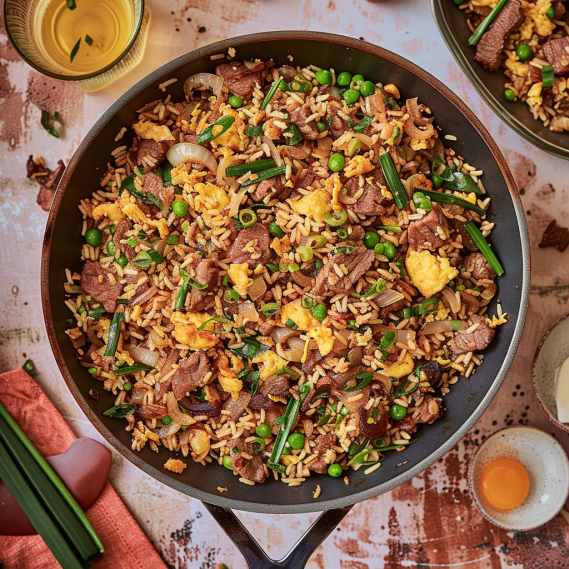
There’s something deeply satisfying about a one-pan meal, especially after a long day when the thought of multiple dirty dishes feels overwhelming. This Onion Beef Fried Rice recipe is my go-to for those busy weeknights. It’s simple, flavorful, and comes together so quickly, proving that a delicious home-cooked meal doesn’t need to be complicated.
Why This Onion Beef Fried Rice Works
This recipe is a weeknight hero because it streamlines the cooking process without sacrificing flavor. The beef cooks quickly, the onions provide sweetness and depth, and the rice absorbs all those delicious juices. It’s a balanced meal that’s both comforting and efficient, perfectly suited for a busy schedule.
Ingredients
Here’s what you’ll need to gather for this flavor-packed fried rice:
- For the Beef:
- 1 pound flank steak or sirloin steak, thinly sliced against the grain
- 1 tablespoon soy sauce (low sodium is good if you’re watching sodium intake)
- 1 teaspoon cornstarch
- 1 teaspoon sesame oil
- 1/2 teaspoon black pepper
- For the Fried Rice:
- 2 tablespoons vegetable oil or other high-heat cooking oil (like canola or peanut oil)
- 1 large yellow onion, thinly sliced
- 2 cloves garlic, minced
- 1-inch piece of fresh ginger, grated or minced
- 4 cups cooked white rice, preferably day-old and chilled (this is key!)
- 2 tablespoons soy sauce (again, low sodium is an option)
- 1 tablespoon oyster sauce (optional, but adds great depth)
- 1 teaspoon sugar
- 1/2 teaspoon white pepper (or black pepper if that’s all you have)
- 2 large eggs, lightly beaten
- 2 green onions, thinly sliced (for garnish)
Gathering all your ingredients and having them prepped before you start cooking is what makes stir-frying so fast and efficient. This is often referred to as “mise en place,” and it’s an essential step for successful fried rice. Let’s break down each component a bit more to really understand why these specific ingredients and preparation methods are important.
You might love this: Freakin’ Fantastic Fried Rice
How to Make It
Follow these straightforward steps for a delicious bowl of fried rice:
- Marinate the Beef: In a medium bowl, combine the thinly sliced beef with 1 tablespoon soy sauce, 1 teaspoon cornstarch, 1 teaspoon sesame oil, and 1/2 teaspoon black pepper. Toss to coat evenly. Set aside for at least 10 minutes while you prepare the other ingredients. The cornstarch here is for velveting the beef, making it tender and helping it brown beautifully.
- Prepare the Sauce: In a small bowl, whisk together 2 tablespoons soy sauce, 1 tablespoon oyster sauce (if using), 1 teaspoon sugar, and 1/2 teaspoon white pepper. Set aside. Having this mixture ready means you can add it all at once, ensuring even flavor distribution into the rice.
- Cook the Beef: Heat 1 tablespoon of the vegetable oil in a large skillet or wok over medium-high heat until shimmering. A properly heated pan is crucial for a good sear. Add the marinated beef in a single layer (cook in batches if necessary to avoid overcrowding). Overcrowding will cause the beef to steam rather than sear, leading to a less desirable texture. Sear for 1-2 minutes per side, until browned but not fully cooked through. Remove the beef from the skillet and set aside. This partial cooking ensures the beef remains tender after being added back later.
- Sauté the Aromatics: Add the remaining 1 tablespoon of vegetable oil to the skillet. Add the sliced onion and cook, stirring, for 3-5 minutes until softened and starting to turn translucent. Onions caramelize beautifully when given time to soften properly. Add the minced garlic and grated ginger, and cook for another 30 seconds until fragrant, being careful not to burn them. Garlic and ginger can go from fragrant to burnt very quickly, so active attention is needed here.
- Add the Rice: Add the cooked, chilled rice to the skillet. Break up any clumps with your spatula and stir-fry for 2-3 minutes, allowing the rice to heat through and lightly toast. This step is essential for achieving that signature fried rice texture where grains are separate and slightly crisped.
- Combine and Sauce: Return the seared beef to the skillet with the rice. Pour the prepared sauce mixture over everything. Stir well to combine and coat all the ingredients evenly. Continue to stir-fry for another 2-3 minutes, allowing the sauce to thicken slightly and the flavors to meld. The heat helps the sauce coat each grain of rice and piece of beef.
- Cook the Eggs: Push the rice and beef mixture to one side of the skillet, creating a well in the center. Pour the beaten eggs into the well. Let them cook undisturbed for about 30 seconds until the edges start to set, then gently scramble them with your spatula until cooked through. This is a quick way to incorporate eggs without needing a separate pan.
- Integrate and Finish: Gently incorporate the scrambled eggs into the rice and beef mixture. Stir-fry for another 1 minute to ensure everything is heated through and well combined.
- Serve: Remove from heat. Garnish with sliced green onions. Serve hot. The final minute of cooking allows all the flavors to meld together beautifully.
This process is designed for maximum efficiency, ensuring that each component is cooked to perfection without overcooking. By cooking the beef first and setting it aside, you prevent it from becoming tough and overdone while the rice and aromatics cook.

Nutrition at a Glance
- Calories: Varies based on exact ingredient amounts and brands used, but typically in the range of 450-650 calories per serving. This is a hearty meal, so portion control is a consideration for those watching calorie intake.
- Protein: A good source of protein from the beef and eggs, generally around 25-35 grams per serving. This makes it a satiating and muscle-building option.
- Fat: Primarily from the cooking oil and beef, aim for healthy fats where possible. Around 15-25 grams per serving. The type of oil used can influence the fat profile – opting for unsaturated oils like canola or peanut is generally healthier.
- Carbohydrates: From the rice, approximately 40-60 grams per serving, depending on portion size. This provides the energy needed for your day.
- Sodium: Can vary greatly based on soy sauce and oyster sauce used. Using low-sodium options can help manage this, as can rinsing the rice before cooking if you are particularly sensitive to sodium.
- Fiber: Relatively low in fiber due to white rice, but can be increased with added vegetables like peas, corn, or carrots. Those seeking higher fiber content might consider using brown rice, though it will alter the texture.
Understanding the general nutritional breakdown helps you integrate this dish into a balanced diet. While it’s a satisfying meal, being mindful of portion sizes and sodium content is always a good practice, especially if you have specific dietary needs.
How to Serve It
This Onion Beef Fried Rice is wonderfully versatile and can be enjoyed in several ways:
- As a Standalone Meal: It’s hearty and flavorful enough to be a complete meal on its own, especially on a busy weeknight. The combination of protein, carbs, and savory flavors is very satisfying.
- With Extra Vegetables: For added nutrition and texture, you can stir in some quickly cooked vegetables like peas, corn, diced carrots, broccoli florets, or snap peas in the last few minutes of cooking. Quick-cooking vegetables like edamame also work well.
- With a Side of Soup: A light, clear broth-based soup, like a simple egg drop soup or a vegetable soup, can complement the richness of the fried rice beautifully without making the meal too heavy.
- Garnished with Fresh Herbs: Beyond green onions, a sprinkle of fresh cilantro can add another layer of freshness and a different aromatic dimension.
- With a Fried Egg on Top: For an extra indulgent variation, top your serving with a perfectly fried sunny-side-up or over-easy egg, allowing the runny yolk to cascade over the rice, adding a creamy richness.
The beauty of fried rice lies in its adaptability. It’s a dish that welcomes additions and modifications, allowing you to tailor it to your preferences and what you have on hand. Serving it hot ensures the flavors are at their peak and the textures are just right. Consider a small dish of Sriracha or chili garlic sauce on the side for those who appreciate an extra kick.
Common Mistakes
Avoiding these common missteps will help ensure your fried rice turns out delicious every time:
- Using Freshly Cooked Rice: As mentioned, this leads to greasy, clumpy rice that sticks together. Always use cold, day-old rice for the best texture. The residual dryness is key.
- Overcrowding the Pan: When stir-frying, especially the beef, cook in batches if necessary. Overcrowding lowers the pan’s temperature, causing ingredients to steam rather than sear and leading to a greasy, unappetizing result.
- High Heat is Crucial: Fried rice is a dish that thrives on high heat. Ensure your pan is hot before adding ingredients. This promotes quick cooking, caramelization, and prevents ingredients from becoming soggy. If you don’t have a wok, a large, heavy-bottomed skillet will work, but make sure it can handle high heat.
- Mincing Garlic and Ginger Too Coarsely: Finely minced or grated aromatics ensure they cook quickly and distribute their flavor evenly without leaving large, potent chunks that can lead to uneven flavor distribution or burning.
- Not Prepping Ingredients in Advance: Stir-frying is fast. If your ingredients aren’t ready to go, chopped, measured, and within easy reach, you’ll miss your cooking windows, and things can end up burning or becoming overcooked as you scramble to prep the next item. This is where mise en place truly shines.
- Adding Too Much Sauce: Start with the recommended amount of sauce and taste as you go. Add more only if needed. Too much liquid early on can make the fried rice soggy and dilute the flavors rather than concentrating them. You want the rice to be coated, not swimming.
By being mindful of these common pitfalls, you can elevate your fried rice from good to great. The techniques discussed, like proper rice use and pan management, are fundamental to achieving that authentic fried rice texture and flavor that is so satisfying. Paying attention to the heat, the order of ingredients, and the cooking times will make a significant difference.
Storage and Reheating
Proper storage and reheating are key to enjoying leftover fried rice safely and deliciously:
- Storage: Allow the fried rice to cool completely at room temperature (no more than 2 hours to prevent spoilage) before transferring it to an airtight container. Store in the refrigerator for up to 3-4 days. For best quality and to prevent moisture loss, ensure the container is well-sealed.
- Reheating: The best method is to reheat in a skillet or wok over medium-high heat with a splash of oil or a tablespoon of water to help loosen the grains and prevent sticking. Stir frequently until heated through. Alternatively, you can reheat it in the microwave, stirring halfway through for more even heating. Be aware that microwaved fried rice can sometimes be a bit softer in texture compared to skillet-reheated versions, but it’s a convenient option.
It’s essential to cool food quickly to prevent bacterial growth. Airtight containers prevent the rice from drying out and absorbing odors from other foods in the refrigerator. Reheating in a skillet is generally preferred for the best texture, as it allows some of the grains to crisp up slightly again, reminiscent of the original preparation. Ensure the fried rice is steaming hot throughout before consuming.
Leftover Ideas
Don’t let those delicious leftovers go to waste! Here are a few ways to give your Onion Beef Fried Rice a second life:
- Fried Rice “Cakes”: Press chilled fried rice firmly into a small, greased non-stick skillet over medium heat. Cook until golden brown and crisp on the bottom, then carefully flip and cook the other side. Serve like a savory pancake, perhaps with a dollop of sour cream or a sprinkle of chives.
- Adding Fresh Greens: Stir in a handful of baby spinach or chopped bok choy in the last minute of reheating in a skillet. The residual heat will wilt them perfectly, adding freshness and nutrients.
- Topped with a Fried Egg: As mentioned earlier, reheating leftovers and topping with a freshly fried egg is a fantastic quick meal. The runny yolk acts as a sauce, bringing everything together.
- As a Base for a Buddha Bowl: Reheat the fried rice and use it as the base for a colorful Buddha bowl. Add fresh-picked greens, avocado slices, roasted sweet potatoes, grilled chicken, or edamame. A drizzle of tahini dressing or a spicy peanut sauce ties it all together beautifully.
- Incorporating into a Stir-fry: If you have other stir-fry components cooked separately (like extra vegetables or protein), you can combine leftover fried rice with them for a quick, hearty meal that feels like a completely new dish.
Leftovers can be just as exciting as the first time around with a little creativity. These ideas leverage the pre-cooked nature of the fried rice to speed up meal preparation even further, making it an economical and practical option for busy individuals and families. Experiment with different toppings and additions to keep things interesting.
PrintKool-Aid Slushie
- Total Time: 5 minutes
- Yield: 4 servings 1x
- Diet: Vegetarian
Description
A refreshing, icy frozen drink made with Kool-Aid, ice, and sugar that’s perfect for hot summer days. Ready in just 5 minutes with simple ingredients.
Ingredients
- 4 cups ice cubes
- 1 packet Kool-Aid drink mix (unsweetened)
- 1 cup granulated sugar
- 2 cups cold water
- 2 tablespoons lemon juice (optional)
Instructions
- 1. Add ice cubes to the blender first, followed by the cold water.
- 2. Sprinkle the Kool-Aid packet and sugar over the ice and water mixture. Add lemon juice if using.
- 3. Secure the blender lid tightly and start blending on low for 10 seconds to break up the ice.
- 4. Gradually increase speed to high and blend for 30-45 seconds until smooth and slushy.
- 5. Check consistency and adjust if needed by adding more ice for thickness or water if too thick.
- 6. Pour immediately into pre-chilled glasses and serve right away.
Notes
For best results, use very cold water and serve immediately. Leftovers can be frozen in an airtight container for up to 2 weeks. To re-use, let thaw slightly and scrape with a fork. Try mixing different Kool-Aid flavors or adding fresh fruit for variation.
- Prep Time: 5 minutes
- Cook Time: 0 minutes
- Category: Beverages
- Method: Blending
- Cuisine: American
Nutrition
- Serving Size: 1 cup
- Calories: 120
- Sugar: 30g
- Sodium: 15mg
- Fat: 0g
- Carbohydrates: 31g
- Fiber: 0g
- Protein: 0g
3 thoughts on “Onion Beef Fried Rice Recipe – The Ultimate One-Pan Weeknight Dinner”